 Rankblocks
How Leading AI Visibility Optimization Tools Close the Gap Between Content and Citations
Buyers stopped scrolling ten blue links. They ask ChatGPT, Perplexity, and Gemini which brand to trust, and the answer decides who gets the sale. If your business is missing from that answer, you lose the deal before anyone sees your website.
That shift breaks most legacy tools. Classic rank trackers count keywords and backlinks, but they never tell you what an AI assistant says about your category. A January 2026 Search Engine Land study found 37% of consumers now start their searches with AI tools rather than Google. The leading AI visibility optimization tools split into two real tiers. Passive trackers show the gap, and full-loop optimizers close it.
This piece defines that capability gap, maps each tool to a tier, and helps you pick the right standard. It speaks to SEO managers, agency owners, founders, and non-technical business owners comparing options right now.
What AI visibility optimization actually means for search engine optimization
AI visibility measures how often and how prominently your brand appears in AI-generated answers. When someone asks Perplexity for the best law firm search engine optimization option, you either get cited or you get skipped.
Here is the part most roundups miss. AEO, GEO, and classic search engine optimization overlap heavily. The same content that earns AI citations also ranks on Google, so you win both channels with one asset. Treat them as one discipline, not three budgets. WebFX's analysis of 2.3 billion sessions found generative AI traffic grew 796% in two years and converted 1.2x higher than organic search.
The two tiers matter because they answer different questions. The tracker tier monitors mentions and share of voice, then stops. The optimizer tier finds the gap, writes the content, publishes it, and measures the result in one loop.
Six criteria separate a useful platform from an expensive dashboard.
- Engine coverage across ChatGPT, Claude, Gemini, and Perplexity at minimum
- Prompt-level tracking that shows which exact questions surface your brand
- Competitive benchmarking and share of voice, not just raw mention counts
- Citation source attribution naming the pages that earn the mentions
- Content creation inside the platform, not handed to a separate tool
- Closed-loop measurement tying citations back to Google rankings and revenue
Score any vendor against those six before you swipe a card. Each criterion is covered in our AI visibility tools explained breakdown.
Top 6 leading AI visibility optimization tools for closing the content-to-citation loop
Below are six options ranked by how much of the loop they close. We list capabilities honestly, name real gaps, and match each tool to the team it fits.
Rankblocks
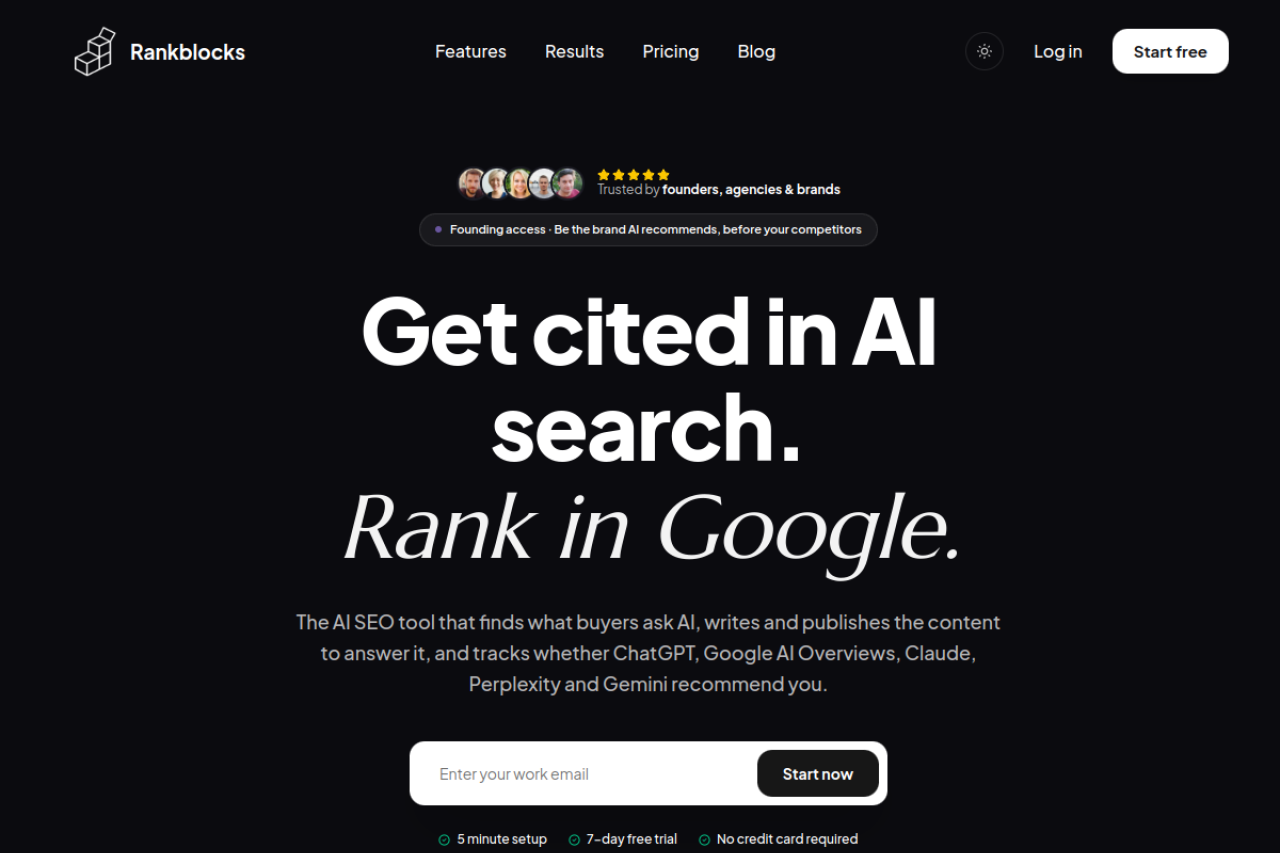
Rankblocks runs the full closed loop on autopilot. The AI Visibility Tracker finds citation gaps across ChatGPT, Claude, Gemini, and Perplexity, so you see which prompts recommend competitors instead of you.
Then it acts. The Content Gap Analysis and AI Content Writing Engine write and publish the fix, engineered to earn citations and rank on Google. The Brand Kit keeps every article on-voice with no manual briefing.
The Live GSC Dashboard and Keyword Tracker measure results daily in one place, so you never stitch five tools together. The best AI optimization tools roundup compares it against the field.
Best for SEO managers, agency owners, solo operators, and non-technical business owners who want the find-write-publish-measure loop automated.
Peec AI
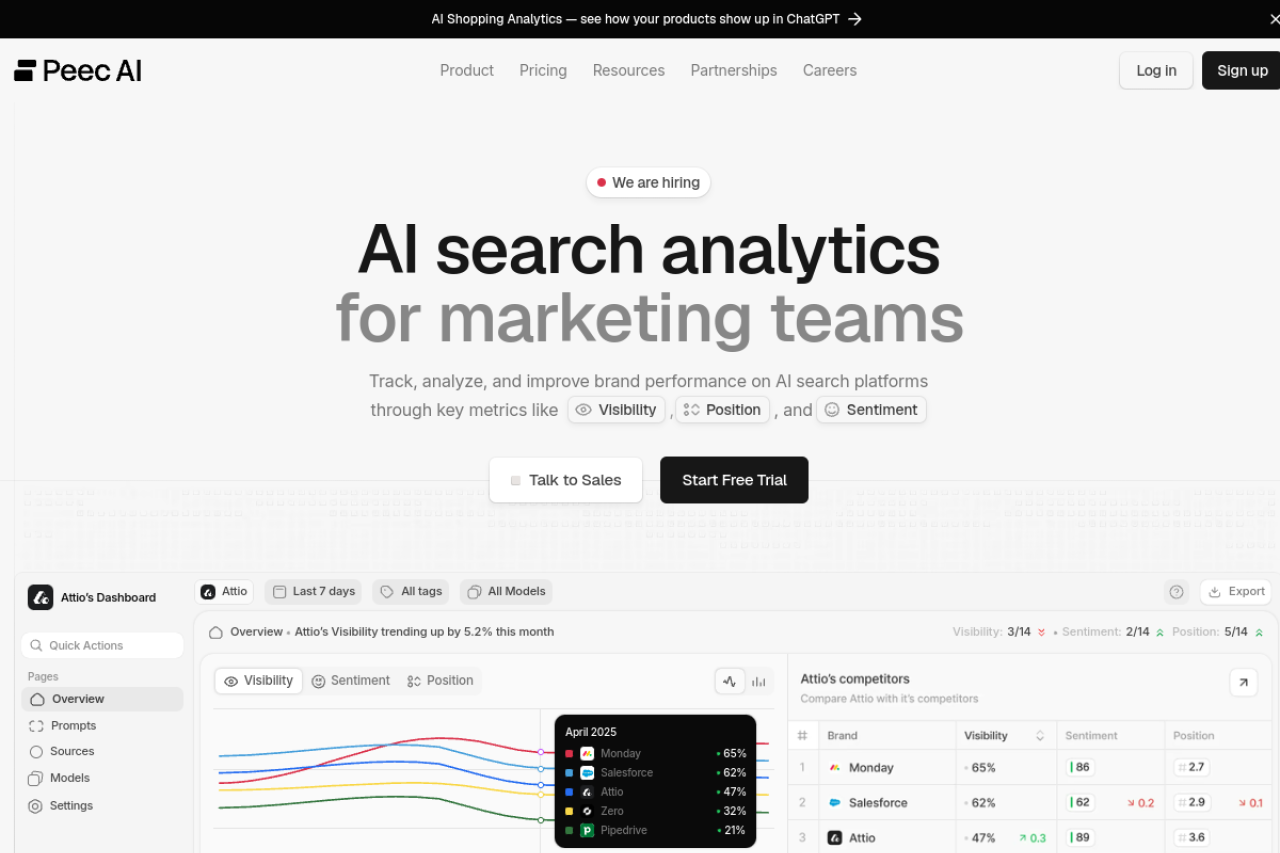
Peec AI is a prompt-level tracker. It monitors ChatGPT, Perplexity, Google AI Overviews, and Claude, with clean share-of-voice dashboards.
Its UI-scraping approach captures actual user-facing responses instead of API-layer estimates. That makes the monitoring data credible for teams that care about what buyers really see.
The gap is clear. Peec AI stops at diagnosis. It offers no content creation, no content recommendations, and no Google Search Console integration.
Best for mid-market B2B teams that need clean monitoring data without enterprise pricing. Honest limitation: knowing the gap is step one, and closing it still needs a separate tool.
Profound
Profound is enterprise-grade. It runs 15M+ daily prompts across up to 10 AI engines, and it excels at crawler analytics for GPTBot and ClaudeBot plus prompt-volume intelligence.
Its Agents feature writes AI-optimized content, but the entry point matters. Multi-engine coverage starts on the Growth plan at $399 per month, and the Starter plan covers ChatGPT only.
The gap includes no GSC integration and a steep learning curve. You need dedicated analysts to extract value.
Best for Fortune 500 marketing teams with a six-figure AEO budget and staff who live in the data every day.
Searchable
Searchable is a purpose-built AEO platform. It tracks brand mentions in ChatGPT, Perplexity, and Google AI Overviews, and its in-platform AI agent turns findings into specific content briefs and technical fixes.
GA4 and Search Console integrations tie AI visibility data to real traffic and revenue. That connection is rare among trackers and worth noting.
The gap sits in the details. Claude and Copilot tracking hide behind a Custom plan, and content execution still happens outside the tool.
Best for mid-market B2B and agency teams that want monitoring plus guided recommendations in one place.
Mangools
Mangools is a classic SEO suite. KWFinder, SERPWatcher, LinkMiner, and SiteProfiler cover keyword and rank work, with AI Search Watcher added on top.
AI Search Watcher monitors brand visibility across ChatGPT, Claude, Gemini, and other LLMs, with weekly or daily updates. The free AI Search Grader scores a snapshot across 8 models with no credit card.
The gap is scope. It monitors only, with no content creation, no citation-to-publish workflow, and no direct GSC integration inside the AI module.
Best for budget-conscious solo operators and small teams who want affordable classic SEO plus a lightweight AI visibility pulse. The cheapest AI visibility software guide covers value picks like this.
Clearscope
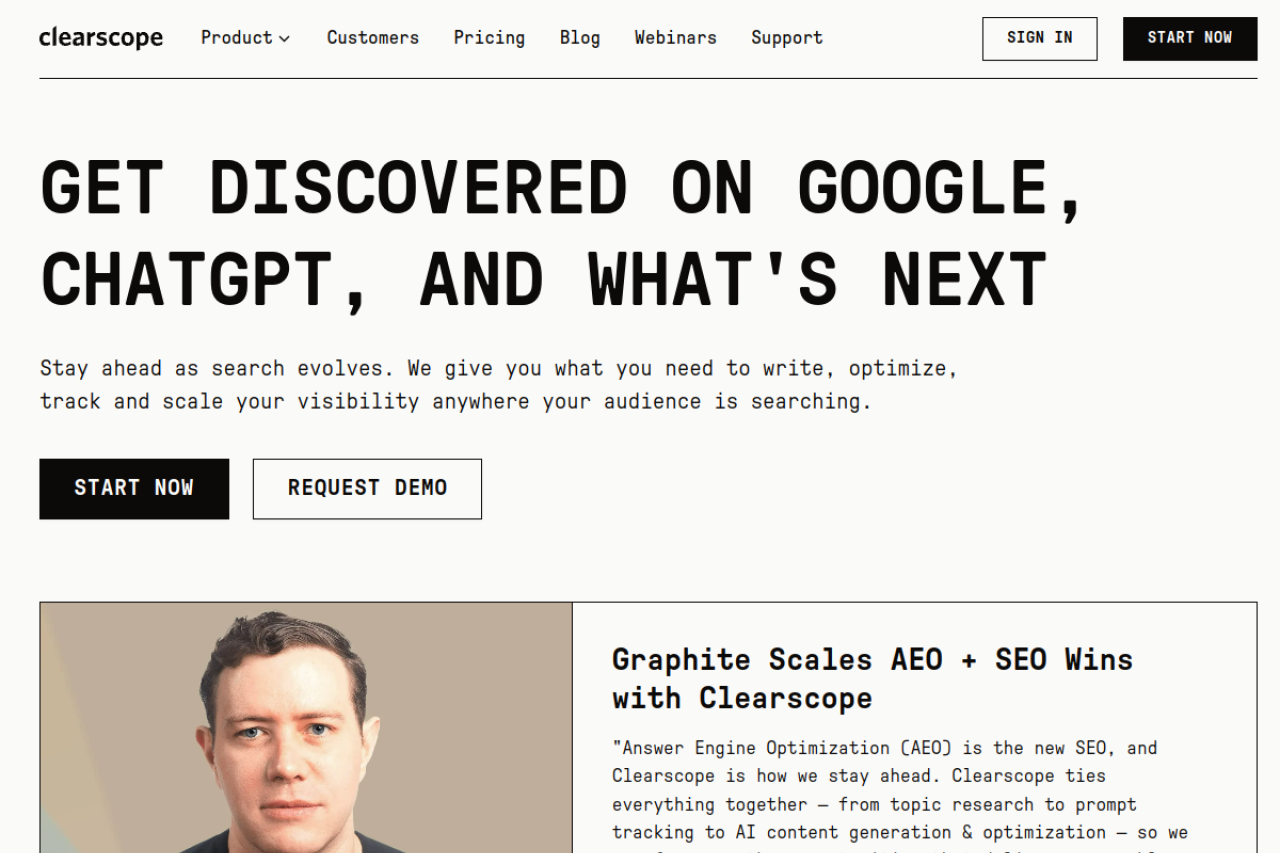
Clearscope is a content optimization platform. It grades draft content against top-ranking SERP pages using NLP term analysis, then scores keyword coverage and readability.
That helps writers know exactly what to add before publishing. It is a strong on-page assistant for classic Google rankings.
The gap is category. Clearscope was built for Google SEO, not AI citation tracking. It does not monitor ChatGPT, Claude, or Perplexity mentions, and it offers no prompt-level tracking or closed loop.
Best for content teams that already know what to write and need help polishing drafts for Google.
Six criteria that separate tracker tools from true optimization platforms
Use these six criteria as your buying checklist. They expose the gap between a tool that reports a problem and one that solves it.
| Criterion | What to demand | Why it matters |
|---|---|---|
| Multi-engine coverage | ChatGPT, Claude, Gemini, Perplexity at minimum | Buyers use different assistants, so single-engine data lies |
| Prompt-level tracking | The exact questions surfacing you vs. a rival | You cannot fix a gap you cannot name |
| Competitive benchmarking | Share of voice, not raw counts | Context shows who is actually winning the category |
| Citation source attribution | Which pages earn the mentions | You double down on what works |
| Content creation | Writing and publishing inside the platform | No handoff means no delay and no separate bill |
| Closed-loop measurement | Citations tied to rankings and revenue | Proof, not vanity metrics |
Most tools nail two or three of these. Very few nail all six. When a vendor covers only monitoring, treat it as step one and budget for the rest. A comparison of AI visibility metrics shows why measurement across AI and Google in one view beats scattered dashboards.
Which tool tier fits your team's actual situation
The right tier depends on one question. Do you have people who can act on the data, or do you need the action automated for you?
In-house SEO managers need daily tracking, GSC integration, and hard proof of citation gains to report upward. A tracker alone forces them to buy a second content tool and reconcile two reports.
Agency owners need white-label reporting and automated content production to scale across client accounts. Manual writing does not scale past a handful of clients, so automation protects margins.
Startup founders and solo operators need fast setup and automated workflows without a dedicated team. They cannot spend a week learning an enterprise interface, so a steep learning curve is a dealbreaker.
Non-technical local and ecommerce business owners need the full find-write-publish-measure loop automated in plain language. A gardening firm or a beauty clinic wants customers, not a keyword tutorial. A review of the best AI visibility service providers helps this group choose without an expensive agency.
Match the tier to your capacity, not to the longest feature list. A dashboard you cannot act on is money on fire.
AI citations plus Google rankings, pick your tool accordingly
Monitoring tools tell you the problem. Full-loop platforms solve it without adding headcount. That is the whole difference, and it decides your ROI.
Remember the core idea. AEO, GEO, and classic search engine optimization form one discipline now, so citation-earning content also ranks on Google. The difference between answer and generative engine optimization matters less than the fact that one content asset wins both.
Rankblocks closes the full loop on autopilot. It finds the buyer questions where you are invisible, writes and publishes the fix, and measures AI citations and Google rankings together. Among the leading AI visibility optimization tools, that end-to-end automation is the differentiator, and a breakdown of top AI visibility tools shows the move from tracking to earning citations.
Any business invisible in AI answers today loses consideration before a buyer opens a website. See exactly which AI answers your brand is missing with a free AI audit.
Frequently asked questions about leading AI visibility optimization tools
What is the difference between an AI visibility tracker and a full optimization platform?
A tracker only monitors, showing how often AI assistants mention your brand and where competitors beat you. A full optimization platform goes further, finding the gap, writing and publishing content to close it, then measuring the result. The tracker reports the problem, and the platform solves it in one loop.
Which AI visibility tools actually write and publish content to earn citations?
Rankblocks writes and publishes articles engineered for AI citations and Google rankings through its AI Content Writing Engine, with no manual briefing. Profound offers content generation through its Agents feature on higher plans. Peec AI, Mangools, and Clearscope do not publish citation-earning content, so they leave the fix to you.
How do leading AI visibility tools connect with Google Search Console and classic SEO workflows?
Rankblocks connects to Google Search Console in one click and surfaces clicks, impressions, CTR, and striking-distance keywords daily. Searchable ties AI data to GA4 and Search Console for revenue context. Peec AI, Profound, and Mangools lack direct GSC integration inside their AI modules, forcing extra reporting work.
What search engine optimization tips apply when choosing a tool for small teams or agencies?
Pick tools that automate content production and reporting so you scale without adding headcount. Demand multi-engine coverage, prompt-level tracking, and closed-loop measurement rather than a long feature list. For agencies, white-label reporting matters most, while solo operators should prioritize fast setup and plain-language proof it works.
Which AI visibility tools work best for non-technical local and ecommerce business owners?
Business owners who do not want to learn SEO need the full find-write-publish-measure loop automated in plain language. Rankblocks handles that on autopilot, finding gaps, publishing content, and showing visible proof. Pure trackers like Peec AI or Mangools require a second tool and technical effort those owners rarely have time for.