 Rankblocks
Cheapest AI Visibility Software for Growing Brands
Your buyers stopped scrolling ten blue links. They ask ChatGPT, Perplexity, and Google AI Overviews for recommendations, and the winners get named while everyone else stays invisible. That shift makes an ai search visibility tool a real line item, not a nice-to-have. AI traffic grew 796% from 2024 to 2025, with those visitors converting around 1.2 times higher than organic search. Gartner predicts traditional search engine volume will drop 25% by 2026 as AI answer engines replace standard questions.
The problem is not whether AI visibility matters. You already know it does. The problem is price-to-value, because tools range from $29 a month to over $3,000 and most of them just hand you a score.
This guide ranks the cheapest ai visibility software by real, public prices. Each pick includes honest use-case fit, so you find the right entry point without paying for enterprise features you will never touch.
What AI search visibility tools actually track
An ai visibility tool measures three things. Citation frequency counts how often AI answers link to your site. Brand mentions count how often a model names you. Share of voice compares your mentions against competitors across ChatGPT, Claude, Gemini, and Perplexity.
Classic rank trackers watch Google positions. AI visibility tools watch answer inclusion, which is a different game entirely. A page can sit at Google position one and never get cited by an LLM, because models pick sources by structure and authority signals, not by SERP order. Around 80% of LLM citations don't even rank in Google's top 100 for the original query.
That gap trips up most owners. Ranking first on Google feels like winning, yet ChatGPT can still recommend a competitor.
Monitoring-only versus monitor-and-execute
The category splits into two types. Monitoring-only tools alert you to gaps but do nothing to close them. Monitor-and-execute tools track visibility and then write content to earn more citations.
That split matters more than any feature list. Understanding GEO vs AEO helps you judge which side of that split your current tool covers. AI-sourced traffic surged 527% year-over-year between January and May 2025 alone, so the gap monitoring tools leave unfilled is growing fast. Prices run from $29 a month to $3,000 and up, so filtering by price and by tool type saves you from a subscription that never moves your numbers.
How to evaluate an affordable AI visibility tool
Cheap does not mean useful. Score each affordable ai visibility tool against five criteria before you spend a dollar.
- Engine coverage. Tools that watch only ChatGPT miss Gemini, Claude, and Perplexity, where your buyers also ask questions.
- Prompt volume. Budget tiers cap the number of prompts tracked, which limits how many buyer questions the tool can discover.
- What is gated. Claude, Gemini, and competitive benchmarking often hide behind higher tiers, so the sticker price rarely tells the whole story.
- Monitoring versus execution. A tool that alerts without fixing wastes your fee, because you still pay staff to write the content.
- Pricing transparency. Confirm public pricing first. Many vendors hide it behind a demo call, which usually signals enterprise pricing.
Weigh these together, not one at a time. A $29 plan that watches one engine and writes nothing can cost more than a full-loop tool once you add a writer's time. Understanding answer engine optimization versus generative approaches helps you judge what each tool really delivers.
The cheapest AI visibility software, compared
Here is how the main options compare, starting with Rankblocks.
1. Rankblocks, full-loop AI visibility from find to publish
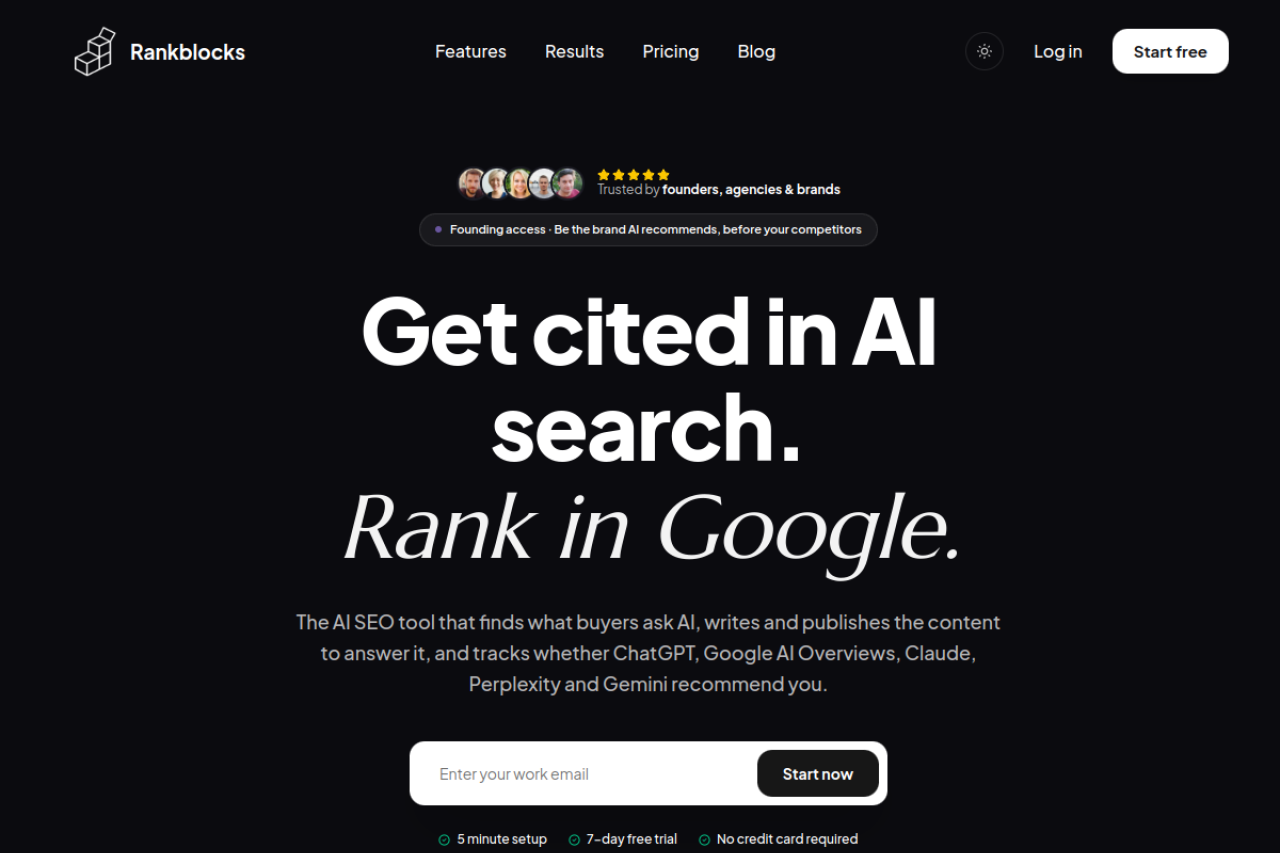
Rankblocks combines three products in one platform. Run a free AI audit to see exactly where your brand is invisible across AI engines before you pick any tool. The AI Visibility Tracker watches citations and mentions across ChatGPT, Claude, Gemini, and Perplexity. Content Gap Analysis finds the buyer questions where you are invisible. The AI Content Writing Engine writes and publishes articles built to earn citations.
Here is the genuine reason it leads this list. It is the only entry-level option that tracks citations and then writes and publishes content to earn more of them, on autopilot. Most cheap tools stop at the score. Rankblocks closes the find-write-publish-measure loop in one closed system.
That fit works for four groups. Local and ecommerce owners get customers finding them in AI answers without learning SEO. Solo operators get fast setup. In-house SEO managers get citation tracking plus content output. Agency owners get execution they can resell.
The honest trade-off
Rankblocks builds for automated content execution, not for analysts who want raw prompt-volume exports to slice in a spreadsheet. If your job is pure data analysis with no interest in publishing, a monitoring-only tool fits your workflow better.
The self-serve entry price gets you tracking, gap analysis, and published content at one tier. You pay once and get the full loop, not a dashboard that needs five more tools to act on it. That is the difference between a geo seo tool that reports and one that ranks you. Dig deeper in the AEO category to understand what separates monitoring from execution.
2. Otterly, the leanest monitoring entry point
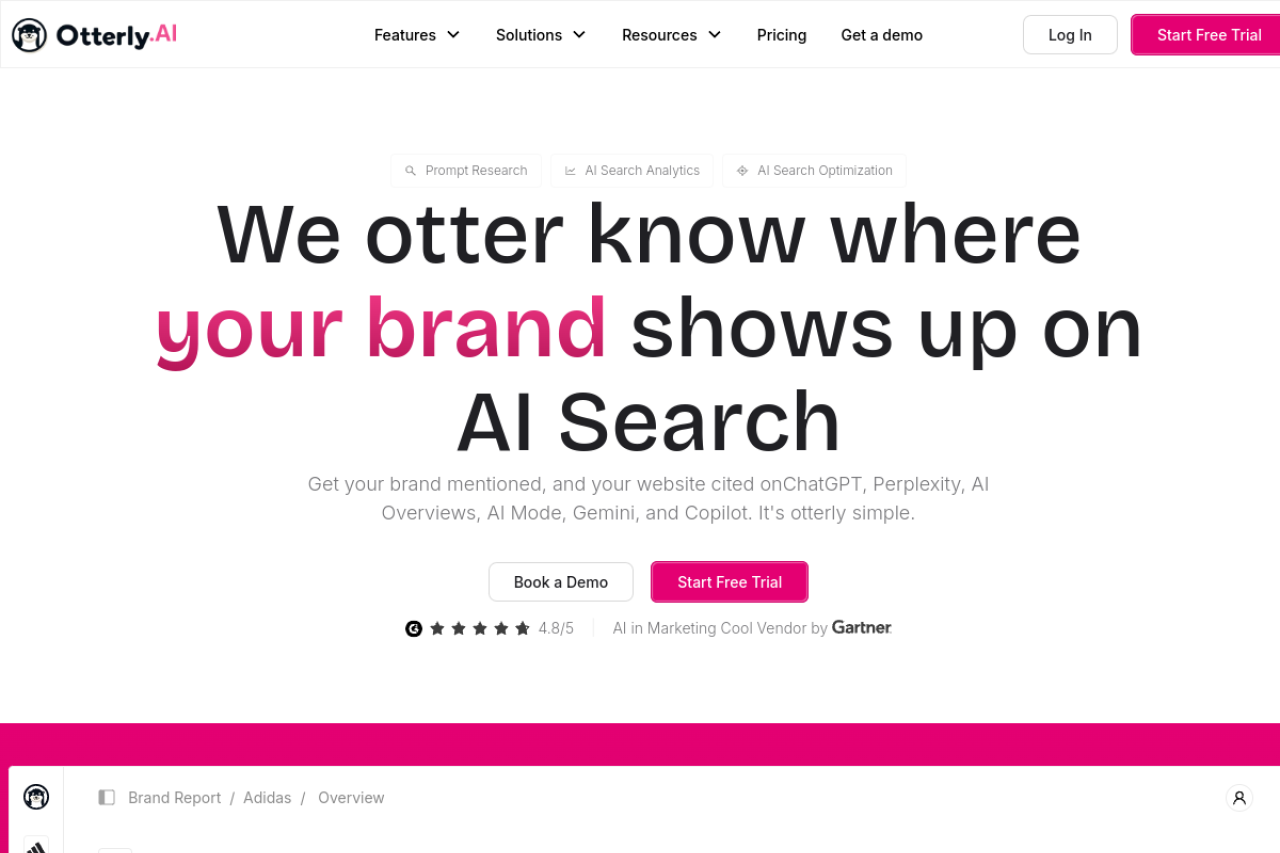
Otterly is a lightweight brand mention tracker starting at $29 a month. It watches ChatGPT, Perplexity, and Gemini, which makes it the cheapest paid entry point in this list.
It fits early-stage teams testing whether ai search visibility matters before committing bigger budget. If you want a low-risk first look, $29 buys you that look.
The honest con is real. Otterly is monitoring-only, with no content creation and no hallucination detection. Engine coverage stays limited, and the entry-tier prompt cap gives you a narrow view in competitive categories.
Best pairing? Run it alongside a separate content execution tool so you can act on its alerts. On its own, it tells you the score and leaves the fix to you.
3. Peec AI, mid-market analytics with clean data
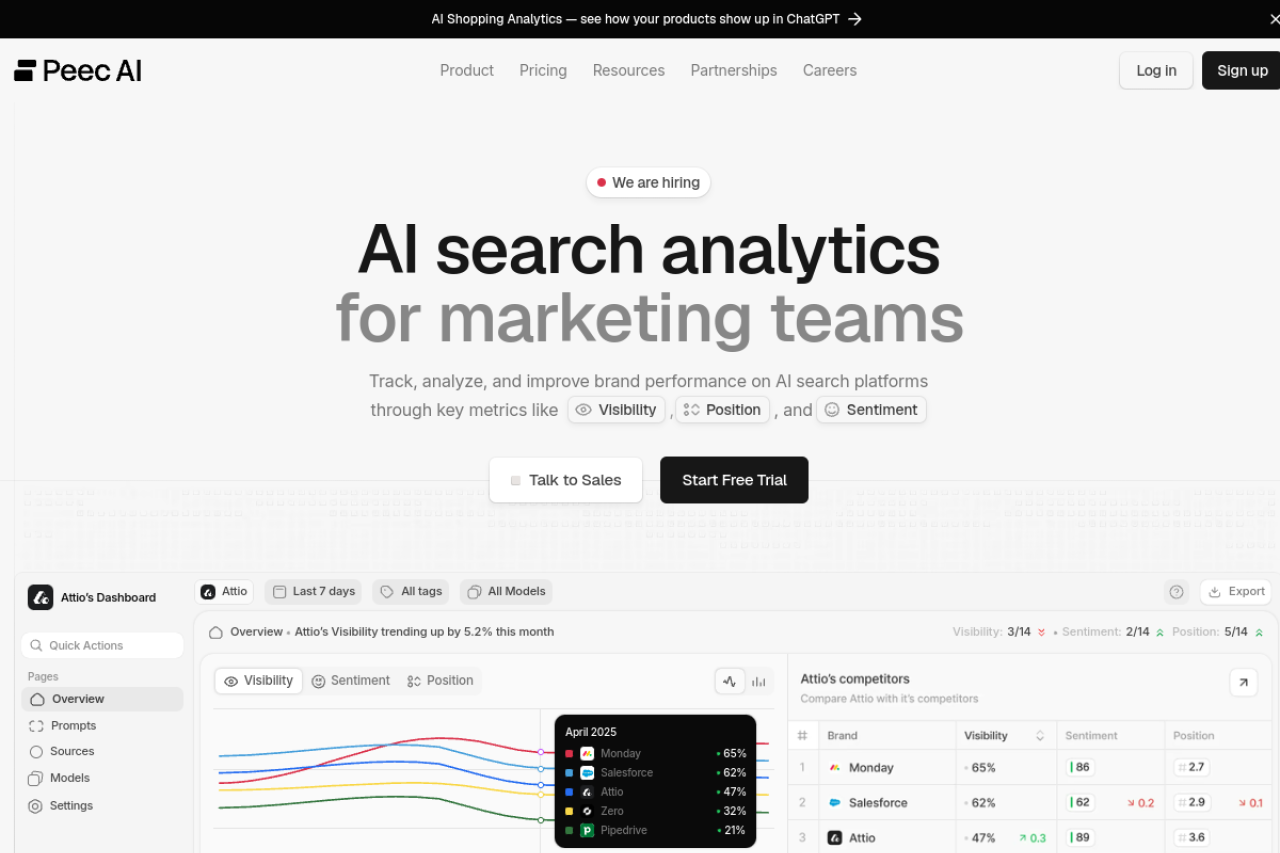
Peec AI is an analytics-first platform starting around $95 to $100 a month. It tracks citations across ChatGPT, Perplexity, and Google AI Overviews with clean, readable data.
It fits mid-market B2B teams that already have a content team in place to act on the numbers. If you employ writers and just need direction, Peec AI points them at the right topics.
The honest con matches the pattern. Peec AI is monitoring-only, with no built-in content writing and no AEO execution layer. Claude, Gemini, and extra engines cost more per model on top of the base plan, so the $95 figure grows fast.
One genuine plus stands out. Peec AI includes unlimited seats on all plans, which growing teams appreciate when competitors charge per user. That alone can justify the price for a larger content team.
4. Profound, enterprise power at an enterprise price
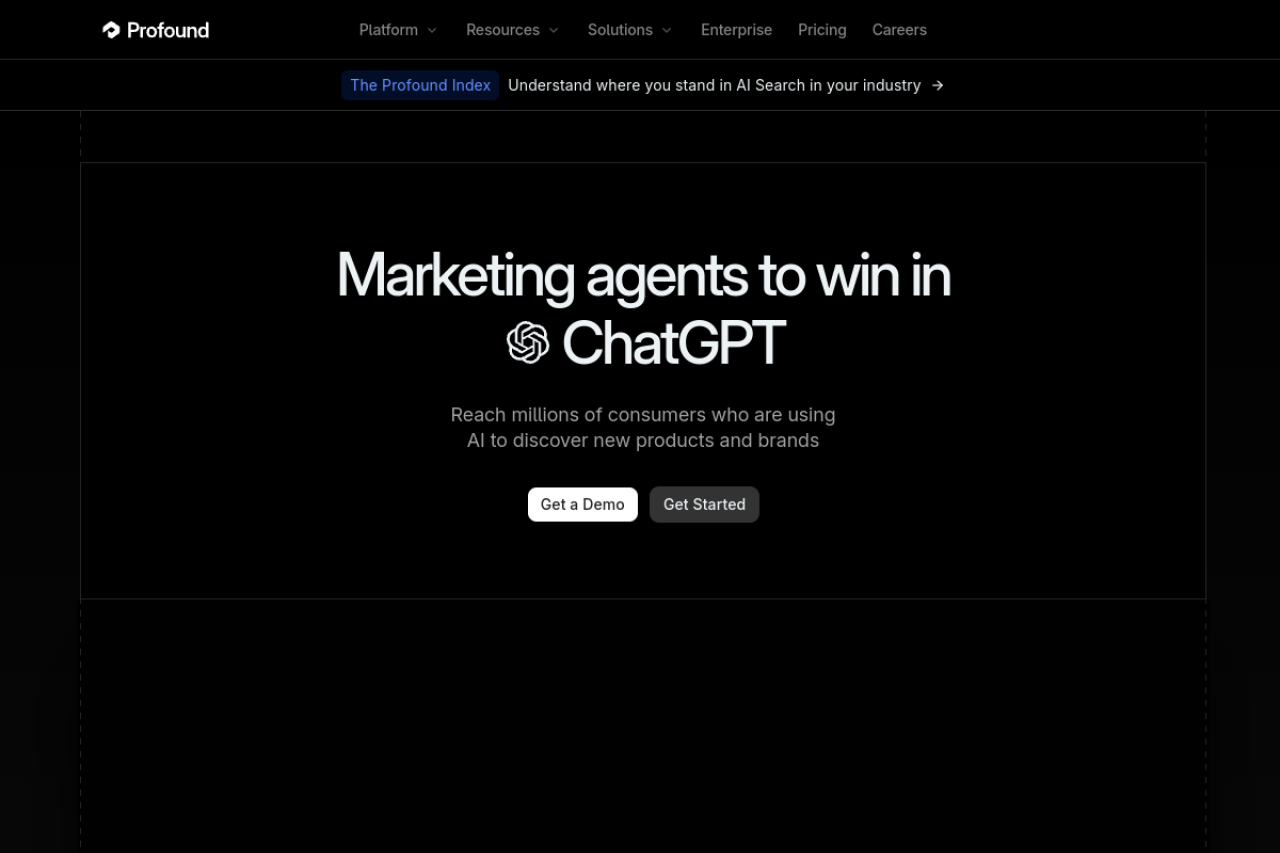
Profound is the enterprise benchmark. It tracks up to 10 AI engines with deep prompt-volume intelligence, which is more coverage than any budget tool offers.
Pricing tells the story. The starter at $99 a month covers ChatGPT only. Multi-engine coverage requires $399 a month or above, which pushes it out of budget range fast.
It fits Fortune 500 teams and agencies with a dedicated analyst to work the data daily. If you have that analyst and that budget, Profound delivers depth.
The honest con is scope. Complexity and price exclude most SMBs and lean teams without execution resources. And the core gap repeats at every tier below enterprise content creation. You get data but no fix, so you still hire someone to write.
5. Mangools AI search grader, free baseline checker
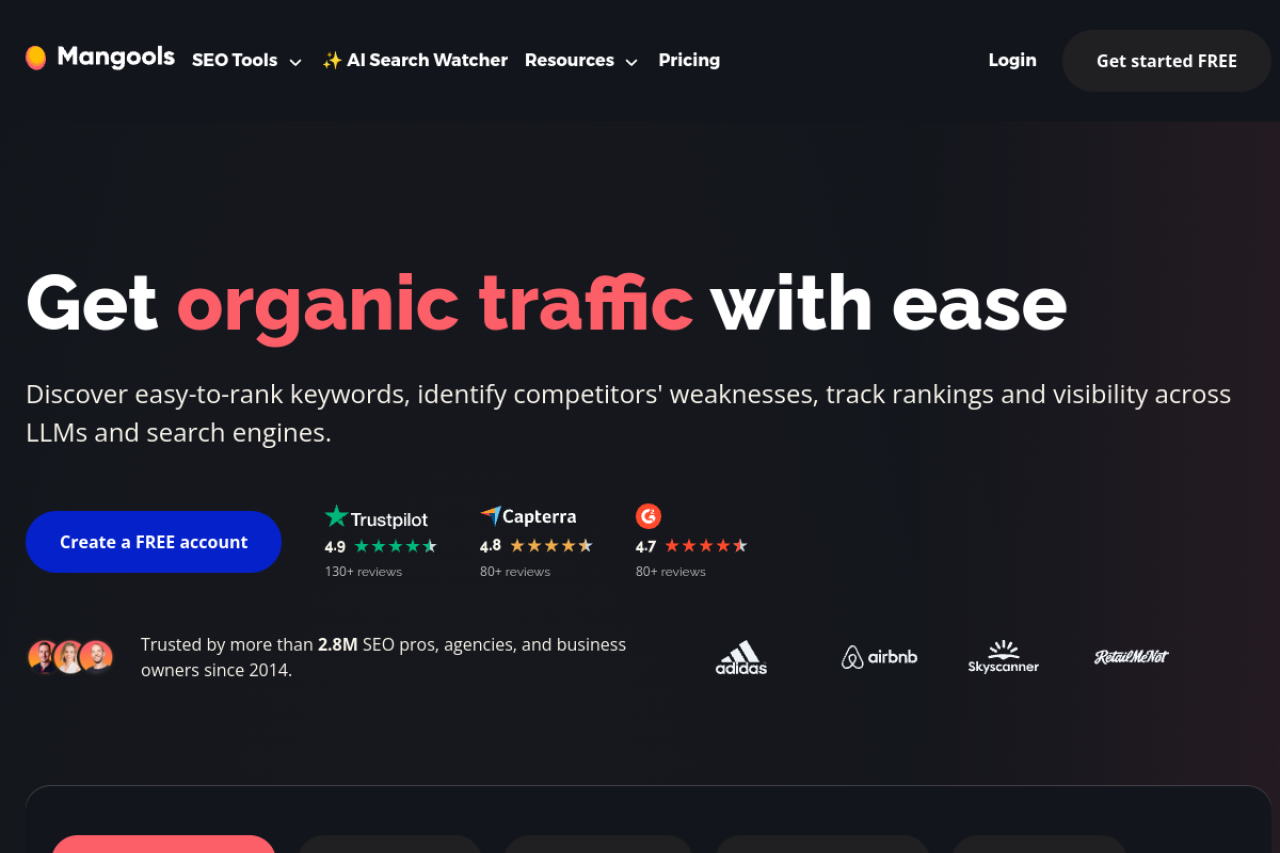
Mangools offers a free AI search grader for a quick baseline. It focuses on Google AI Overviews and gives you a one-time visibility read at no cost.
It fits budget-constrained owners who want a health check before choosing a paid ai brand visibility tools stack. Free is free, and a baseline beats guessing.
The honest limitation is clear. It covers fewer engines and prompts than any paid tool, and it is not built for ongoing monitoring. No competitive benchmarking, no trend tracking, no content output.
Best use? Run it as a sanity check before you commit to a paid platform. Treat it as a thermometer, not a treatment.
At a glance, price, engines, and what each tool fixes
Scan this table to shortlist fast. The "fixes gap" column shows which tools need a separate execution stack and which write content for you.
| Tool | Starting price | Engines at entry tier | Fixes the gap | Best for |
|---|---|---|---|---|
| Rankblocks | Self-serve entry | ChatGPT, Claude, Gemini, Perplexity | Yes, writes and publishes | Owners and teams wanting autopilot |
| Otterly | $29/mo | ChatGPT, Perplexity, Gemini | No, monitoring-only | Early-stage testing |
| Peec AI | ~$95/mo | ChatGPT, Perplexity, Google AIO | No, monitoring-only | Mid-market with a content team |
| Profound | $99/mo | ChatGPT only | No, monitoring-only | Enterprise with an analyst |
| Mangools grader | Free | Google AI Overviews | No, one-time check | Baseline before buying |
Note the gap between the $29 entry point and the first multi-engine execute option. Several tools offer trials for hands-on testing, so use them before you pay. The AEO fundamentals content helps you interpret each tool's numbers.
Pick the tool that matches what you need done
Start with the job, not the sticker price. Match the tool to the outcome you actually want.
If you only need a baseline, start with Mangools or Otterly before spending $100 a month. A cheap read tells you whether the problem is urgent. If your team will do its own content execution, Peec AI or Profound fit that analyst-led workflow.
If you want tracking, content writing, and publishing in one automated loop, Rankblocks closes that gap. You skip hiring a content team and you skip paying for five separate tools. That is where a full-loop platform beats a raw data feed for content strategy.
Here is the decision frame most owners miss. A cheap dashboard that demands manual execution is not actually cheap once you add staff time. The AI search landscape rewards published content, not saved reports.
Rankblocks stands apart because it does the whole job. It finds the buyer questions where you are invisible, writes content built to earn citations, publishes it, and measures results in one closed loop. Search is one overlapping discipline now, so the same content wins AI answers and Google rankings together.
For local owners, solo operators, in-house SEOs, and agency heads, the cheapest ai visibility software is the one that removes work, not the one with the lowest monthly fee. Want to see citations tracked, content written, and rankings measured on autopilot from day one? Start your audit and watch the loop close.
Frequently asked questions about cheapest AI visibility software
What is the cheapest AI visibility tool that tracks multiple AI engines?
Otterly is the cheapest paid multi-engine option at $29 a month, covering ChatGPT, Perplexity, and Gemini. It stays monitoring-only, so you get tracking without content output. Rankblocks costs more at entry but adds writing and publishing to the same tracking, which changes the value math.
Do budget AI visibility tools also help improve my AI citations?
Most do not. Otterly, Peec AI, and Profound monitor citations but never write content to earn more, so you still pay staff to close the gap. Rankblocks is the exception, since its AI Content Writing Engine publishes articles built to earn citations after its tracker finds the gap.
How does AI visibility software pricing compare to traditional SEO tools?
AI visibility software already prices higher than most SMB SEO tools, with a median cheapest plan near $79 a month. Traditional rank trackers often start lower, yet they watch Google positions only. AI tools track answer inclusion across LLMs, a newer job that carries a premium.
Can a low-cost AI visibility tool improve both Google rankings and AI mentions?
Yes, when the tool writes content, not just reports. Content engineered to earn AI citations also ranks on Google, because AEO, GEO, and classic SEO reinforce each other. AirOps found that brands earning both citations and mentions show 40% higher likelihood of reappearing</a> across AI answers. A tool like Rankblocks that publishes structured content lifts both surfaces from the same work.
What do entry-level AI visibility plans typically leave out?
Entry tiers usually cap prompt volume, limit engine coverage, and gate Claude, Gemini, and competitive benchmarking behind higher plans. Profound's $99 starter covers ChatGPT only, and Peec AI charges extra per added engine. Confirm what is included before comparing sticker prices.
Is there a free AI visibility tool worth using before buying a paid plan?
The Mangools AI search grader gives a free one-time baseline focused on Google AI Overviews. It works as a sanity check but lacks trend tracking, multi-engine coverage, and content output. Use it to decide urgency, then move to a paid tool that fixes what it finds, as the AEO guide explains.