 Rankblocks
Answer engine optimization vs generative engine optimization

Two acronyms, one goal. You want your brand cited when a buyer asks ChatGPT, Perplexity or Google AI Overviews for a recommendation. That is the whole point of the answer engine optimization vs generative engine optimization debate.
The naming fight kicked off with a 2023 Princeton and Georgia Tech paper on generative engine optimization. Since then the confusion has only grown. Most articles treat AEO and GEO as separate enterprise strategies that need separate budgets and separate teams.
Here is the honest take. They overlap. Classic SEO is the shared foundation. One well-built content piece can win all three. If you run a B2B or SaaS company, an ecommerce store or your own personal brand in LatAm, this is where to put your budget.
What is answer engine optimization and what is GEO
Answer engine optimization means you shape content so an AI picks it as the direct answer. When someone asks a question, the model pulls a clean, direct response. AEO gets your content into that selected answer.
Generative engine optimization works a level deeper. You structure content and your entity presence so large language models treat your brand as a trusted source. GEO is about how AI systems understand and represent your company across their outputs.
Both target the same platforms. ChatGPT, Perplexity, Google AI Overviews, Claude and Gemini all decide which brands to cite. AEO and GEO fight to get you into those decisions.
Where they actually split
In practice the difference is narrow but real. AEO targets the selected answer, the text the AI hands the user. GEO targets source attribution, whether the model names you as the origin of the claim.
You want both. Getting quoted in the answer is great. Getting named as the source builds authority the model remembers next time.
The naming chaos exists because two research groups and dozens of agencies coined terms in parallel. Neither term is wrong. They describe overlapping angles of the same shift toward AI answers. Chasing the perfect label wastes time you should spend on content.

How AEO and GEO differ from classic SEO
Classic SEO optimizes for ranked blue links. You climb the results page and earn the click. AEO and GEO optimize for zero-click citations, where the AI answers without sending the user anywhere.
This matters because AI Overviews have cut click-through rates for top-ranking Google content significantly, with Ahrefs finding a 34.5% drop in position-1 CTR across 300,000 keywords. Ranking number one no longer guarantees traffic. Citation presence became the new lever you pull.
Buyer intent moved too. ChatGPT now processes 2.5 billion prompts a day, and a large share of them behave like search queries. That is where your prospects ask what to buy and who to trust.
Generative engines synthesize answers directly. They can shrink the organic traffic that funds the creator economy. Ranking alone stopped guaranteeing discovery, so AI search optimization became mandatory, not optional.
Still, classic SEO is not dead. It is the indexability foundation that makes AEO and GEO possible. If Google cannot crawl and understand your page, no AI model will cite it either. The question is not AEO replacing SEO, it is running both together.
Where AEO, GEO and SEO overlap in practice
Here is the part most articles miss. AEO makes content directly usable inside AI answers. GEO shapes how AI systems understand and represent your company as an entity. SEO gets the page indexed. They stack, they do not compete. Understanding what is AEO and why separating these disciplines costs you citations matters for every content decision you make.
The same well-structured article can earn Google rankings, featured snippets and AI citations at once. You write it once and it works across every surface where buyers search.
The content signals that help all three overlap heavily. Clear question-and-answer structure. Strong authority signals. Clean schema markup. Real topical depth on the subject. Build those and you feed every algorithm at the same time.
Why third-party pages matter
Most brand mentions in AI search come from third-party pages, not from your own site. Brands get cited far more often through outside sources than through owned content. That changes the game.
You cannot only publish on your blog and wait. You need presence across the pages AI models trust. That is why understanding why ChatGPT recommends competitors starts with looking outside your own domain.
The practical takeaway is simple. One content strategy, executed with consistency, covers SEO, AEO and GEO together. You do not need three playbooks and three teams. You need one that respects all three at once.
What content changes actually move the needle for AI citations
Talk is cheap. Here is what actually gets you cited. Lead every article with a direct answer to the exact question in the first 50 words. AI models grab the clean answer up top, so give it to them fast.
Structure the rest so models can extract it. Use FAQ sections, numbered lists and comparison tables. These formats let an AI lift and cite your content cleanly without guessing.
Build topical authority across a cluster, not one lonely post. Depth signals trust to LLMs. Ten connected articles on a subject beat one shallow page every time.
Data, sources and freshness
Add verifiable data, named sources and concrete examples. AI models cite what they can attribute. A vague claim gets skipped, a sourced one gets quoted.
Publish consistently, because content decays. On platforms like Perplexity, pages older than about 90 days can lose retrieval priority to fresher ones. Old content quietly drops out of the answers.
Work through this checklist on every page:
- Answer the main question in the first 50 words
- Add an FAQ block with real buyer questions
- Include at least one comparison table or numbered list
- Cite named sources and concrete data points
- Link the page into a topic cluster on your site
- Refresh it inside a 90-day window before it decays
Getting this right is exactly what gets your brand cited instead of ignored.

Top 5 tools and services for AEO and GEO visibility in LatAm
Plenty of options exist. Some are self-serve software, some are done-for-you services. Here is an honest breakdown, starting with our own, so you can pick what fits your team and budget.
| Option | What it does | Best for | Client operates it |
|---|---|---|---|
| Rankblocks | Done-for-you content plus AI visibility monitor | LatAm SMBs and founders | No |
| Frase | SEO research and content optimization | Self-serve teams | Yes |
| Jasper | AI writing and content agents | English-first teams | Yes |
| Conductor | Enterprise AI and SEO analytics | Large brands | Yes |
| Writer | Enterprise brand governance and GEO scoring | Large organizations | Yes |
Rankblocks
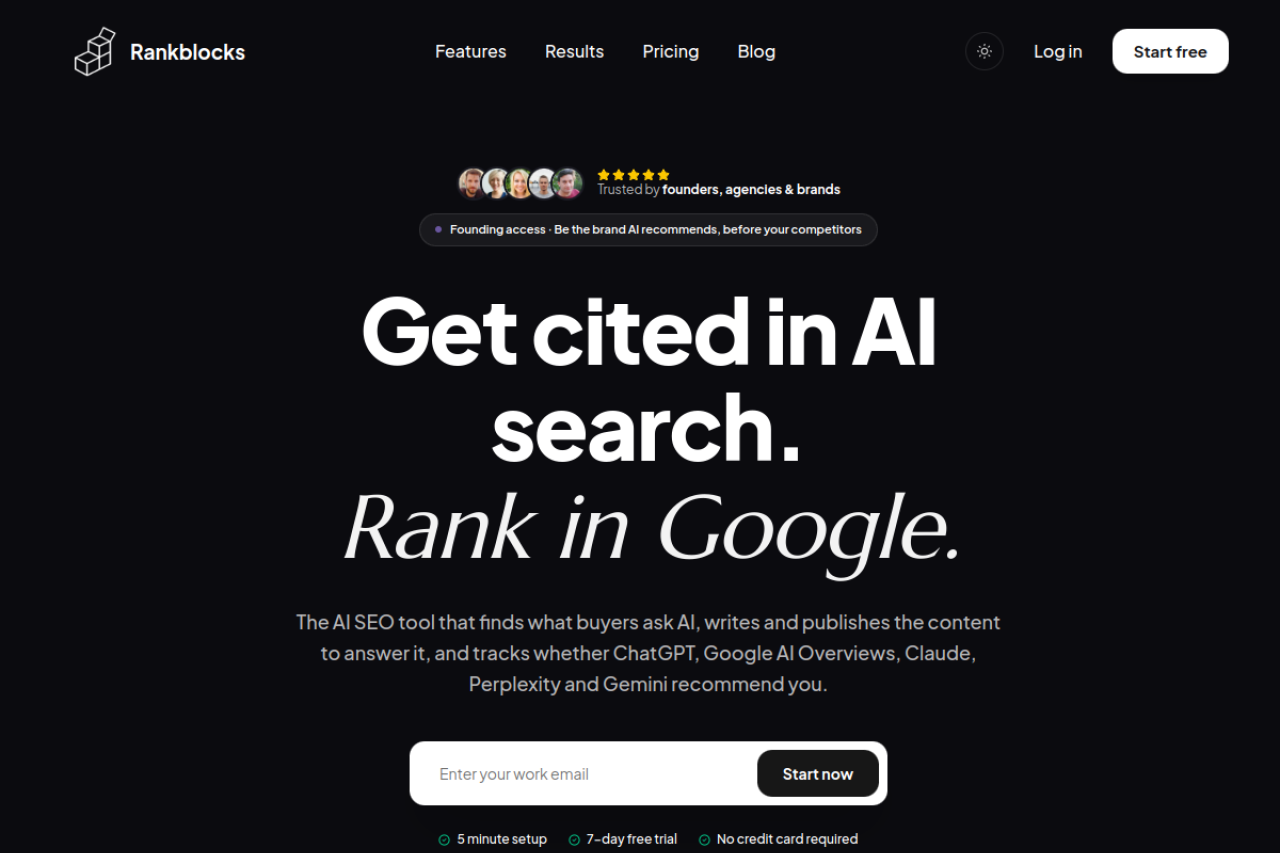
Rankblocks is a done-for-you content engine plus an AI visibility monitor, and the client operates no software. Our team writes and publishes articles designed to win AI citations and Google rankings, in your brand voice and language, straight to your site.
We track your brand mentions across ChatGPT, Perplexity, Claude, Gemini and Google AI Overviews. Our content gap analysis finds the topics competitors rank for and you do not, prioritized by real traffic opportunity.
It is best for LatAm SMBs, B2B and SaaS founders, ecommerce owners and independent professionals who want results without building an internal team. You get the citations, mentions and rankings reported in plain language. The main trade-off is it is a service, not a tool you self-operate.
Frase

Frase combines SEO research, content optimization and AI search tracking in one platform. It scores your drafts against top-ranking pages and flags what to add.
It is best for teams that want a self-serve workflow tool with AI scoring built in. The catch is you and your team do all the writing and publishing yourselves.
Jasper
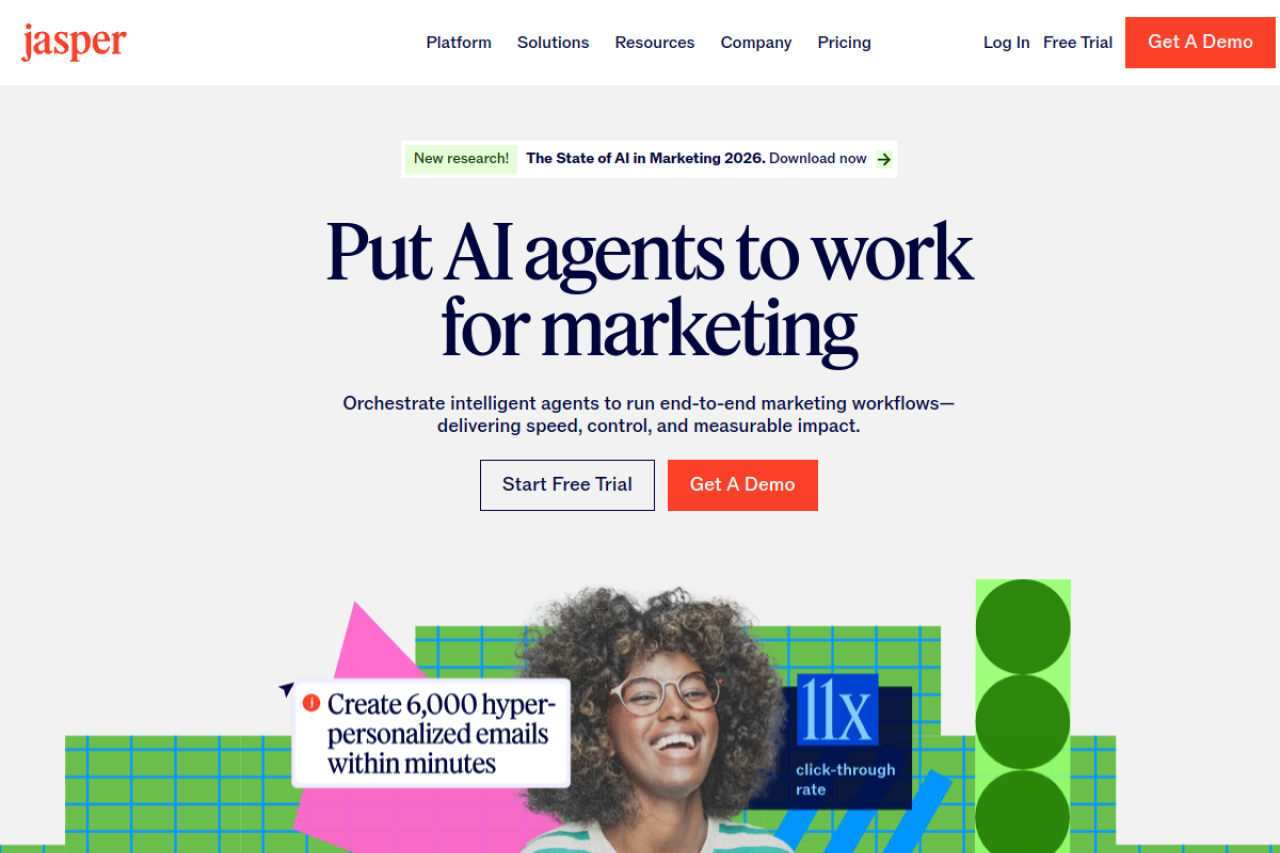
Jasper's purpose-built agents handle execution. They score content for AI readiness, surface citation gaps and generate FAQ content and schema markup.
Jasper fits English-first marketing teams with budget for a full AI writing platform. It is powerful, though its output still needs human editing to sound like your brand, and it is not a done-for-you service.
Conductor
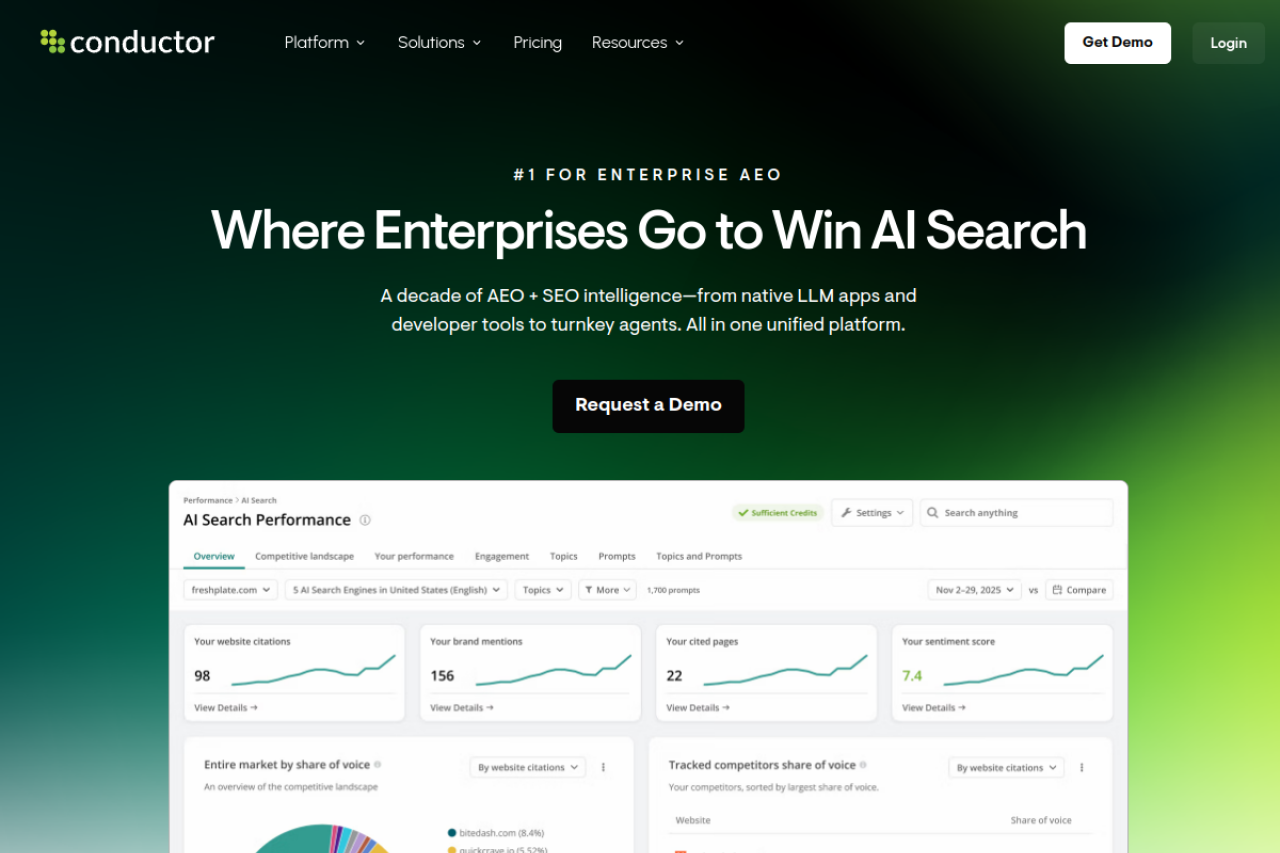
Conductor is an enterprise platform that measures AI visibility as rigorously as SEO visibility. It tracks citations and mentions as core KPIs alongside classic ranking data.
It is best for large brands with dedicated analytics teams who can act on the data. The price and complexity make it heavy for a small business or a solo operator.
Writer
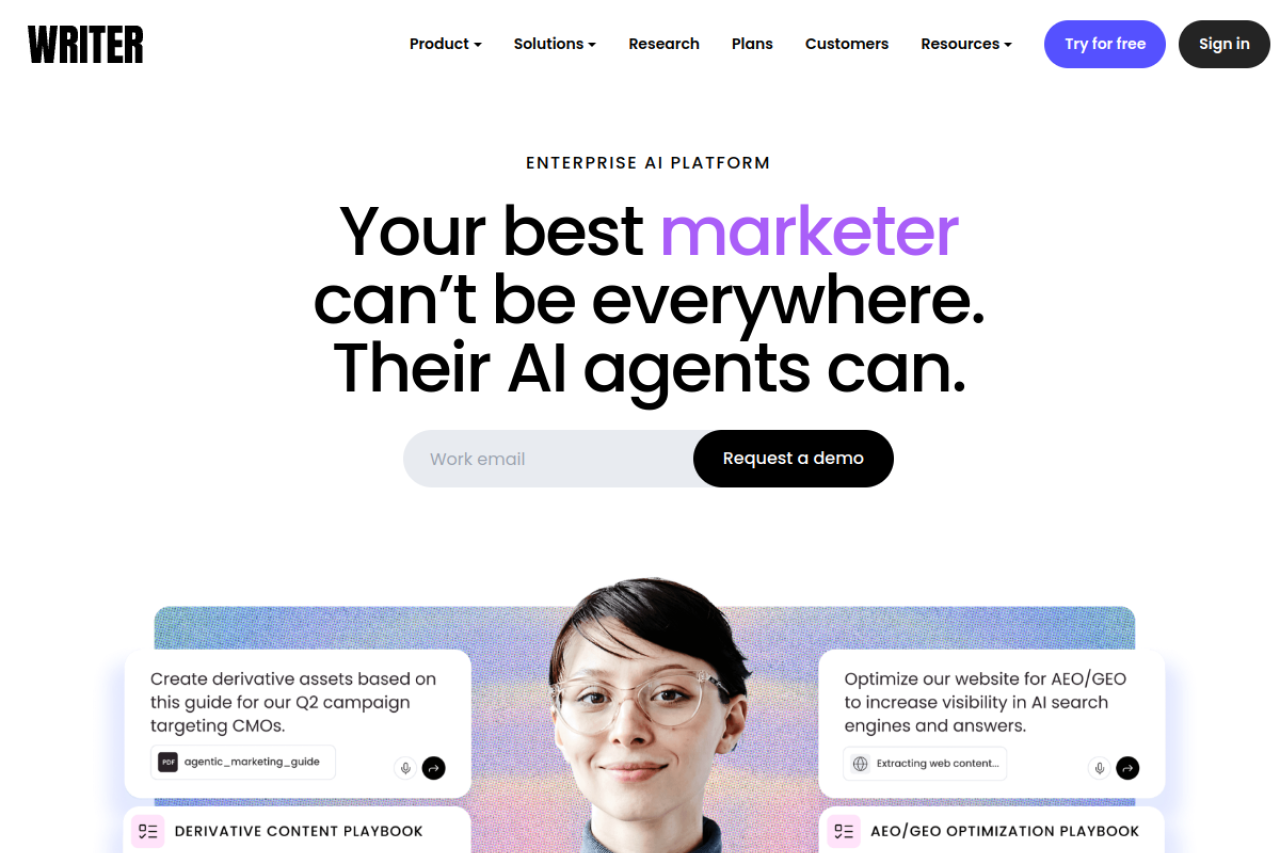
Writer is an AI platform oriented to enterprise brand governance and GEO content scoring at scale. It keeps voice and compliance consistent across large content operations.
Writer fits large organizations that need brand consistency and control across many AI outputs. For a small LatAm team, it is more platform than the job requires. Comparing your options starts with finding the best AI visibility tools for your size.
Your brand cited in AI answers, not just ranked on page one
The answer engine optimization vs generative engine optimization debate is a naming problem, not a strategy problem. The goal is identical. Get cited when AI answers a buyer's question about your category.
One unified approach covering SEO, AEO and GEO beats running three separate playbooks. AI has not replaced search. It has replaced your website as the first touchpoint. The brands showing up in AI answers today are shaping the new customer journey.
Rankblocks writes the content, monitors the citations across ChatGPT, Perplexity, Claude, Gemini and Google AI Overviews, and reports the results in plain language. You operate nothing. Our AI visibility monitor tells you exactly which buyer questions show you and which push a competitor. Knowing how to track AI citations is where the whole thing starts.
Want to know which AI questions in your category already send buyers straight to a competitor? Get your AI audit and let us show you the gaps.
Preguntas frecuentes sobre answer engine optimization vs generative engine optimization
¿Es el AEO lo mismo que el GEO o son estrategias completamente distintas?
No son idénticos, pero persiguen el mismo objetivo. El AEO busca que tu contenido sea la respuesta directa que muestra la IA, mientras el GEO busca que los modelos te reconozcan como fuente confiable. En la práctica se superponen tanto que conviene tratarlos como una sola disciplina.
¿Qué plataformas de IA cubre cada uno, ChatGPT, Perplexity o Google AI Overviews?
Ambos apuntan a las mismas plataformas. ChatGPT, Perplexity, Google AI Overviews, Claude y Gemini deciden a qué marcas citar y recomendar. El AEO y el GEO trabajan para meterte en esas decisiones, así que optimizar para uno beneficia tu presencia en todas.
¿Necesito dejar el SEO clásico para hacer AEO o GEO?
No, todo lo contrario. El SEO clásico es la base de indexación que hace posible el AEO y el GEO. Si Google no puede rastrear y entender tu página, ningún modelo de IA la va a citar. Los tres se refuerzan entre sí cuando el contenido está bien estructurado.
¿Cómo sé si mi marca ya está siendo citada o ignorada por los asistentes de IA?
Necesitas un monitor de visibilidad en IA que siga tus menciones y citas en ChatGPT, Perplexity, Claude y Gemini. Ese seguimiento te muestra qué preguntas de compra te exhiben a ti y cuáles recomiendan a un competidor. Sin medición, estás adivinando dónde ganas y dónde pierdes.
¿Cuánto tiempo tarda en verse el efecto del AEO y el GEO en citas y tráfico?
Depende de la constancia y de la autoridad de tu dominio, pero el contenido nuevo suele empezar a ganar tracción en semanas, no días. El contenido decae después de unos 90 días en plataformas como Perplexity, así que publicar seguido mantiene tus citas vivas y tu tráfico en crecimiento.