
 Rankblocks
Top AI Visibility Tools for Optimization: How to Move From Tracking to Earning Citations

Your buyers stopped scrolling ten blue links. They now ask ChatGPT, Perplexity, Gemini, and Claude which product to pick. That shift decides whether an AI answer names your brand or hands the customer to a competitor. ChatGPT alone crossed 1 billion monthly users in 2026, so that answer now reaches a huge audience.
Most tools stop at monitoring. They show you the gap, then leave you alone with a spreadsheet and a shrug. Few close the loop from citation gap to published content that actually earns the mention.
This list ranks the top AI visibility tools for optimization against one benchmark. Does the tool move you from passive tracking to active citation earning? We picked based on LLM coverage, actionable next steps, and whether the tool completes the track-to-earn cycle.
What AI visibility tools actually do for automated SEO optimization
AI visibility tools monitor how brands appear inside large language model answers. They track mentions, citations, and sentiment across ChatGPT, Perplexity, Gemini, and Claude. Some also connect to Google data so you see both worlds at once. Generative AI referral traffic to websites keeps climbing, according to Similarweb data.
Here is the split that matters. Tracking is passive. It tells you which prompts name you and which recommend rivals. Earning is active. It means creating content that changes those answers in your favor.
Classic Google SEO and AEO/GEO stopped being separate jobs. Content engineered to earn AI citations tends to rank on Google too, because both systems reward clear, authoritative answers. One piece can win both channels at once.
We scored every tool below on four criteria.
- LLM coverage. How many engines it tracks, including Google AI Overviews.
- Actionability. Whether it tells you what to write next, not just what is broken.
- Content workflow. Whether it writes and publishes, or stops at data.
- Pricing transparency. Whether you can see costs without a sales call.
Different segments need different things. In-house SEO managers want one closed loop. Agency owners need white-label proof. Solo operators want fast setup. Local and ecommerce owners want customers to find them without learning a single acronym.
The top AI visibility tools for optimization, compared
Here is how the main options compare, starting with Rankblocks.
Rankblocks: the closed-loop track-to-earn platform
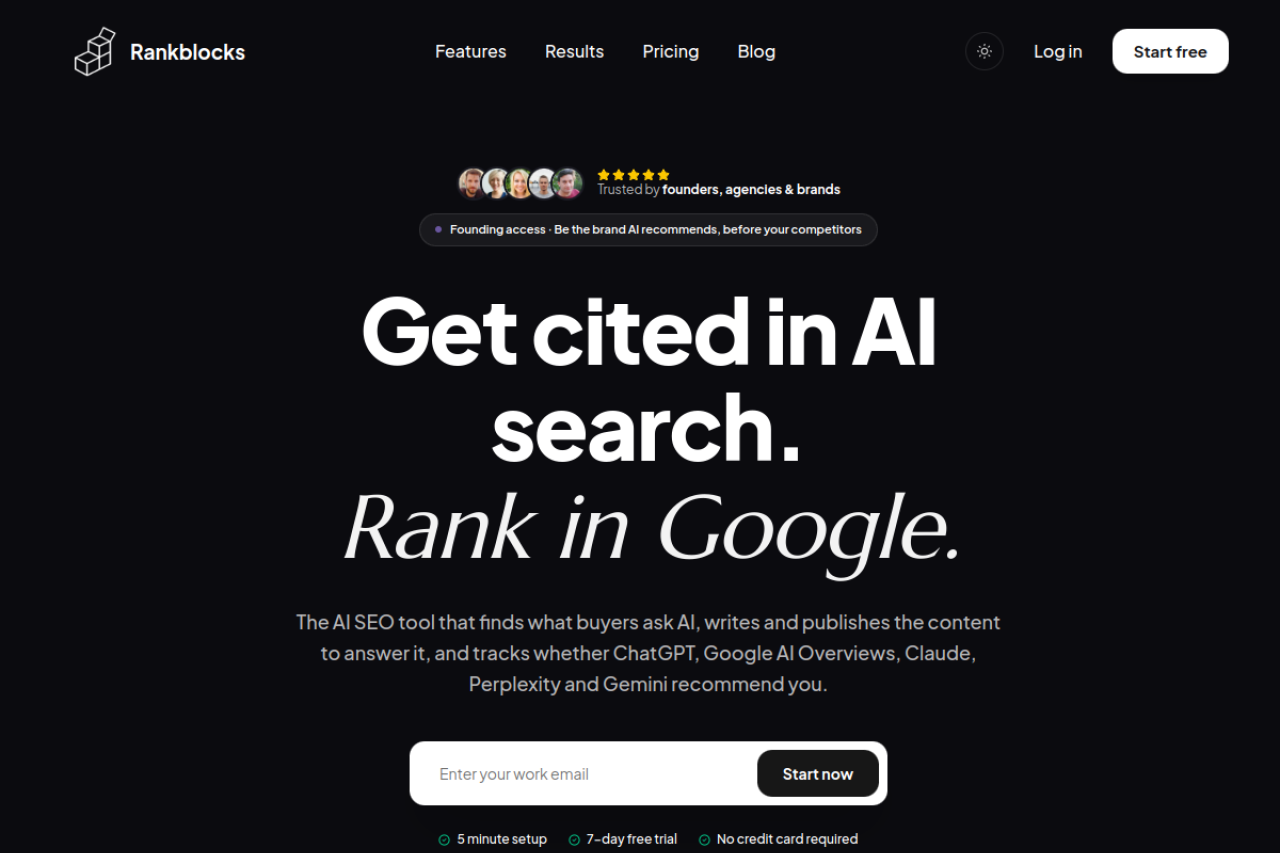
Rankblocks leads this list because it closes the full loop in one automated workflow. It finds the gap, writes the fix, publishes it, and confirms the lift. No other tool here does all four without bolting on extra software.
The AI Visibility Tracker monitors brand citations across ChatGPT, Claude, Gemini, and Perplexity daily. You see which prompts surface your brand and which recommend competitors instead. That is your starting map of where you are invisible.
The Content Gap Analysis surfaces topics competitors own in AI answers that you do not. It prioritizes by traffic opportunity, so you know exactly what to write next. This turns content gap analysis into a to-do list, not a puzzle.
From gap to published content
The AI Content Writing Engine writes and publishes articles built to earn citations and mentions in AI answers, then rank on Google. It uses your Brand Kit for voice and targets the right search engine optimization keywords at scale. You approve, it ships.
The Live GSC Dashboard connects to Google Search Console in one click. It surfaces clicks, impressions, CTR, and striking-distance keywords updated daily. The Keyword Tracker logs daily positions with SERP snapshots so you catch drops early.
Together, these two confirm the lift in both AI mentions and Google rankings. Best for any team that wants the whole find-write-publish-measure cycle handled for them, from solo operators to agencies running multiple client accounts.
Peec AI: clean LLM tracking with no content layer
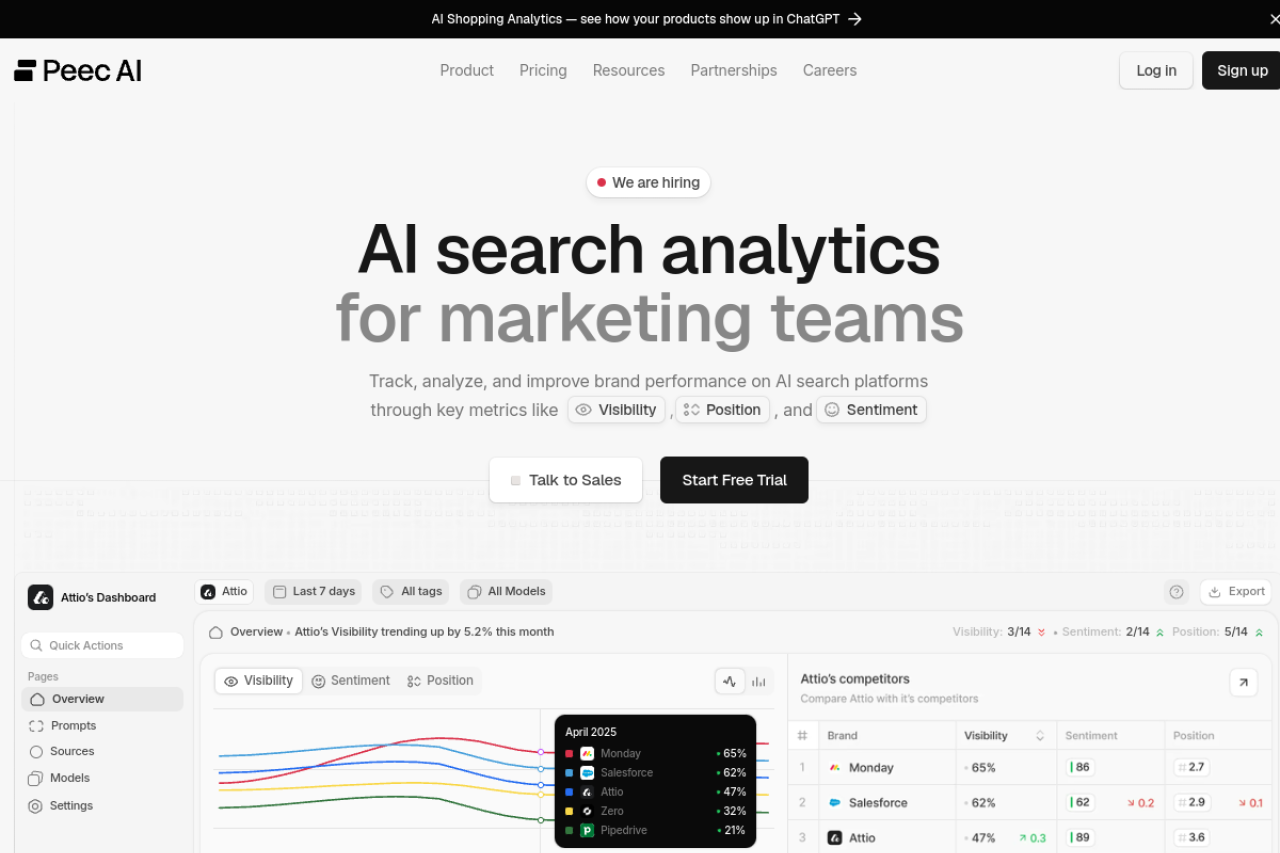
Peec AI is a dedicated AI visibility monitor with multi-country prompt tracking. It focuses on one job and does it cleanly. You get share-of-voice data without a crowded interface.
Coverage includes ChatGPT, Perplexity, and Google AI Overviews, with modular pricing per engine. You pay for the engines you care about, which keeps entry costs predictable.
Honest pros. The interface stays clean and readable. Modular add-ons let you scale coverage as budget allows. It works well for benchmarking share of voice against direct competitors over time.
Honest cons. It is data only. Peec AI gives no content recommendations, writes nothing, and publishes nothing. It also skips Google ranking integration, so you never see AI visibility and classic rankings in one place.
Best for teams that already run a separate content workflow and simply need reliable monitoring numbers to feed it. If you have writers and editors in place, Peec AI covers the tracking half well.
Profound: enterprise-grade AI search intelligence
Profound is a dedicated AI visibility platform built for deep tracking and competitive benchmarking. It targets larger brands that treat AI search as a board-level metric. The reporting depth reflects that focus.
Coverage spans ChatGPT, Gemini, Perplexity, Claude, Grok, and DeepSeek. Enterprise tiers add more engines and finer segmentation. Few tools track this many models in one view.
Honest pros. Profound offers some of the strongest share-of-voice data on the market. It layers in sentiment analysis and iterates its product quickly. Enterprise teams get granular competitive intelligence.
Honest cons. It carries no built-in content writing or publishing. When Profound shows a gap, your team must fix it inside separate tools. That means more logins, more handoffs, and more time before a single new citation appears.
Best for enterprise brands and agencies that prioritize tracking depth over content automation. If you have a full content team and just need the sharpest visibility data, Profound fits. Understanding answer engine optimization helps you act on what it surfaces.
Clearscope: content optimization grounded in GEO principles
Clearscope is a content optimization tool with GEO scoring and topic cluster exploration. It grades drafts against the terms and entities that signal authority to AI systems. Writers use it to sharpen pages before publishing.
Coverage includes ChatGPT, Gemini, and Perplexity. It does not track Claude and offers no custom prompt tracking. So it optimizes content but does not monitor your live AI footprint.
Honest pros. The GEO-grounded scoring is genuinely useful for content strategy. It includes a brand share-of-voice measure and a strong topic-breadth approach. Editors trust its guidance to lift page quality.
Honest cons. Clearscope is not a visibility monitor. You need a separate tracking tool beside it to see where you rank in AI answers. It also does not publish, so the workflow still has manual steps.
Best for content teams that already run a tracking solution and want optimization scoring to raise their hit rate. Pair it with a monitor and you cover two of the three jobs.
Mangools: classic SEO toolkit with entry-level AI signals
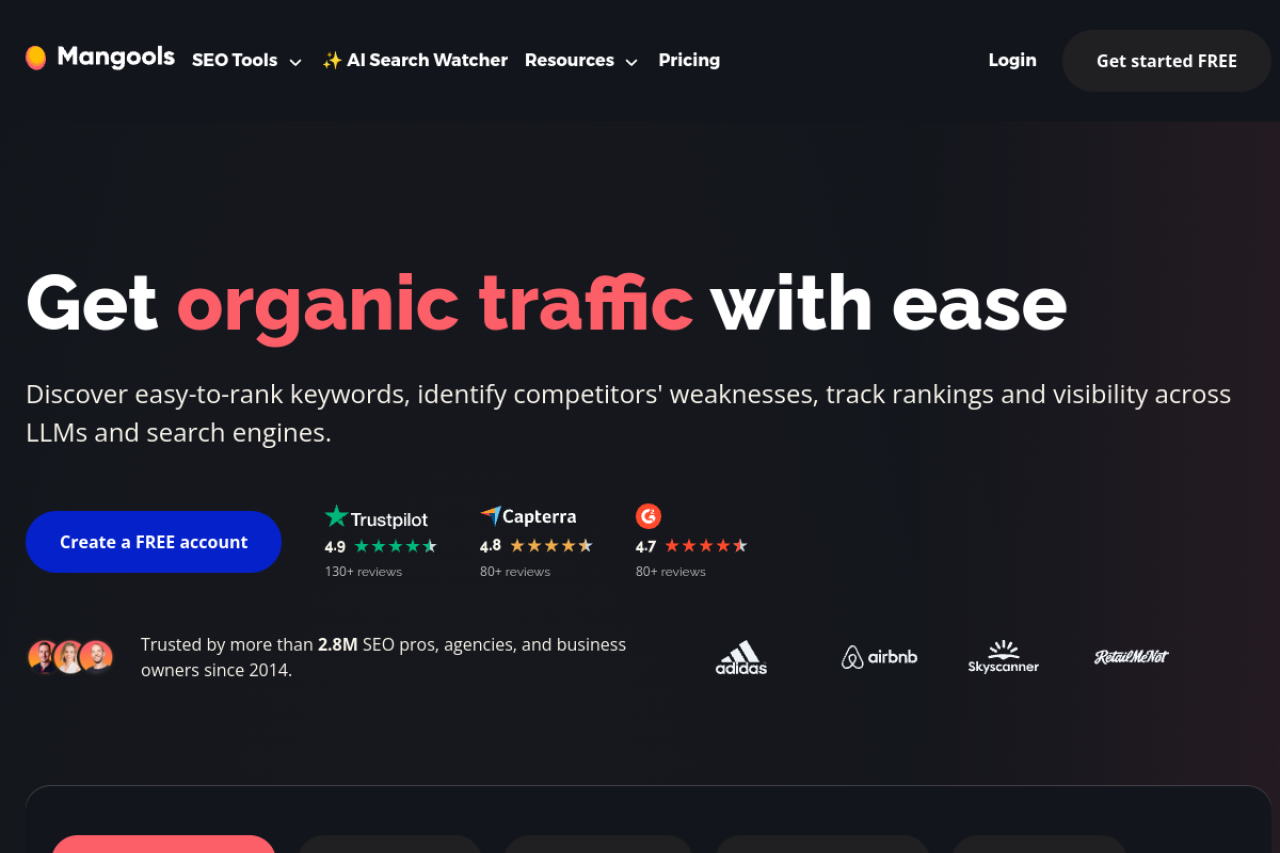
Mangools is an affordable all-in-one SEO suite with keyword tracking and SERP analysis. It built its reputation on traditional search engine optimization, and that remains its strength. AI features here are light.
AI visibility coverage stays limited. The core value sits in keyword rank tracking, backlink data, and SERP research. If you want deep AI citation monitoring, Mangools is not the pick.
Honest pros. Pricing is transparent and low, which suits tight budgets. Setup is fast. It handles striking-distance keyword prioritization well, so you know which pages sit one push from page one.
Honest cons. It offers no dedicated AI citation monitoring. It does not publish content or automate any part of the earning loop. You still write and post everything yourself.
Best for solo operators and small local businesses that need solid Google ranking data on a budget. For local search engine optimization services on a shoestring, Mangools covers the classic side. For AI answers, you will need more.
Searchable: lightweight AI mention tracking for small teams
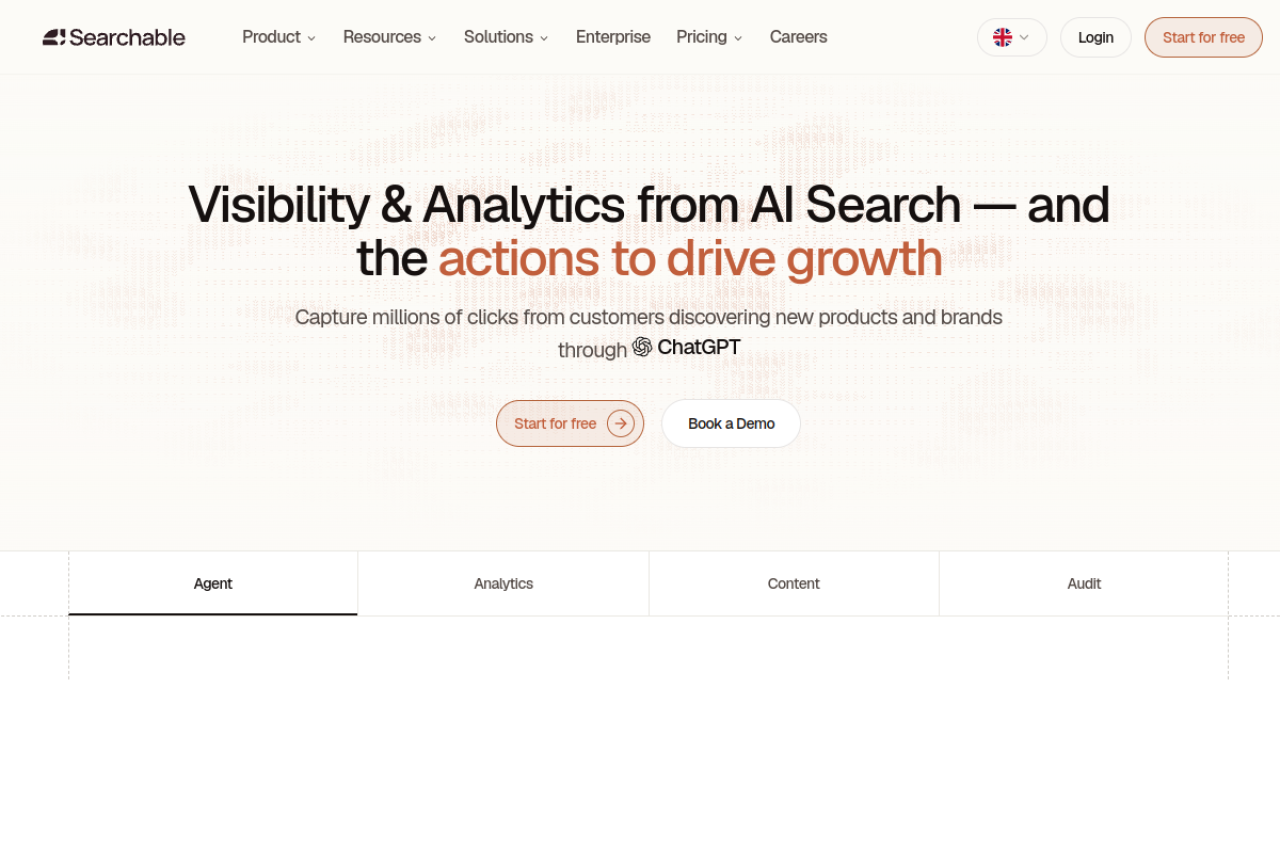
Searchable is an entry-level AI visibility monitor built for simplicity and fast onboarding. It aims at owners who want a quick pulse check, not a command center. You get answers in minutes, not days.
Coverage includes the core engines. Depth on sentiment analysis and competitor benchmarking stays limited compared to enterprise monitors. It trades detail for ease.
Honest pros. The barrier to entry is low, and setup is quick. It gives non-technical owners a first look at their AI footprint without a manual. As a starting point, it does the job.
Honest cons. Searchable creates no content and offers no Google Search Console integration. Actionability is thin, so you see a gap but get little guidance on closing it. The workflow ends where the real work begins.
Best for local and ecommerce businesses that want a basic AI footprint check without complexity. If you sell online and run search engine optimization for ecommerce alone, treat Searchable as a smoke alarm, not a fire crew.
At a glance: which tool fits your situation
Here is the fast comparison across the criteria that decide your buy.
| Tool | LLM coverage | Content workflow | Google ranking data | Best-fit segment |
|---|---|---|---|---|
| Rankblocks | ChatGPT, Claude, Gemini, Perplexity | Yes, writes and publishes | Yes, via GSC and Keyword Tracker | Teams wanting the full loop automated |
| Peec AI | ChatGPT, Perplexity, AI Overviews | No | No | Teams with a separate content workflow |
| Profound | ChatGPT, Gemini, Perplexity, Claude, Grok, DeepSeek | No | No | Enterprise brands needing tracking depth |
| Clearscope | ChatGPT, Gemini, Perplexity | Optimization only, no publishing | No | Content teams needing GEO scoring |
| Mangools | Limited AI signals | No | Yes, classic rankings | Solo operators on a budget |
| Searchable | Core engines | No | No | Local and ecommerce first checks |
Only one tool on this list closes the full tracking-to-earning loop without extra software. Set expectations honestly. Every tool shows gaps, but content execution decides whether citations actually grow.
The quick decision rule: need one workflow that fixes gaps end to end? Choose the integrated option. Need pure tracking depth? Choose a dedicated monitor and staff the content yourself.
Pick the tool that does more than count your mentions
Tracking alone never earns a single citation. Content action does. A dashboard that shows you are invisible is useful only if you close that gap fast. The cheapest AI visibility software still leaves you stranded if it stops at data.
The distance between knowing you are invisible and publishing the fix is where most brands lose. AEO, GEO, and Google SEO reinforce each other. Winning content does all three at once, which is why the right top AI visibility tools for optimization must both find and fix.
Rankblocks closes that loop. The AI Visibility Tracker finds where you are missing, the AI Content Writing Engine publishes the fix, and the GSC Dashboard confirms the lift in AI mentions and Google rankings alike. One workflow, on autopilot, in plain language.
Want to see exactly which AI prompts your brand is missing today? Start your free audit and find out.
Frequently asked questions about top AI visibility tools for optimization
What separates an AI visibility tracker from a tool that helps you earn citations?
A tracker only reports where LLMs mention or ignore your brand. A tool that earns citations acts on that data by writing and publishing content built to change the answer. Trackers show the gap. Earning tools close it, which is the difference between watching a problem and fixing it.
Which AI visibility tools cover ChatGPT, Perplexity, Claude, and Google AI Overviews?
Coverage varies by tool. Rankblocks tracks ChatGPT, Claude, Gemini, and Perplexity, while Profound adds Grok and DeepSeek. Peec AI includes Google AI Overviews, and Clearscope covers three engines but skips Claude. Confirm the exact engine list before buying, since gaps in coverage hide gaps in your visibility.
How do I use AI visibility data to close content gaps and improve Google rankings too?
Start with a content gap analysis that ranks missing topics by traffic value. Publish clear, well-structured answers on those topics, then track both AI mentions and Google positions. Because AEO and classic SEO reward the same authority signals, one strong page often lifts both channels at the same time.
How do I know if my AI visibility is actually improving after I publish new content?
Measure before and after across the same prompts and keywords. A tool with daily citation tracking and a Google Search Console connection shows whether new content earns mentions and moves rankings. Look for more prompts naming your brand and rising clicks and impressions within weeks, not months.
Which tools work for small teams or local businesses with no dedicated SEO staff?
Non-technical owners need fast setup and plain-language output. Searchable offers a simple first check, and Mangools handles budget Google rankings. For a hands-off loop that finds gaps, writes the fix, and reports results, an integrated platform like Rankblocks removes the manual work entirely.