 Rankblocks
Best AI Optimization Tools for Visibility: From Content Gaps to Earned Citations

Buyers stopped scrolling ten blue links. They ask ChatGPT, Perplexity, Gemini and Claude for recommendations, and they buy from the brands those tools name. BCG research found GenAI assistants ranked as the second most influential touchpoint in consumer purchase journeys. If your business never gets cited, you lose the sale before you even know a search happened.
Here is the problem with most tools sold as the best AI optimization tools for visibility. They alert you that a competitor got mentioned, then leave you to fix it alone. That is a smoke alarm, not a fire truck.
This list ranks six platforms by full workflow coverage, not feature count. Real AI optimization needs three things. It must find your gaps, create content that earns citations, and measure the results. You will leave with a shortlist matched to your budget and use case.
What AI search engine optimization tools actually need to do
AI visibility measures one thing. How often, and how prominently, ChatGPT, Perplexity, Gemini and Claude cite or mention your brand when someone asks a buying question. Classic SEO tools cannot see this.
Traditional platforms track keywords, backlinks and SERP positions. None of them tell you whether Perplexity recommends a competitor instead of you. That blind spot costs traffic that used to arrive through Google. AI search visits grew 42.8% year-over-year in Q1 2026, while Google traffic edged up just 2.4%.
The three-stage workflow every tool must serve
Every serious tool must serve three stages. Skip one, and you keep paying for data you cannot act on.
- Discover. Find the buyer questions where your brand is invisible in AI answers.
- Create. Write and publish content engineered to earn citations and mentions.
- Measure. Track citations, mentions and Google rankings in one loop.
Monitoring-only versus execution-led
Monitoring-only tools tell you where you stand. Execution-led platforms take that data and hand you a workflow to move the needle. That is the practical difference.
AI optimization and classic Google rankings reinforce each other. The same content that earns a ChatGPT citation also ranks in AI Overviews and organic results. You do not rebuild your stack, you unify it.
Top 6 AI optimization tools for visibility
I picked these six on one rule. How much of the discover, create, measure loop does each tool actually close on its own. Here is the honest breakdown.

Rankblocks
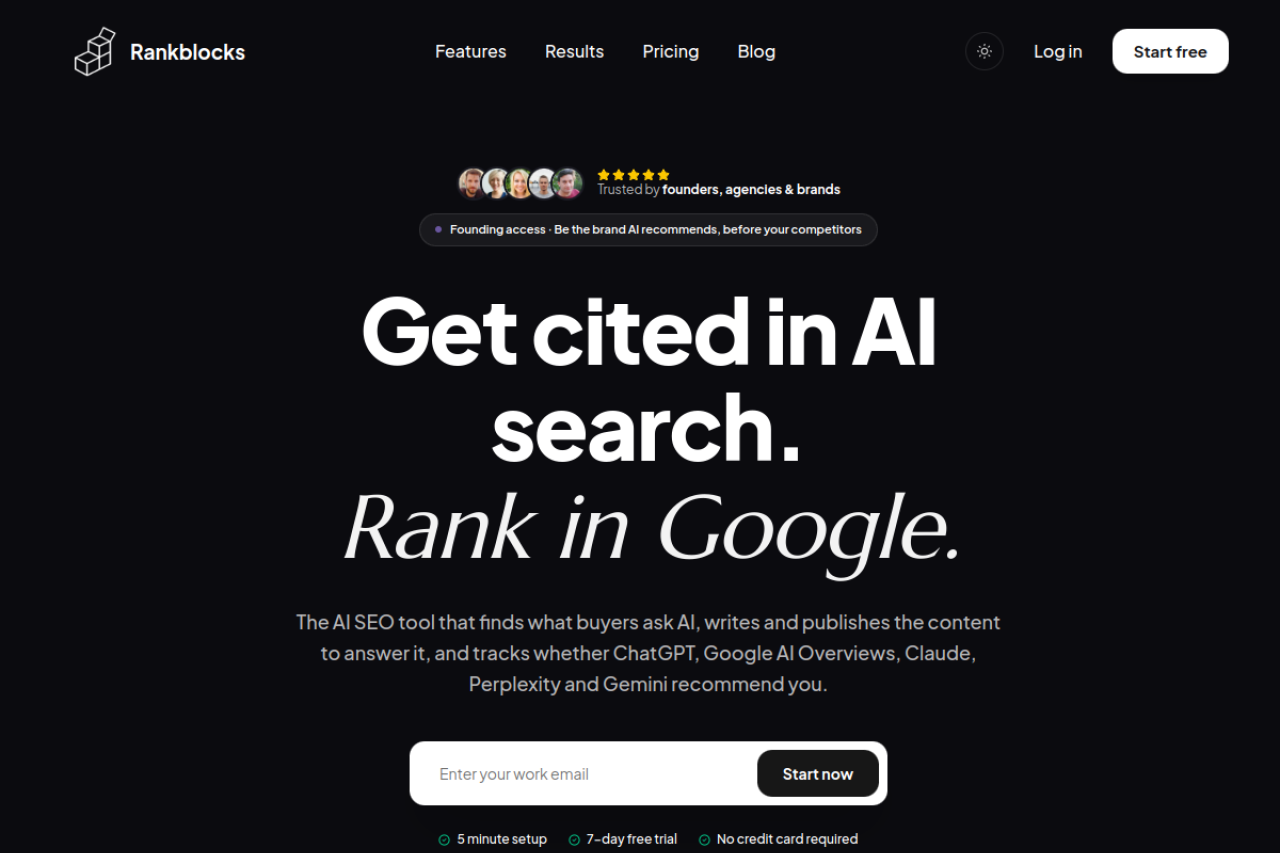
Rankblocks covers the full loop in one place. It combines an AI Visibility Tracker, Content Gap Analysis, an AI Content Writing Engine, a Live GSC Dashboard and a Keyword Tracker. You discover, publish and measure without switching tools.
It suits four groups well. Local business owners who want autopilot delivery in plain language, solo operators with no team, in-house SEOs juggling traffic targets, and agency owners managing multiple accounts.
The unique position is simple. It is the only platform here that finds your gaps, writes and publishes cited content, then measures the Google-side lift together. Run a free audit to see where your brand stands right now. Most rivals do one slice of that.
Honest note. Rankblocks is a newer entrant, so brand name recognition trails legacy tools. Pricing runs on self-serve tiers, so you skip the expensive agency retainer. That matters if you cannot afford to stitch three tools together.
Profound
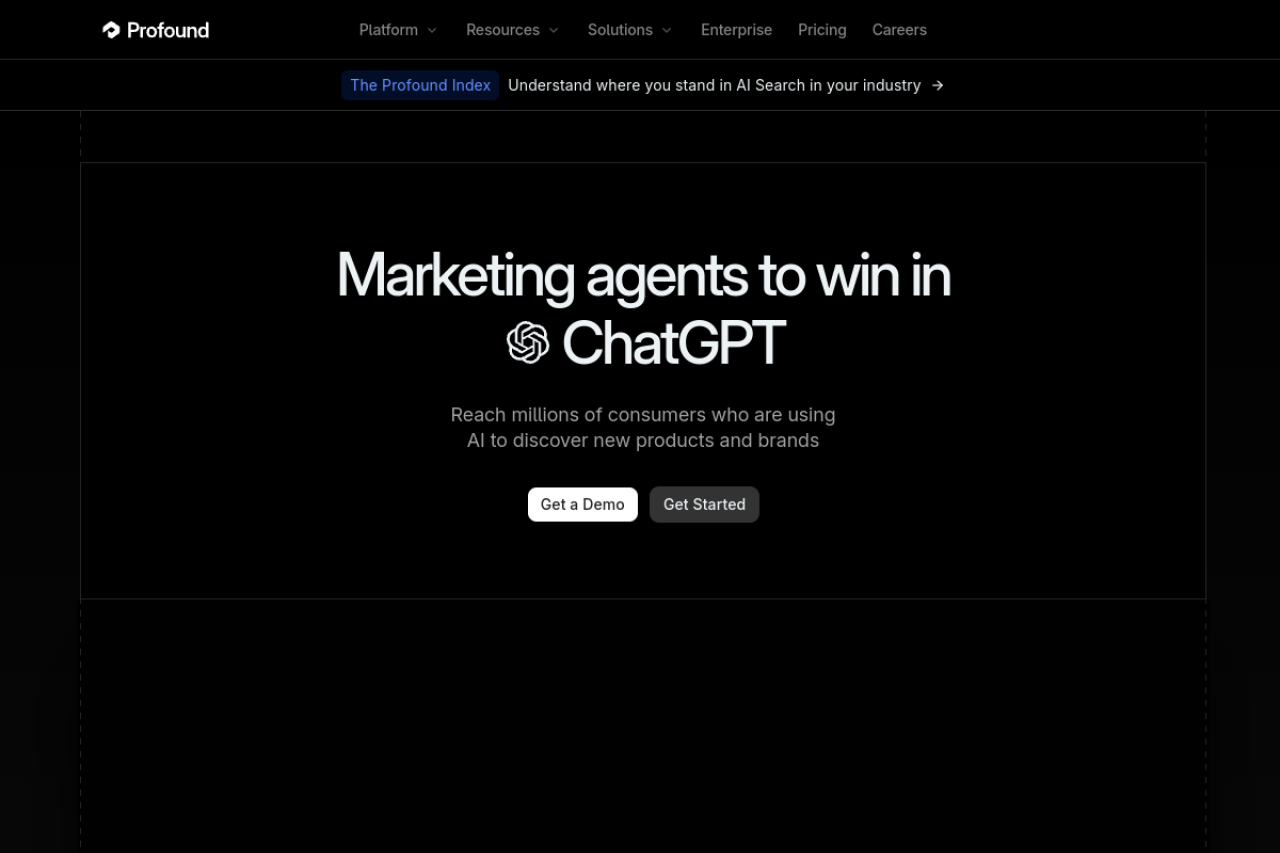
Profound delivers enterprise-grade AI citation monitoring across more than ten engines. It goes deep on prompt-level data and share-of-voice analysis for large teams.
Best for large brands and agencies that need SOC 2 compliance and granular reporting. If you answer to a security team, this is your lane.
The pro is broad engine coverage and depth few tools match. The con is real. Enterprise pricing, no built-in content writing, and no publishing workflow. There is no free trial, so you commit to a demo upfront before you see a dollar of value.
Peec AI
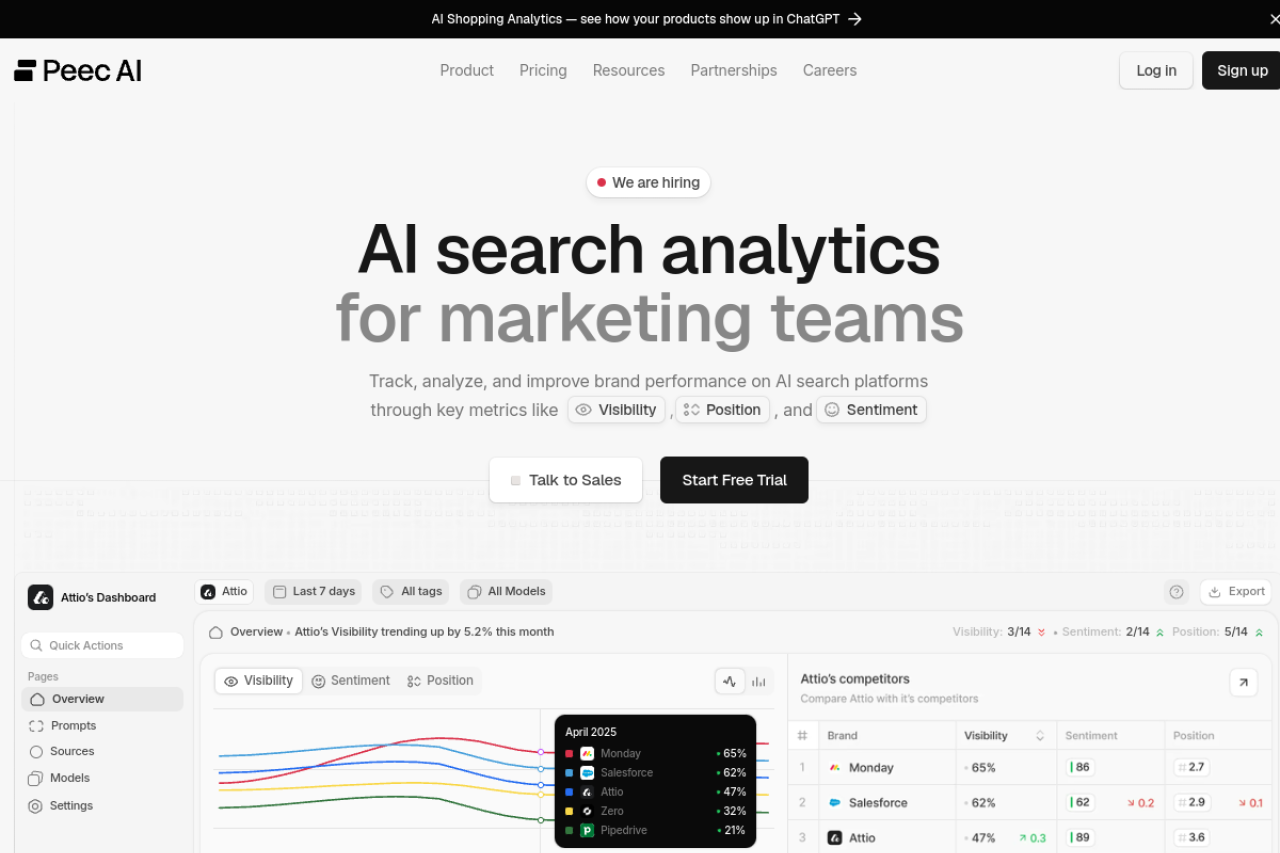
Peec AI offers affordable GEO tracking with daily prompt monitoring and competitor benchmarking. It gets small teams to foundational visibility data fast.
Best for small agencies and budget-conscious teams that want the numbers without a steep learning curve. The interface is clean and entry pricing sits around 89 to 199 dollars per month.
The con is the gap. No AI content creation, no traffic attribution, and insights must be exported and actioned elsewhere. It is monitoring only, so you pair it with a separate content tool to close the loop. That means two subscriptions and more of your time.
Clearscope
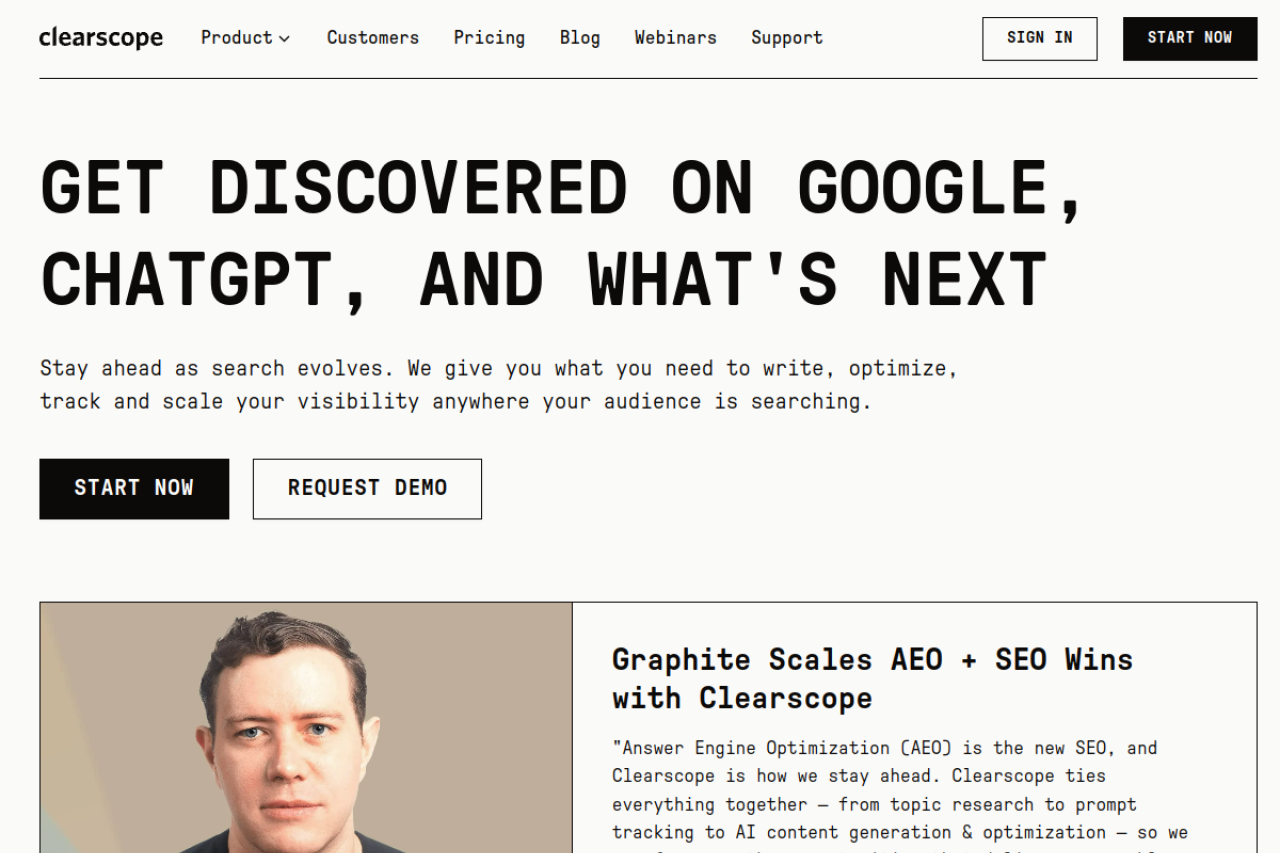
Clearscope is a content optimization platform built around keyword and topic coverage scoring. It grades your drafts and suggests terms to add for better on-page depth.
Best for in-house SEO teams that already run a content calendar and want stronger topical coverage. The editor grading is genuinely useful for tightening articles.
The con is a hard one for this list. Clearscope does not track AI citations or brand mentions. It has no AI visibility layer at all. It is a classic SEO tool, not an AEO or GEO platform, so it never tells you what ChatGPT says about you.
Mangools
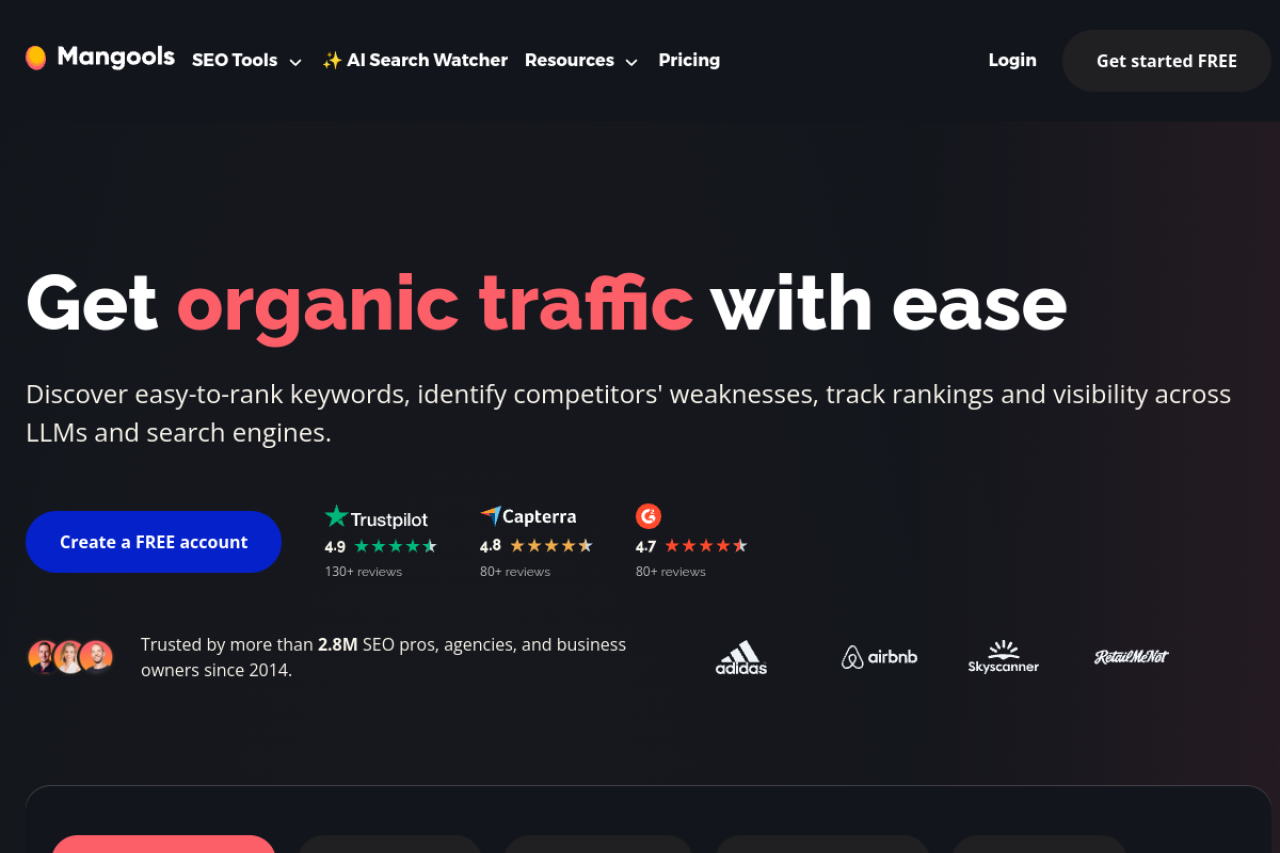
Mangools bundles affordable keyword tracking and SERP analysis into one tidy suite. It handles the Google-side basics on a tight budget.
Best for solo operators and small businesses tracking daily Google rankings without spending much. The UI is intuitive and the keyword research tools are solid.
The con matters for AI search. No AI visibility, no citation tracking, no content writing, and Google-only data. Mangools fills the keyword and rank-tracking slice of the workflow, nothing more. Useful, but it leaves the discover and create stages wide open.
Searchable
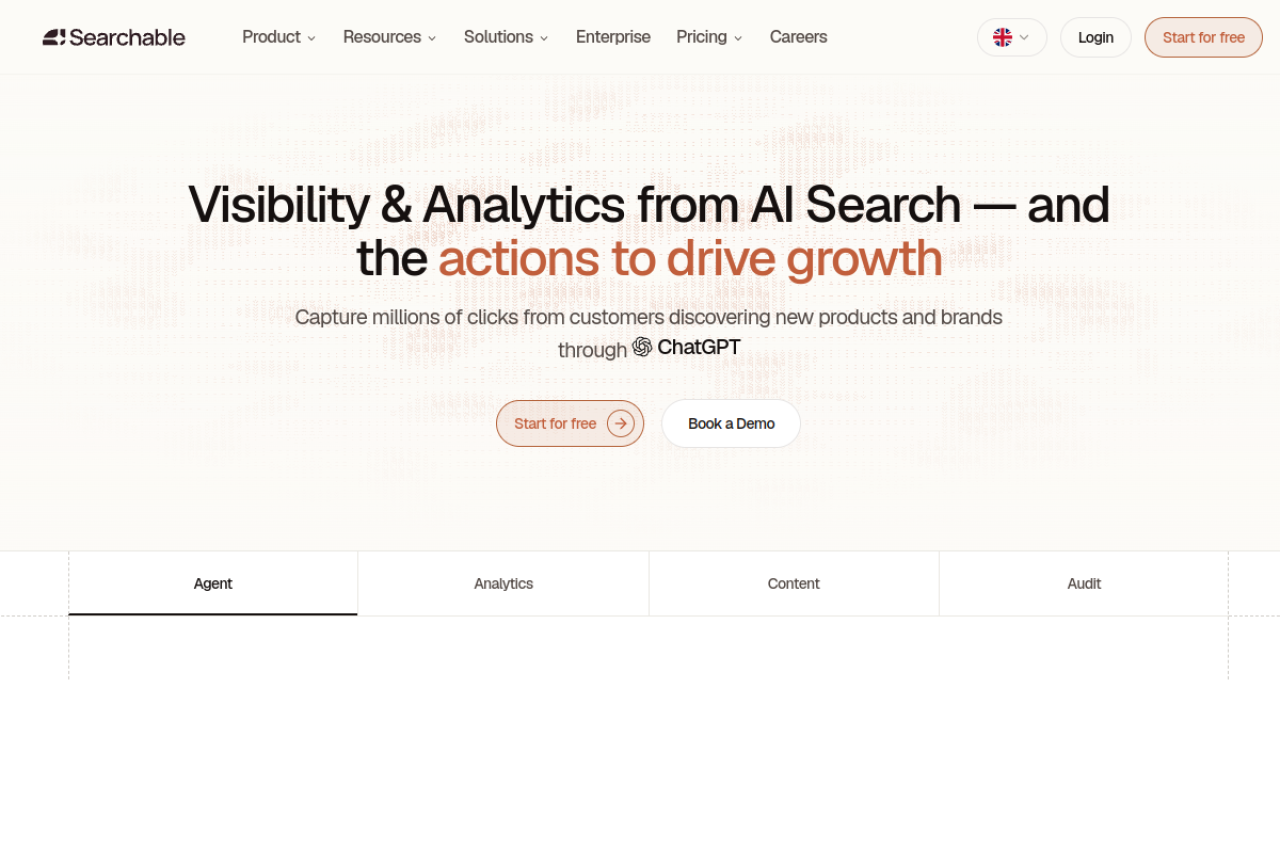
Searchable focuses on AI search visibility monitoring, specifically brand mention and citation frequency. Setup is quick and it tracks prompts across major LLMs.
Best for marketers who want a lightweight AI mention tracker without content or SEO features. If you only need to watch mentions, it does that cleanly.
The con repeats the pattern. No content writing, no Google Search Console integration, and limited workflow depth. It is monitoring only, so you still need external tools for content creation and Google-side measurement. You get the alert, not the fix.
At-a-glance comparison
Here is the workflow coverage for each tool, side by side.
| Tool | Discover gaps | Create content | Measure Google + AI | Entry pricing |
|---|---|---|---|---|
| Rankblocks | Yes | Yes | Yes | Self-serve tiers |
| Profound | Yes | No | AI only | Enterprise, demo required |
| Peec AI | Yes | No | AI only | ~$89–$199/mo |
| Clearscope | Partial | Editor only | Google only | Mid-tier |
| Mangools | Partial | No | Google only | Low-cost |
| Searchable | Yes | No | AI only | Lightweight |
The pattern is clear. Five of the six tools cover one or two stages. Only one closes all three without a second subscription.
How to choose the right tool for your workflow
Start with the gap you need to close. Decide whether you need monitoring, writing, ranking, or all three. Buying a monitoring tool when you actually need content is how budgets get wasted.
Match engine coverage to where your buyers ask questions. A US law firm cares about ChatGPT and Google AI Overviews far more than niche engines. Do not pay for coverage your customers never touch.
Connect AI data to real traffic
Check whether the tool links AI citation data to Google traffic, not just isolated dashboards. A citation that never lifts clicks is a vanity metric. The best platform for AI visibility metrics ties mentions, citations and rankings together so you see revenue impact.
The budget reality
Monitoring-only tools cost less upfront. That number lies a little. Add the content tool, the analytics tool, and the hours you spend moving data between them, and the total climbs fast.
Weigh the real math with these questions.
- Do you have time to action insights, or do you need content published automatically?
- Can you afford two or three subscriptions, or do you need one bill?
- Do you need to prove Google-side lift, not just AI mentions?
For a fuller breakdown of what these platforms track and what to avoid, the AI visibility tools explained guide covers the mechanics in plain language.
Your fastest path from invisible to cited
Here is the honest answer to the question everyone asks. What method really works for the whole AI visibility loop. The method that discovers gaps, creates cited content, and measures results without three separate tools.
That is exactly where Rankblocks fits. The AI Visibility Tracker surfaces which prompts recommend competitors instead of you. The Content Gap Analysis and AI Content Writing Engine turn those gaps into published articles built to earn citations. The Live GSC Dashboard and Keyword Tracker measure the Google-side lift.
Every other tool on this list monitors or creates, but not both. For a full comparison of what to look for, browse the AI visibility blog for category breakdowns. Rankblocks handles discovery, creation and measurement in one autopilot workflow. That is why it anchors any serious list of the best AI optimization tools for visibility, especially if you cannot afford to stitch a stack together.
You get proof it works, in plain language, without an agency retainer. Want to see whether ChatGPT even mentions your brand right now? Run a free audit and watch your citations move within the first content cycle.
Frequently asked questions about the best AI optimization tools for visibility
What method really works for the whole AI visibility workflow?
The method that closes all three stages in one loop works best. You discover the buyer questions where your brand is invisible, publish content engineered to earn citations, then measure both AI mentions and Google rankings together. Tools that only monitor leave the hardest part, actually earning the citation, entirely on you.
How do AI optimization tools connect to classic Google rankings?
The strongest tools connect AI citation data to Google Search Console metrics like clicks, impressions and keyword positions. Content that earns a ChatGPT or Perplexity citation usually also ranks in AI Overviews and organic results. So AI optimization and classic SEO reinforce each other rather than competing for your budget.
Which tools go beyond monitoring and help earn AI citations?
Rankblocks is the tool on this list that writes and publishes content engineered to earn citations, not just track them. Profound, Peec AI and Searchable focus on monitoring and require a separate content tool. Clearscope grades content but never tracks AI mentions, and Mangools stays on Google-only data.
What should a small business expect to pay for an AI visibility tool?
Monitoring-only tools like Peec AI start around 89 to 199 dollars per month, but that number excludes the content and analytics tools you still need. A platform that covers discovery, writing and measurement on self-serve tiers avoids the added cost and the hours spent moving data between tools. Compare the total, not the sticker price.
How do I prove AI optimization results to a client or stakeholder?
Show three metrics together. Citation and mention rate across ChatGPT, Perplexity and Gemini, keyword position history, and Google Search Console clicks over the same window. A closed-loop dashboard that ties AI mentions to real traffic gives stakeholders proof they can trust, not a screenshot of scattered numbers.