 Rankblocks
How to Choose the Best AI Visibility Service Providers for Your Brand

Your customers stopped scrolling ten blue links. They ask ChatGPT, Perplexity, and Gemini for a recommendation, and they act on the answer. If your brand is missing from that answer, a competitor takes the sale.
That shift forces a real decision. Do you buy a tool that only tells you when you are invisible, or a platform that actually fixes the gap? The best AI visibility service providers close the loop between the alert and the fix.
This ranking picks winners on four things: engine coverage across every major assistant, automation depth, closed-loop measurement, and overlap with classic SEO. It fits SEO managers, agency owners, startup founders, and non-technical business owners who want results, not homework.
What AI search visibility actually means for SEO optimization
AI search visibility means your brand gets cited inside AI-generated answers, not just ranked as a blue link. When someone asks Perplexity for the best local plumber, being named in that response is the new page one.
Here is the part most people miss. AEO, GEO, and classic SEO are one discipline now. The same content that earns a citation in ChatGPT also ranks on Google. You write once and win in both places.
That is why monitoring your brand across ChatGPT, Perplexity, Claude, Gemini, and Google AI Overviews matters. Google AI answers now appear in nearly half of all searches, so a gap on one engine leaks traffic on all of them. A WebFX analysis of 2.3 billion sessions found generative AI traffic grew 796% in two years, with conversions growing even faster at 6,432% year over year. Understanding why ChatGPT recommends competitors instead of you is the first step to closing that gap.
Most brands stall in a specific spot. A dashboard flags that you are invisible for a key question, then does nothing. The alert is not the fix. When a competitor earns that citation instead, you lose the click, the trust, and the revenue behind it. Research by Seer Interactive shows organic CTR drops 61% when an AI Overview appears, making citation gaps a direct revenue leak.
Good search engine optimization best practices now start with this reality. Track where AI answers ignore you, then publish the content that makes them cite you.
Five criteria that separate great AI visibility providers from monitoring-only tools
Not every tool that promises AI visibility earns its price. Score each provider against these five criteria before you sign anything.
- Engine coverage. The provider tracks all five major AI engines, not just one or two. Coverage of ChatGPT, Claude, Gemini, Perplexity, and Google AI Overviews is the baseline, not a bonus.
- Closed-loop automation. The best platforms find the gap, write the content, publish it, and measure the result. A tool that stops at the alert leaves the hardest work on your plate. See how the best AI visibility tools go further.
- Citation and mention measurement. You need prompt-level tracking tied to specific pages and sources. Knowing which prompt surfaces your brand beats a vague monthly score.
- Classic SEO integration. Google Search Console data and daily keyword rankings belong in the same workflow. Splitting AEO and SEO across two tools wastes time and hides the overlap.
- Pricing model fit. Transparent tiers should scale for solo operators, in-house teams, and multi-client agencies. A plan built for enterprise rarely fits a single shop, and the reverse is also true.

Use these five criteria as a rubric. Ask every vendor to prove each one in a live demo. If a provider dodges the automation question, you already have your answer. The difference between AEO and GEO matters less than whether a tool actually acts on what it finds.
Best AI visibility service providers for brands and agencies
Here are the top providers, scored on the same rubric. Each entry covers what it is, who it fits best, and honest trade-offs.
Rankblocks
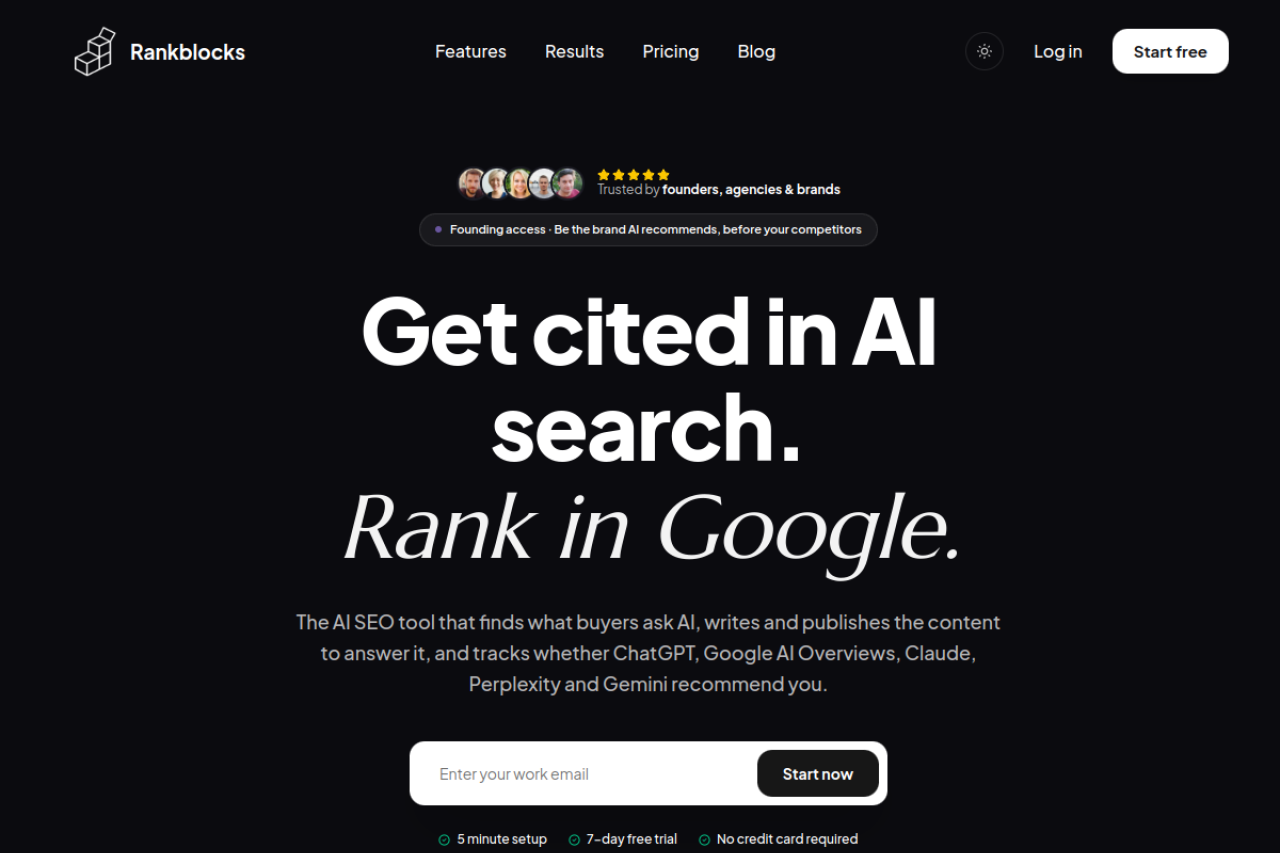
Rankblocks runs the full closed loop in one platform. The AI Visibility Tracker finds the buyer questions where your brand stays invisible across ChatGPT, Claude, Gemini, and Perplexity. It shows which prompts recommend competitors instead of you.
The AI Content Writing Engine then writes and publishes AEO-optimized articles on autopilot, built to earn citations and rank on Google. The Brand Kit keeps your voice consistent across every auto-published piece, so scale never sounds robotic.
The Live GSC Dashboard and Keyword Tracker close the measurement loop. You see clicks, impressions, striking-distance keywords, and daily rank history in the same place you found the gap.
Best for non-technical business owners, lean in-house teams, and agencies that want white-label automation. It is the pick when you want the whole find-write-publish-measure process handled for you. The main trade-off is that it favors automation over manual, hands-on editing control.
Peec AI
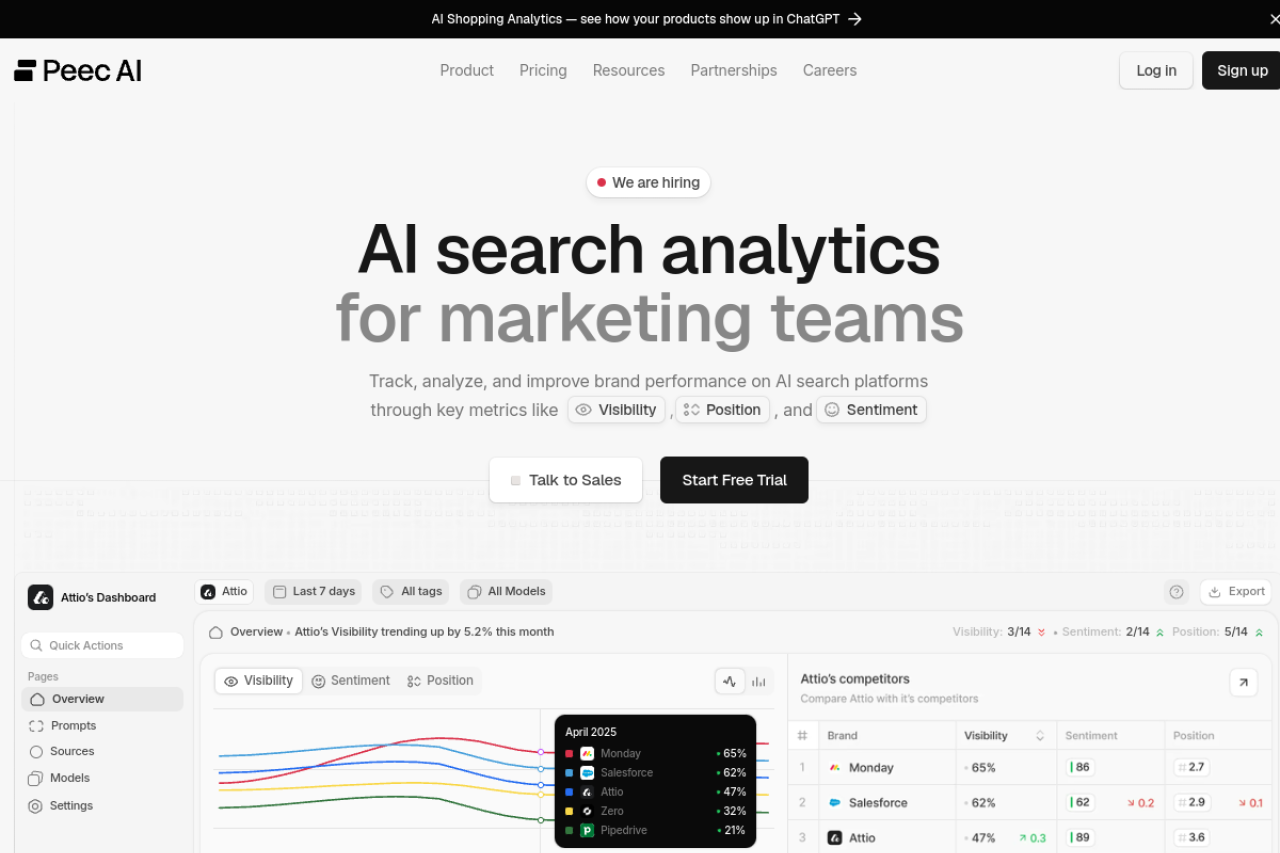
Peec AI is a monitoring-first platform that tracks brand mentions across the major AI engines. It reports where your brand shows up and where it does not.
Its standout feature is product-level tracking. Ecommerce brands can see which specific SKUs surface in AI answers, which is useful for catalog visibility.
The catch is clear. Peec AI does not write or publish content to close the citation gaps it finds. You get the alert, then you build the fix yourself or hire someone else to.
Best for ecommerce teams that need product-level AI mention tracking and already have a content workflow elsewhere.
Profound
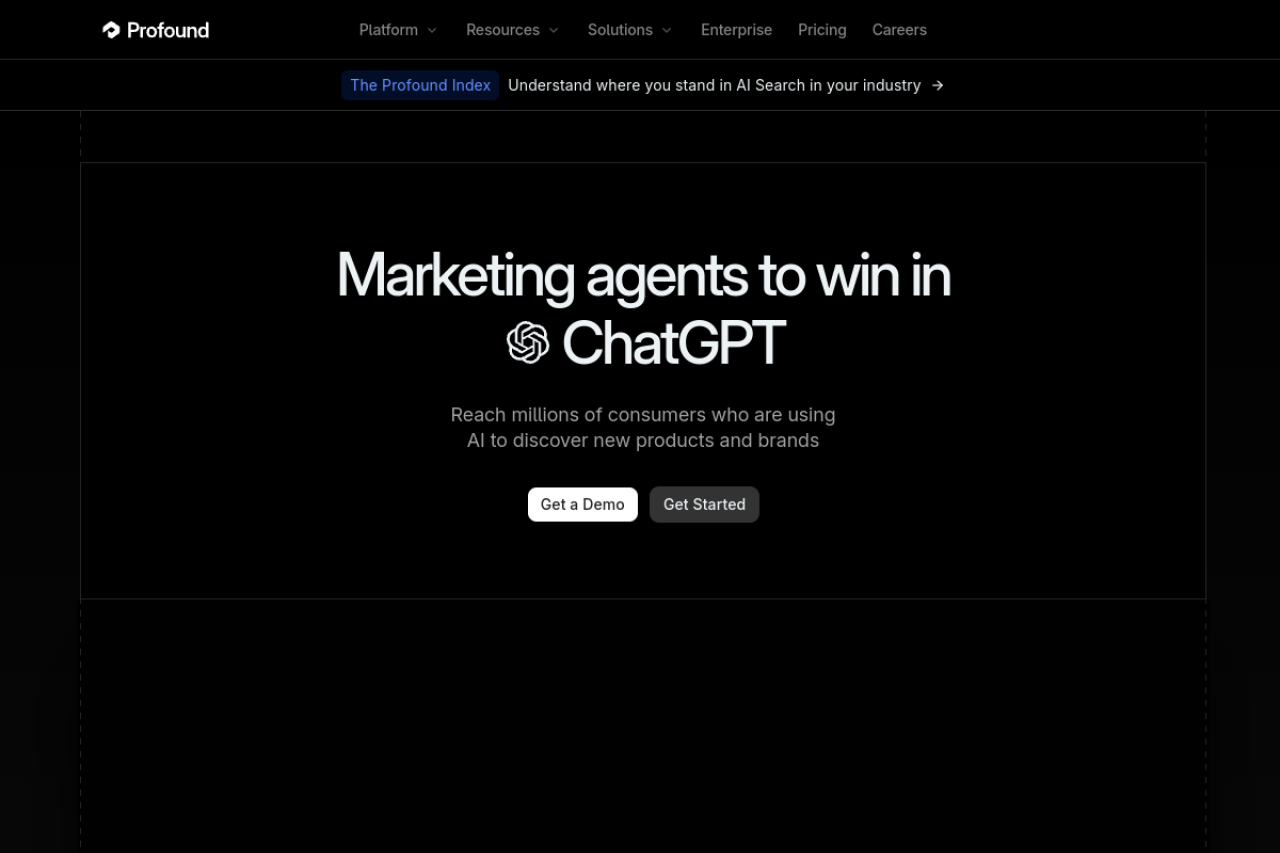
Profound offers enterprise-grade tracking with crawler-level data and multi-engine coverage. Its analytics run deep, which large brands with big data appetites appreciate.
Its Agency Mode adds pitch environments and multi-brand configurations. That helps agencies manage several client accounts inside one workspace.
The trade-offs are cost and setup. The pricing entry point is steep, and higher tiers require a sales call before you can onboard. Profound analyzes deeply but leaves content execution to you.
Best for large enterprise brands and agencies that prioritize deep analytics over hands-off execution.
Clearscope
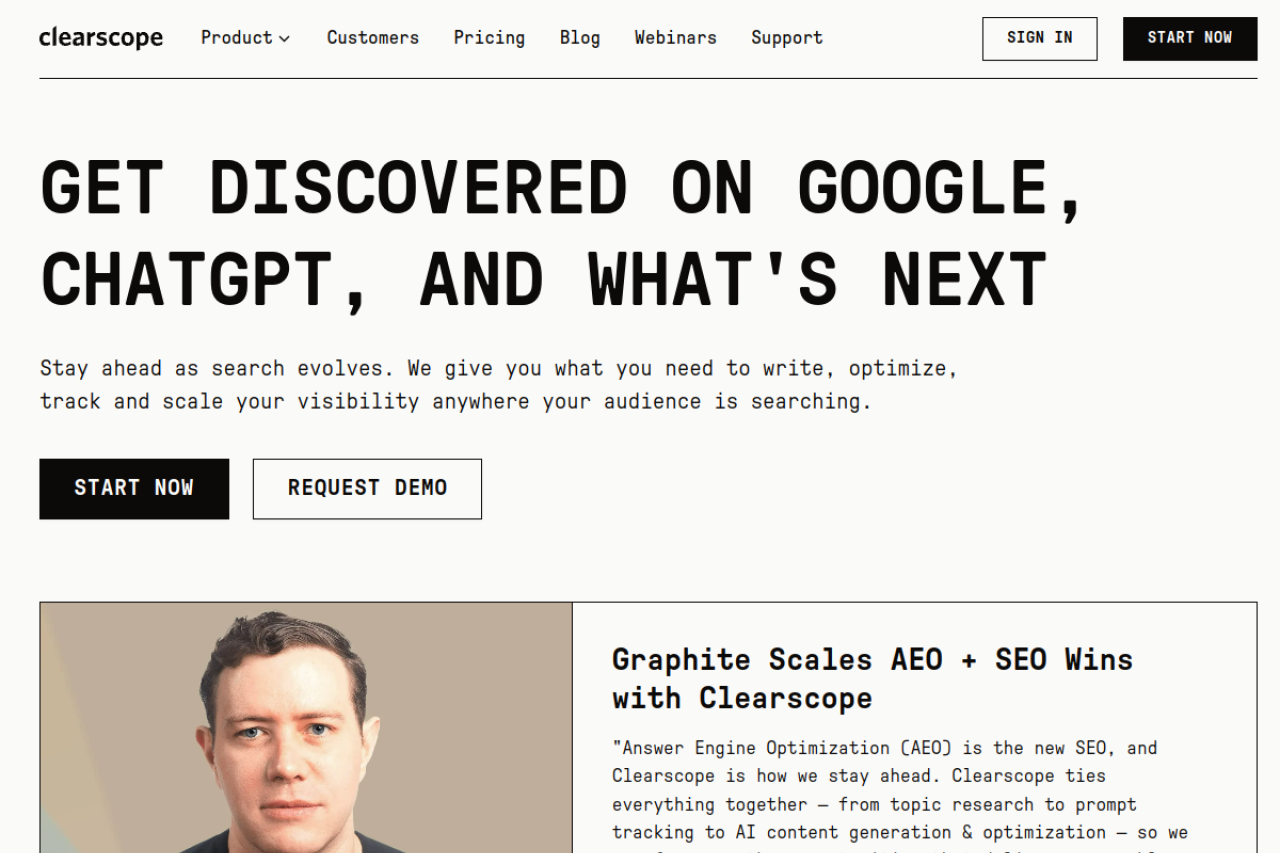
Clearscope is a content optimization platform focused on topical depth and keyword coverage scores. Writers use it to sharpen relevance before publishing.
It helps you improve a draft, but it does not track AI citations or publish anything automatically. There is no native AI engine monitoring, so you pair it with a separate tracking tool.
That makes Clearscope a supporting player rather than a full solution. It strengthens content quality without touching the visibility loop.
Best for in-house content teams that already run a monitoring solution and want a stronger drafting workflow.
Mangools
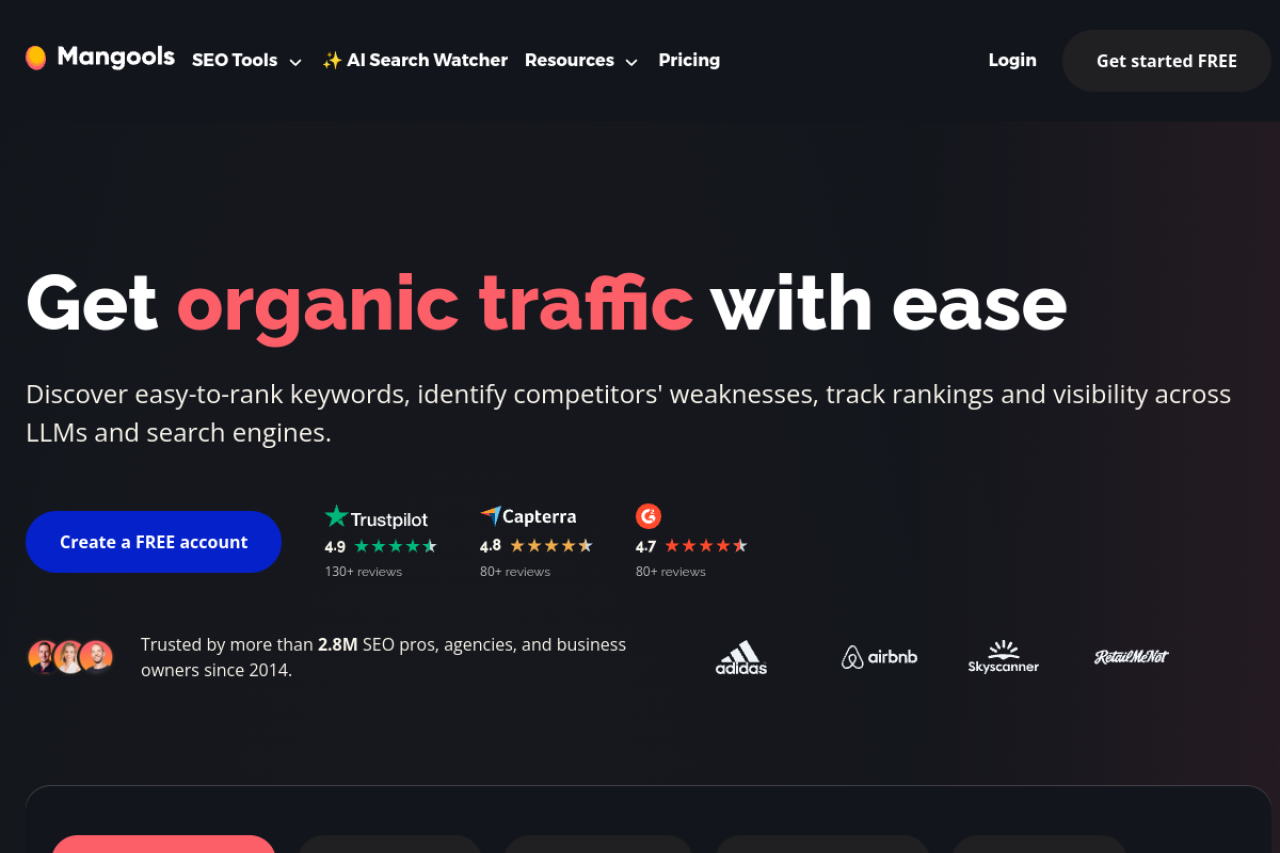
Mangools is a classic SEO suite covering keyword research, rank tracking, and backlink analysis. It is familiar, affordable, and easy to learn.
It carries no native AEO or AI citation tracking, and it does not write or publish content. You get traditional best tools for seo optimization data, nothing more.
The affordable entry point suits teams that need reliable rank-tracking alongside a separate AEO tool. Just know you are buying half the picture.
Best for budget-conscious teams running classic SEO who want familiar rank-tracking workflows.
Searchable
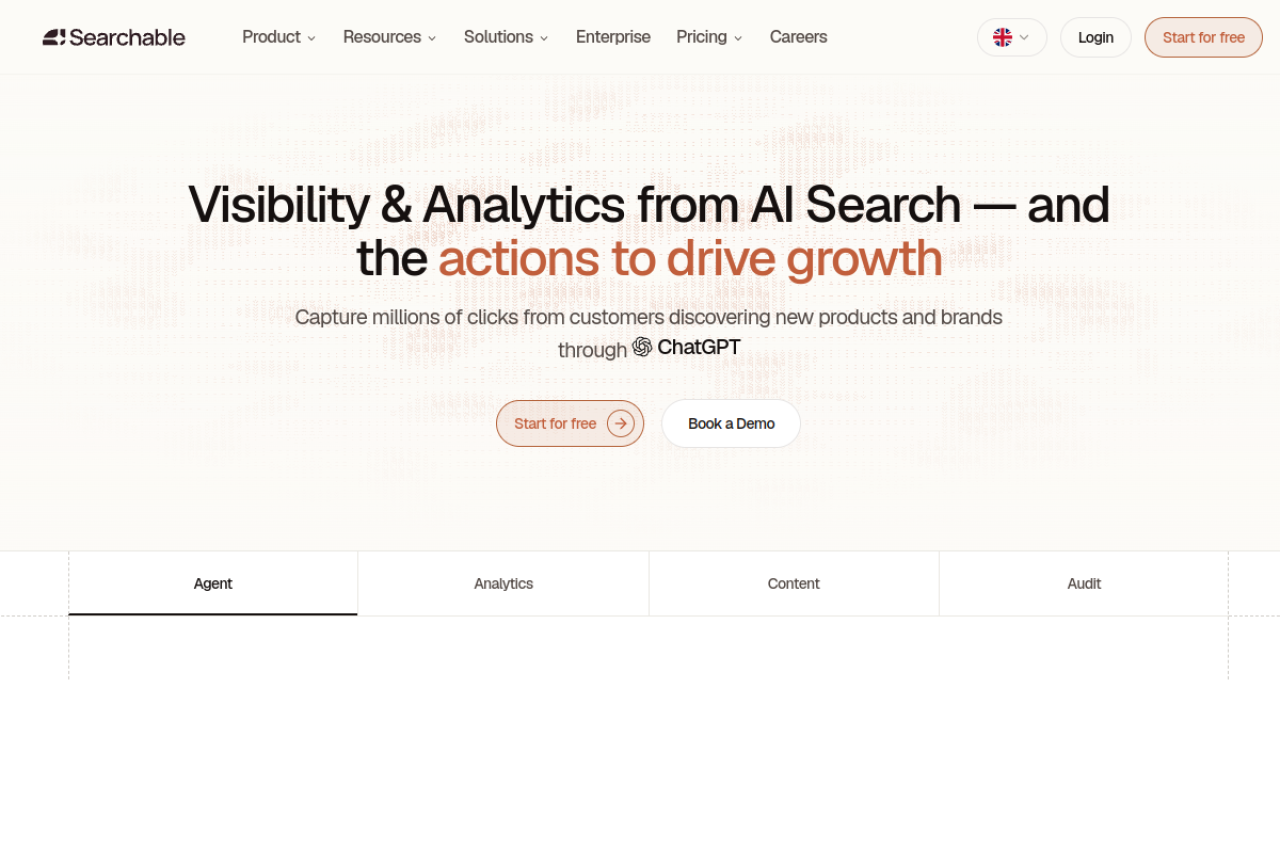
Searchable focuses on AI search visibility through brand mention and sentiment tracking. It gives you a quick read on how AI answers describe your brand.
It provides visibility snapshots but stays light on citation-source attribution. You see the mention, not always the full source detail behind it.
There is no built-in content writing or publishing to act on the gaps it surfaces. Searchable is a starting point, not a finish line.
Best for teams wanting a lightweight monitoring entry before investing in a full execution platform.
How to match a provider to your team type and budget
The right pick depends on who you are and what you can spend. Here is how each segment should choose.
- Non-technical business owners. You need full automation, plain-language reporting, and zero manual effort. Pick a platform that finds, writes, publishes, and measures without asking you to learn SEO.
- In-house SEO managers. You need GSC integration, daily rank data, and citation measurement in one workflow. Cutting the hand-off between tools saves hours every week.
- Agency owners. You need multi-client workspaces, white-label reporting, and pricing that scales per account. A platform for AI visibility metrics that consolidates client reporting protects your margins.
- Startup founders and solo operators. You need fast setup, a clear ROI signal, and no dedicated SEO hire. Automated workflows let one person run visibility for the whole company.
On budget, the industry average for a dedicated AI visibility tool sits around $337 per month. Weigh that number carefully. A monitoring-only cost buys you alerts, while full-loop value buys you published content and measured results. If you are watching spend, compare the cheapest AI visibility software against what a full platform actually delivers.
Quick comparison of the top AI visibility service providers
Here is the at-a-glance view. Scan it, then shortlist two providers for a demo.
| Provider | Engine coverage | Content automation | GSC integration | Pricing tier | Best-fit team |
|---|---|---|---|---|---|
| Rankblocks | All 5 engines | Yes, writes and publishes | Yes, live dashboard | Scales solo to agency | Owners, lean teams, agencies |
| Profound | Multi-engine | No | Limited | Enterprise, high | Large brands, big agencies |
| Peec AI | Major engines | No | No | Mid | Ecommerce teams |
| Clearscope | None native | No, optimizes only | No | Mid | In-house content teams |
| Mangools | None native | No | No | Low, affordable | Classic SEO teams |
| Searchable | AI engines | No | No | Entry | Lightweight monitoring |
Rankblocks leads on closed-loop automation and multi-engine coverage in one platform. Profound leads on enterprise analytics depth but needs separate content execution. Peec AI wins for ecommerce product tracking, then stops at the alert.
Clearscope and Mangools serve classic SEO workflows with no native AEO tracking. Searchable suits teams not yet ready for full execution.
Pick the provider that earns citations, not just counts them
Come back to the core decision. Monitoring tells you the problem. Execution fixes it. The best AI visibility service providers do both in one place.
Ask three questions in every demo. Which engines do you track? Do you write and publish content? How do you measure whether it actually worked? If a vendor cannot answer all three, keep looking.
Rankblocks closes all three cleanly. The AI Visibility Tracker finds where you are invisible, the AI Content Writing Engine publishes the fix, and the GSC Dashboard plus Keyword Tracker confirm the result. That is why it earns the top spot for non-technical business owners and lean teams alike.
Teams that unify tracking, writing, and measurement in one platform cut time-to-citation by removing the hand-off between tools. No more exporting alerts into a doc, briefing a writer, then waiting weeks to see if it worked.
Want to see exactly where your brand goes missing across ChatGPT, Perplexity, Claude, Gemini, and Google AI Overviews today? Check what AI tools track before you commit to a platform. Start a free audit and find out in minutes.
Frequently asked questions about the best AI visibility service providers
What criteria separate a great AI visibility provider from a monitoring-only tool?
A great provider closes the loop, while a monitoring tool only raises the alarm. Look for engine coverage across all five major assistants, automated content writing and publishing, prompt-level citation measurement, and native GSC integration. If a tool finds gaps but cannot fix them, it is monitoring-only.
Which providers cover all five major AI engines including Google AI Overviews?
Rankblocks tracks ChatGPT, Claude, Gemini, Perplexity, and Google AI Overviews in one place. Profound also offers broad multi-engine coverage but leaves content execution to you. Clearscope and Mangools carry no native AI engine tracking at all, so they need a separate tool for engine coverage.
Does an AI visibility platform write and publish content, or just alert me to gaps?
It depends on the platform. Rankblocks writes and publishes AEO-optimized articles automatically through its AI Content Writing Engine. Most competitors, including Peec AI, Profound, and Searchable, only alert you to gaps and leave the writing and publishing entirely on your side.
How do I evaluate AI visibility providers if I run a multi-client agency?
Prioritize multi-client workspaces, white-label reporting, and pricing that scales per account. You want to manage every client from one dashboard and prove ROI without rebuilding reports by hand. Rankblocks and Profound both support agency workflows, though Profound sits at a higher price point.
Is it time to switch from my current SEO tool to an AI-first visibility platform?
Yes, if buyers now find you through AI answers and your current tool ignores citations. Classic tools like Mangools handle rankings but miss where AI assistants recommend competitors. When AI answers appear in nearly half of searches, an AI-first platform protects the traffic your old tool cannot see.