 Rankblocks
Best AI SEO Tools: What to Look For and What to Skip
You searched for the best AI SEO tools and got a wall of roundups that all say the same thing. Most of them lump two very different categories together. That leaves you buying the wrong tool for the job you actually have.
One category is traditional SEO software with an AI feature bolted on. The other is a true AEO/GEO platform built to win citations in AI answers. These are not the same, and the price of confusing them is real.
This list separates the two, grades each tool by what it does for AI citations and Google rankings, and tells you which to skip. It is written for content and growth marketers who own organic growth solo and now have to win AI-search visibility too.
The two categories every list of search tools gets wrong
Most lists of search tools blur one line, and it costs buyers. Let me draw it clean.
AI-enhanced traditional SEO means legacy features with a generative layer on top. Think keyword research, site audits, and content briefs, plus an AI writer stapled to the editor. The core job is still ranking blue links in Google.
A true AEO/GEO platform is built for a different job. It finds where your brand is invisible in AI answers, helps you publish content designed to earn citations, then tracks mentions across ChatGPT, Perplexity, and Google AI Overviews. The difference between AEO and GEO matters, but both target AI visibility, not just rankings.
Why should a small team care? Because buyer behavior already shifted. People ask ChatGPT and Perplexity before they scroll ten links. If your brand does not show up in that answer, the customer never sees you. 73% of B2B buyers now use AI tools like ChatGPT and Perplexity in their research process, per a 2026 analysis of 680 million citations.
For a team with no dedicated SEO headcount, buying the wrong category wastes budget you do not have. A traditional suite will not tell you whether ChatGPT recommends your competitor. A tracking-only tool will not publish the fix. AI search traffic converts at 14.2% versus Google organic's 2.8%, making the right tool choice a revenue decision, not just a workflow one.
Here is the rubric I use to grade every tool below.
- AI citation tracking across ChatGPT, Claude, Gemini, and Perplexity
- Content writing and publishing straight to your site
- Keyword gap analysis tied to real traffic demand
- Rank tracking with position history, not a snapshot
- Single workflow from research to publish to measure
What to look for before you pick any AI SEO tool
Start with citation tracking. If a tool cannot show you when ChatGPT, Perplexity, or Google AI Overviews mention your brand, it is blind to where buyers now decide. You need to track AI citations the same way you track keyword positions.
Next, look at content creation. A tool that writes a doc you copy-paste into WordPress still leaves you doing the boring part. Content that publishes directly to your site saves hours every week.
Then check gap analysis. Keyword volume alone lies. You want gaps tied to real traffic demand, so every article you publish targets buying questions your competitors already win. That is how you avoid writing posts nobody searches for.
Rank tracking matters too, but a single snapshot is useless. Position history lets you catch drops before they cost you traffic. A good SEO rank tracker shows the trend, not just today.
Last, weigh the workflow. Juggling one tool for writing, one for optimization, one for AI tracking, and one for audits is exhausting and expensive. A single platform that handles research, writing, publishing, and measurement beats a stack of four subscriptions.

Keep this checklist open when you shop. It filters most tools out fast.
Top 8 best AI SEO tools for content and growth marketers
I ranked these by how many rubric criteria each one actually covers. Rankblocks leads because it is the only platform that closes the full loop, but every other option below earns its spot for a specific job.
Rankblocks
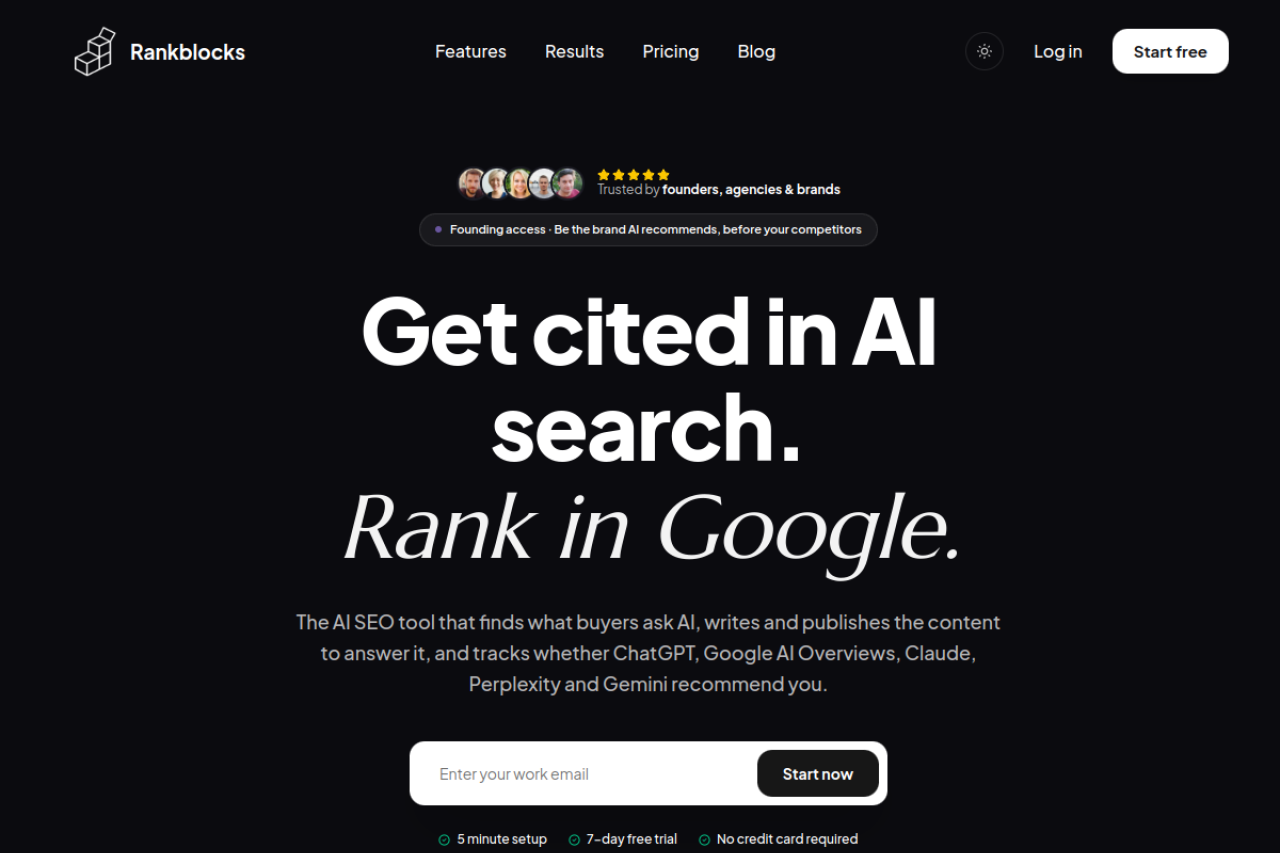
Rankblocks is a full AEO/GEO platform. It runs gap analysis, writes content, publishes to your site, and tracks citations in one place. You go from finding the gap to shipping the fix without switching tabs.
The AI Visibility Monitor tracks brand mentions and citations across ChatGPT, Claude, Gemini, and Perplexity. It shows which buying questions surface you versus a competitor. The AI Content Writing Engine publishes articles built to win citations and rank in Google, in your brand voice.
The Live Search Console Dashboard turns raw GSC data into plain-language reports. You see clicks, impressions, and keywords one step from the top without digging.
Best for small in-house teams who need research-to-publish-to-measure in one workflow. Honest caveat it is a newer platform, so third-party review volume is still growing compared to legacy suites.
Surfer SEO
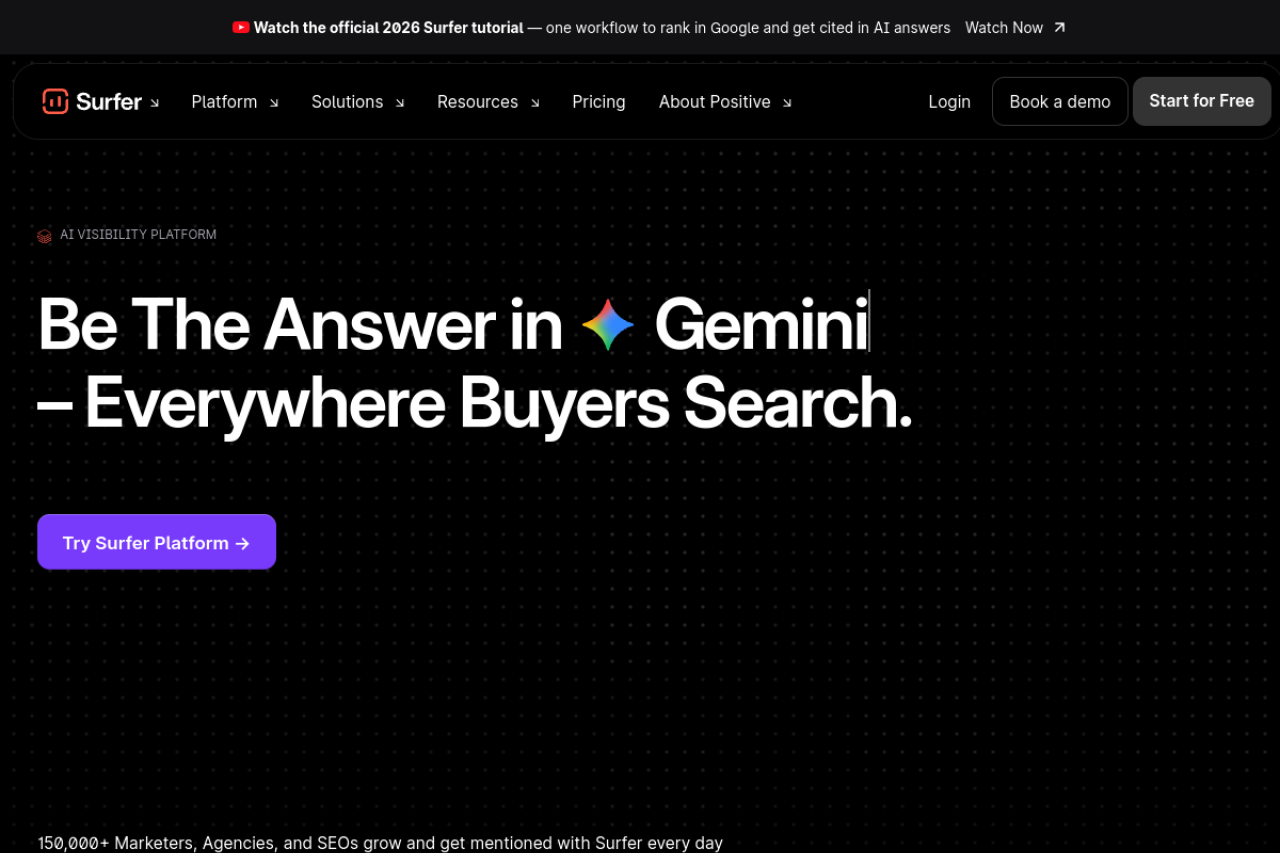
Surfer SEO grades on-page content against top-ranking SERP competitors. It gives you structured briefs and keyword density guidance inside the editor, with AI writing assistance built in.
Best for teams focused on Google rankings who want a clear optimization score before publishing. It is strong at classic on-page work.
Gap it has no native AI citation or brand mention tracking across LLMs. You will not know if ChatGPT cites you.
Clearscope
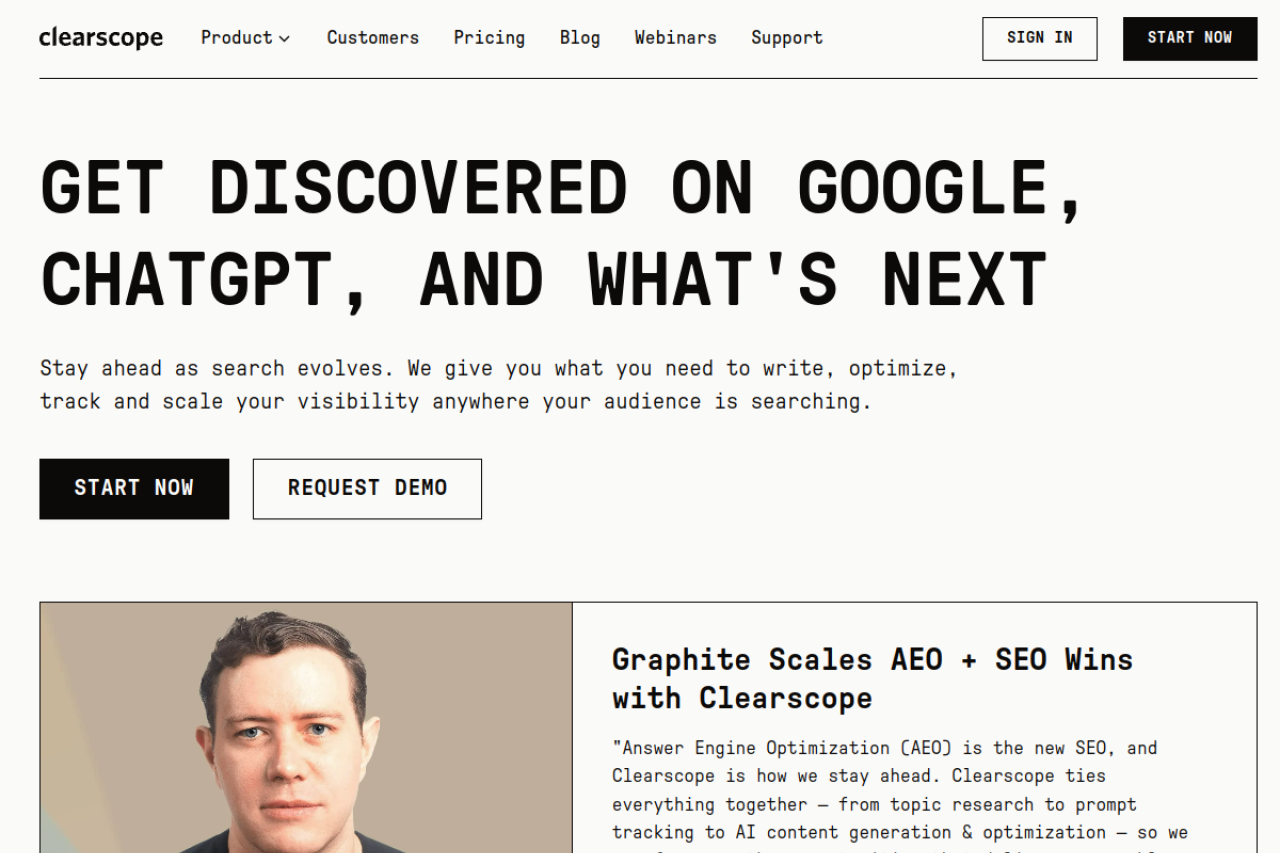
Clearscope offers premium content grading by topical depth and NLP term coverage. It integrates with Google Docs and WordPress, so writers optimize inside their existing process.
Best for content teams that already have a writing workflow and just need optimization guidance. The grading is clean and easy for writers to follow.
Gap it is writing-focused only. No rank tracking, no gap analysis, and no AI visibility monitoring.
Profound
Profound is purpose-built for AI visibility tracking across major LLMs and AI search surfaces. It shows which prompts surface your brand and which surface a competitor instead.
Best for teams whose main need is monitoring AI citations, not creating content. If tracking is the priority, it does that job well.
Gap it is tracking-only. No content writing, no publishing, and no traditional rank tracking, so you still need other tools to act on the data.
Peec AI
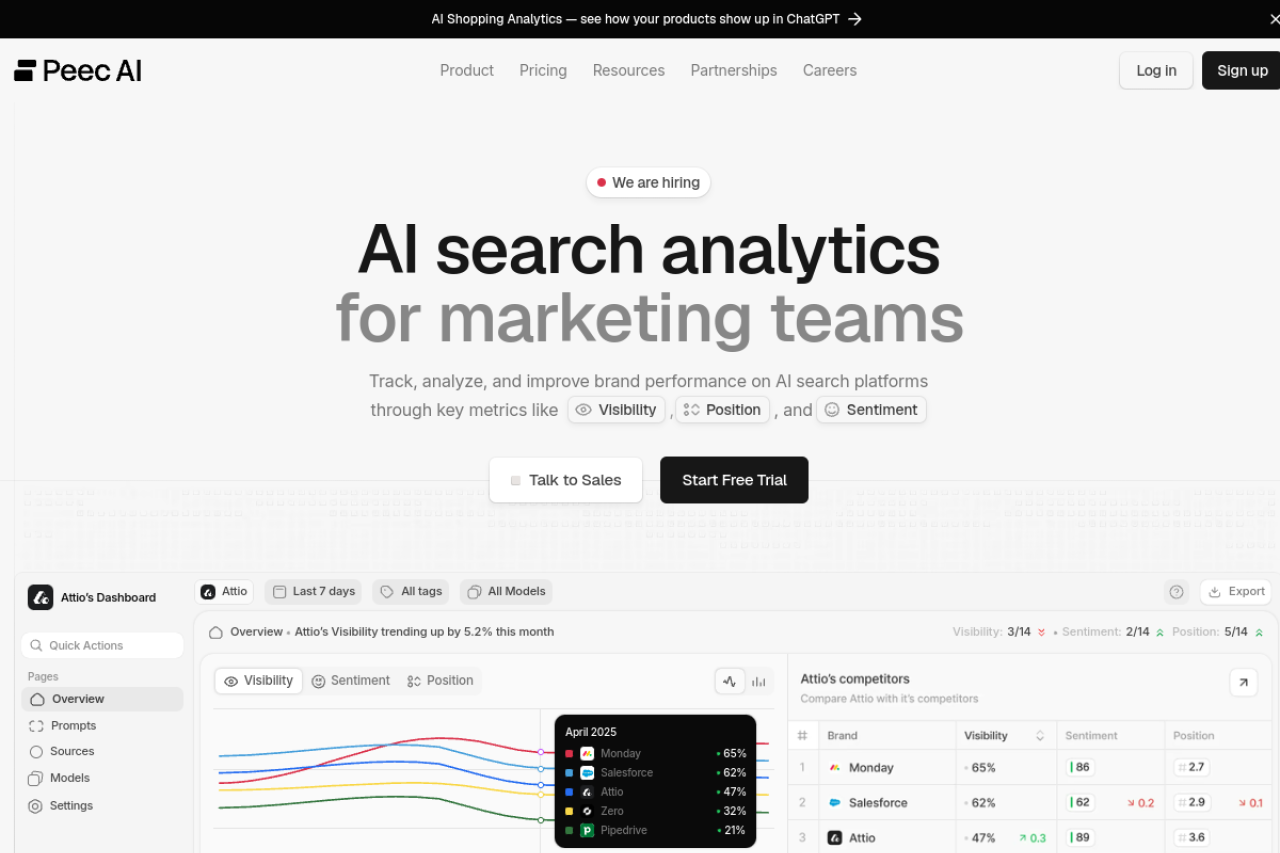
Peec AI tracks brand mentions and share of voice in AI-generated answers. A comparison view shows how often competitors appear versus your brand.
Best for teams that want competitive AI visibility data quickly. The share-of-voice angle is useful for reporting up.
Gap it has no content creation, no keyword gap analysis, and no Google rank tracking built in.
Otterly.AI
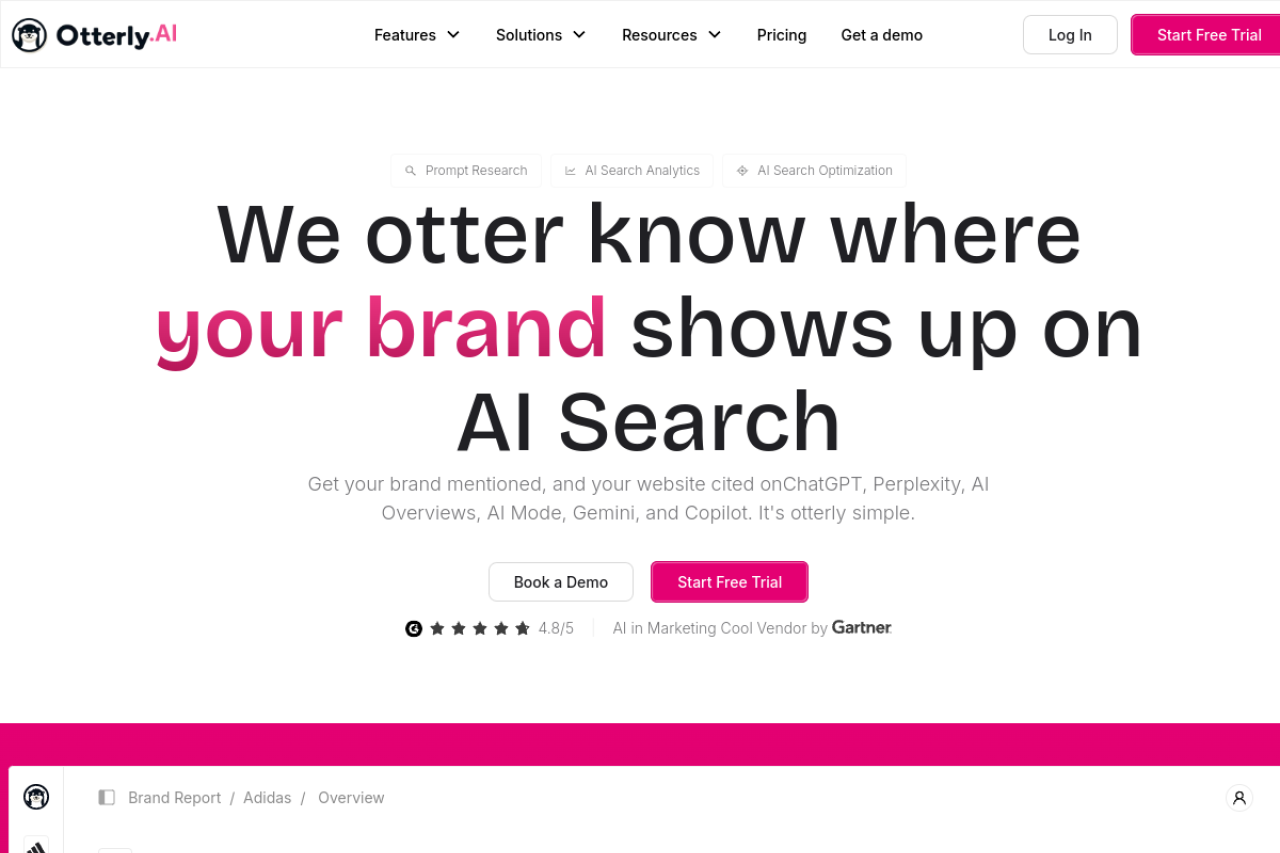
Otterly.AI monitors brand presence and sentiment across AI answer engines. A prompt library lets you test specific buying questions for brand appearance.
Best for marketers focused on reputation and presence in AI answers. Sentiment tracking is a nice extra here.
Gap it is reporting-oriented and does not close the loop from insight to published content.
Semrush
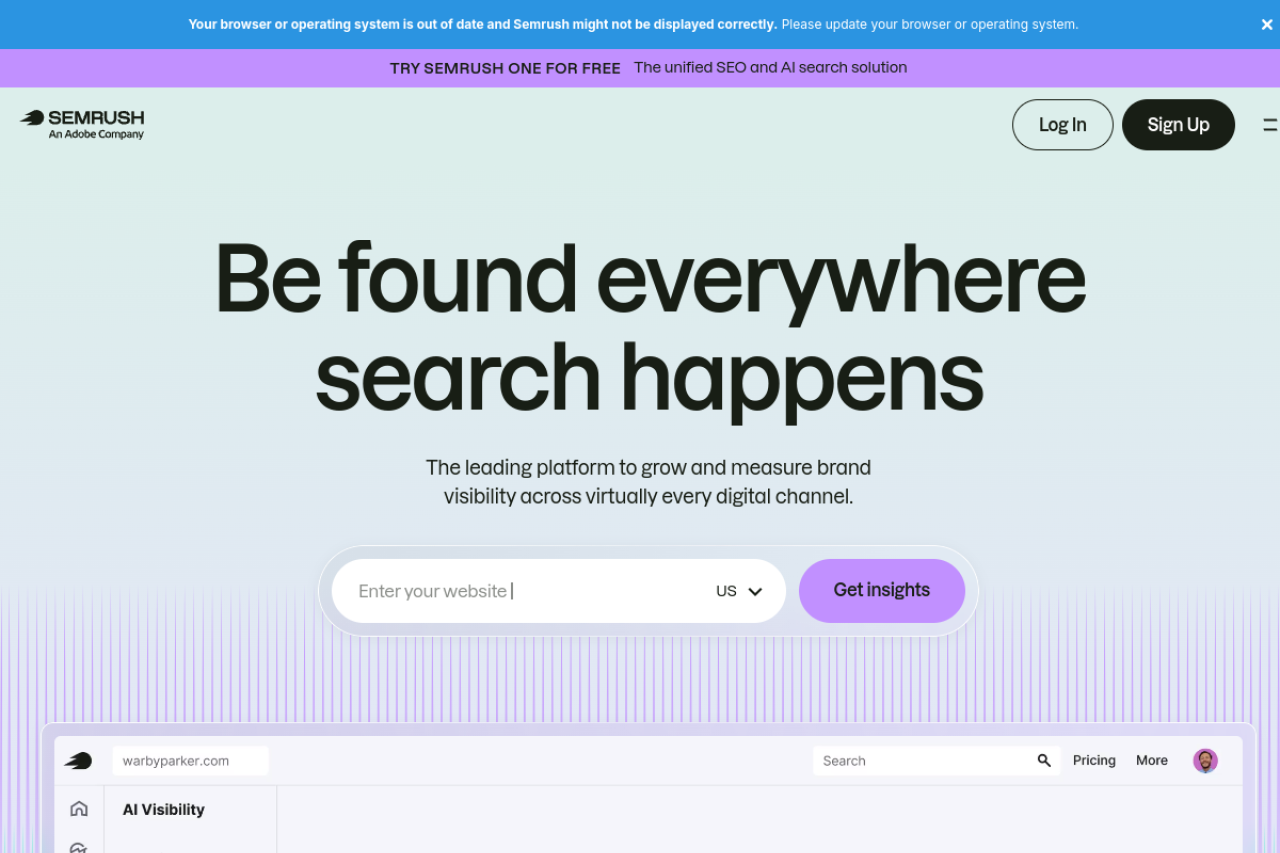
Semrush is a broad traditional SEO suite. It covers keyword research, site audits, backlink analysis, and competitor data. It added an AI visibility toolkit that tracks brand appearance in ChatGPT and Perplexity.
Best for larger teams or agencies that need a full SEO data platform. The depth is genuine. If you weigh SEO software for agencies, it belongs on the list.
Gap the price runs high, and AI visibility is an add-on, not the core product.
Ahrefs
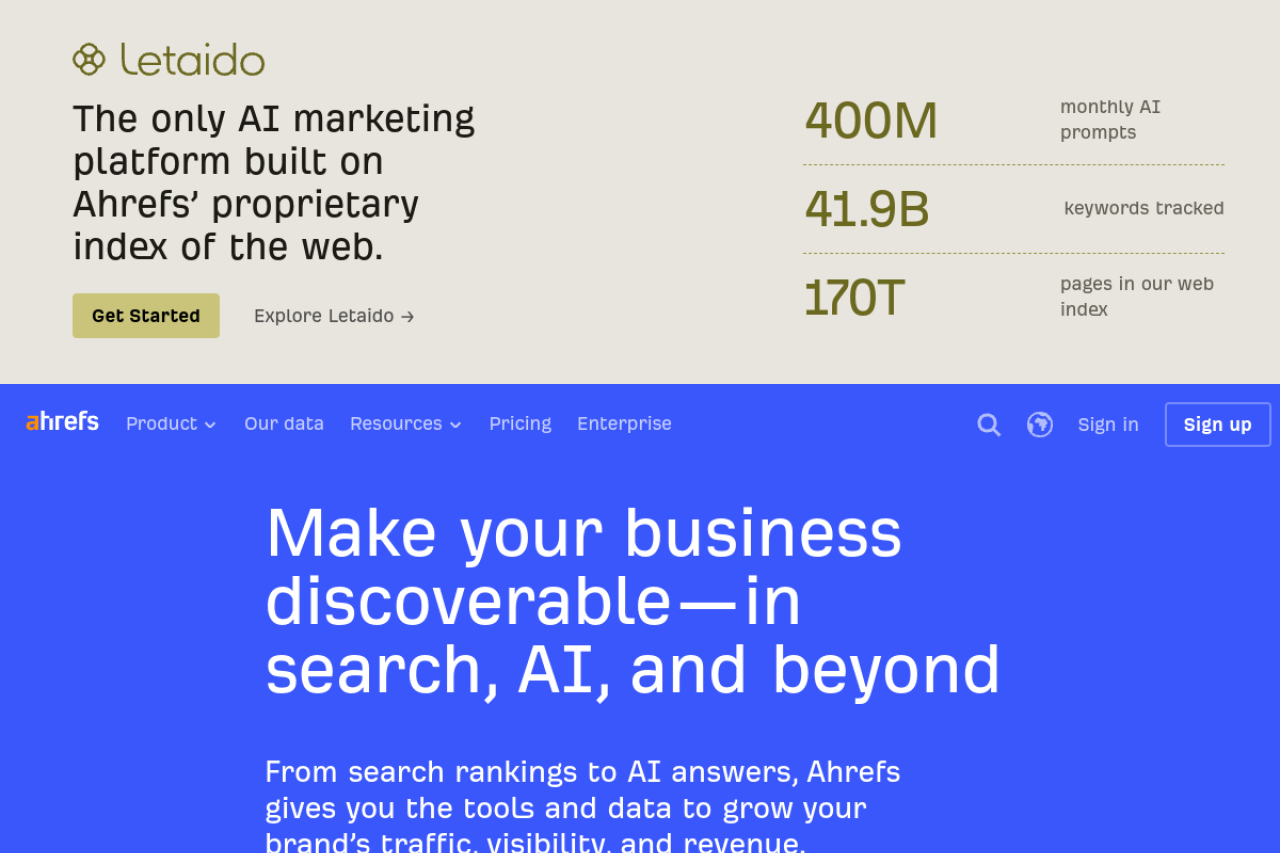
Ahrefs brings deep backlink data, a strong keyword explorer, and site audit tools built for SEO pros. Its content gap feature shows keywords competitors rank for and you do not.
Best for SEO-led teams that prioritize link data and organic keyword research. Few tools match its index for classic work.
Gap it has no AEO/GEO citation tracking. Its AI features assist writing, but they do not measure AI visibility.
At a glance: which tool does what
Use this grid as your shortlist filter before any free trial. Match the checked columns to the jobs on your plate, then trial only the tools that fit.
| Tool | AI citation tracking | Content writing & publishing | Keyword gap analysis | Rank tracking | Single workflow |
|---|---|---|---|---|---|
| Rankblocks | Yes | Yes | Yes | Yes | Yes |
| Surfer SEO | No | Partial | No | No | No |
| Clearscope | No | Partial | No | No | No |
| Profound | Yes | No | No | No | No |
| Peec AI | Yes | No | No | No | No |
| Otterly.AI | Yes | No | No | No | No |
| Semrush | Add-on | Partial | Yes | Yes | Partial |
| Ahrefs | No | Partial | Yes | Yes | Partial |
Rankblocks is the only row with all five checked. The tracking-only tools cover one column well and stop. The traditional suites cover rankings and gaps, but leave the AI-answer surface thin.
Pick the right tool for your actual workflow
Match the tool to the job, not to the longest feature list. Here is the quick sort.
If your only need is tracking, Profound, Peec AI, or Otterly.AI get it done. They tell you where your brand appears in AI answers. But they stop there, so you still need to write and publish elsewhere.
If your focus is Google rankings only, Surfer SEO or Clearscope fit a write-and-optimize workflow. They sharpen on-page content, though neither shows AI citations. That decision is really a version of the old SEO vs SEM budget question, applied to a new surface.
If you want full AEO/GEO plus Google ranking in one place, Rankblocks covers research, content, publishing, and measurement. You skip the stack.
Run a budget check before you commit. A fragmented stack of four subscriptions adds up fast, and the total often beats a single platform. Add the seat costs, the context switching, and the time lost stitching data across tabs.
The smartest start is the gap itself. Find where your brand is invisible in AI answers, especially the buying questions where ChatGPT recommends competitors instead of you. Fix those first.
Where the best AI SEO tools leave you and where Rankblocks takes over
Most roundups grade tools by feature count. That is the wrong test. The right test is whether a tool moves you from finding the AI-citation gap to publishing the fix to proving the result.
Rankblocks is the one platform that does all three. The Content Gap Analysis finds where you are invisible, the AI Content Writing Engine ships the fix, and the AI Visibility Monitor plus Keyword Rank Tracker prove it with citations, brand mentions, and Google rankings. You run it yourself, no fragmented stack and no agency retainer.
For a stretched in-house team, that means fewer subscriptions, faster publishing, and reports leadership can read without a decoder ring. Treat AEO, GEO, and classic SEO as one discipline, because AEO does not replace SEO, it works alongside it, and the same content wins across all of them.
Curious where ChatGPT already skips your brand? Check your AI visibility and start from the gap.
Frequently asked questions about the best AI SEO tools
Can I use AI to handle my SEO end to end?
Yes, but only if the platform covers research, content, publishing, and measurement together. Most AI SEO tools do one part and leave the rest to you. A single AEO/GEO platform can run the full loop, from finding buying questions to tracking citations in ChatGPT and Google AI Overviews.
What separates a true AEO/GEO tool from a regular AI SEO tool?
A true AEO/GEO tool is built to win citations and mentions in AI answers, then track them across LLMs. A regular AI SEO tool adds a generative writer on top of legacy ranking features. The first targets where buyers now decide, the second still optimizes blue links in Google.
Which AI SEO tools actually track brand citations across ChatGPT and Perplexity?
Rankblocks, Profound, Peec AI, and Otterly.AI track brand citations and mentions across ChatGPT, Perplexity, and other AI answer engines. Semrush offers it as an add-on. Surfer SEO, Clearscope, and Ahrefs do not track AI citations at all, since they focus on Google.
Do I need a separate tool for AI visibility and another for Google rankings?
No. You used to, but a single AEO/GEO platform now handles both, since AI citations and Google rankings reward the same content. Running one platform cuts subscription cost, removes context switching, and keeps your citations, mentions, and rankings in one report.
How do I know if an AI SEO tool is built for real visibility or just rebranded?
Check whether it tracks citations across ChatGPT, Claude, Gemini, and Perplexity, and whether it publishes content, not just briefs. A rebranded tool bolts an AI writer onto old features and calls it done. Real AI-powered SEO software closes the loop from gap to citation.