 Rankblocks
Best SEO software for agencies: how to evaluate platforms

The old shortlist no longer covers the job. For years, agencies picked between Semrush, Ahrefs, and AgencyAnalytics, then called the stack complete. That worked when Google owned every click.
Now clients ask a harder question. Why does a competitor appear in ChatGPT, Perplexity, and Google AI Overviews while their brand does not? Most agency tools cannot answer that. When you evaluate the best SEO software for agencies, a missing criterion costs you new business and retainer renewals.
This piece gives you a clear framework first, then a shortlist you can act on today. It treats classic rank tracking and AI citation tracking as one job, not two.
What SEO agency software actually needs to do now
The classic agency workflow is well understood. You run keyword research, track rankings, audit sites, and deliver reporting at scale across many clients. Good tools have handled that for a decade. Most enterprise marketing teams now have a GEO initiative in place, while most SMB marketers have not started, leaving agencies a wide window to lead.
AI search changed the job. Citations, brand mentions, and share of voice inside AI answers now matter as much as blue-link positions. Your clients read those answers and so do their buyers. AI platforms generated 1.13 billion referral visits in June 2025, a 357% increase from June 2024.
Here is the gap most tools leave open. Classic platforms cannot show who ChatGPT or Perplexity recommends when a buyer asks what to purchase. They track Google and stop there.
Treat AEO, GEO, and SEO as one discipline. The same well-structured content wins citations in AI answers and ranks in Google. Content built for one surface tends to win across all three.
The split is clear in the market. Agencies that report AI visibility data win new clients and hold retainers. Agencies that ignore it lose accounts to competitors who can prove a brand mention rate moving over time.
The six criteria that separate the best SEO tools for digital marketing agencies
Skip the feature-count contest. When you compare the best SEO tools for digital marketing agencies, score every platform against these six criteria. Each one maps to a real workflow phase or a client demand you already feel.
- Multi-client management. You need clean data isolation, role-based permissions, and separate workspaces per account. One client's data should never leak into another's report.
- AI citation and brand mention tracking. The platform must monitor citations across ChatGPT, Claude, Gemini, and Perplexity. This is the criterion most legacy tools skip entirely.
- Keyword rank tracking with context. You want position history plus SERP context, so you catch a drop before it costs a client traffic and a hard conversation.
- Content gap analysis by traffic opportunity. The tool should surface topics competitors win and you do not, ranked by real demand, so every article targets money keywords.
- White-label reporting. Branded client dashboards and scheduled delivery keep your agency's name on the work and cut hours off monthly reporting.
- Publish-to-site capability. Fixes should ship without leaving the platform. Every extra tool adds a login, a handoff, and a delay.

Score each platform yes or no on all six. A tool that nails four but misses AI citation tracking still leaves you exposed. That single gap is the one your clients now name out loud.
Weight the criteria by your own pain. If reporting eats your margins, white-label automation matters most. If clients keep asking why they are invisible in AI, citation tracking jumps to the top.
Top 6 SEO software options for agencies
Here are six platforms scored against the framework above. Rankblocks leads the list because it closes the full loop, but every tool below earns a fair, honest read.
Rankblocks
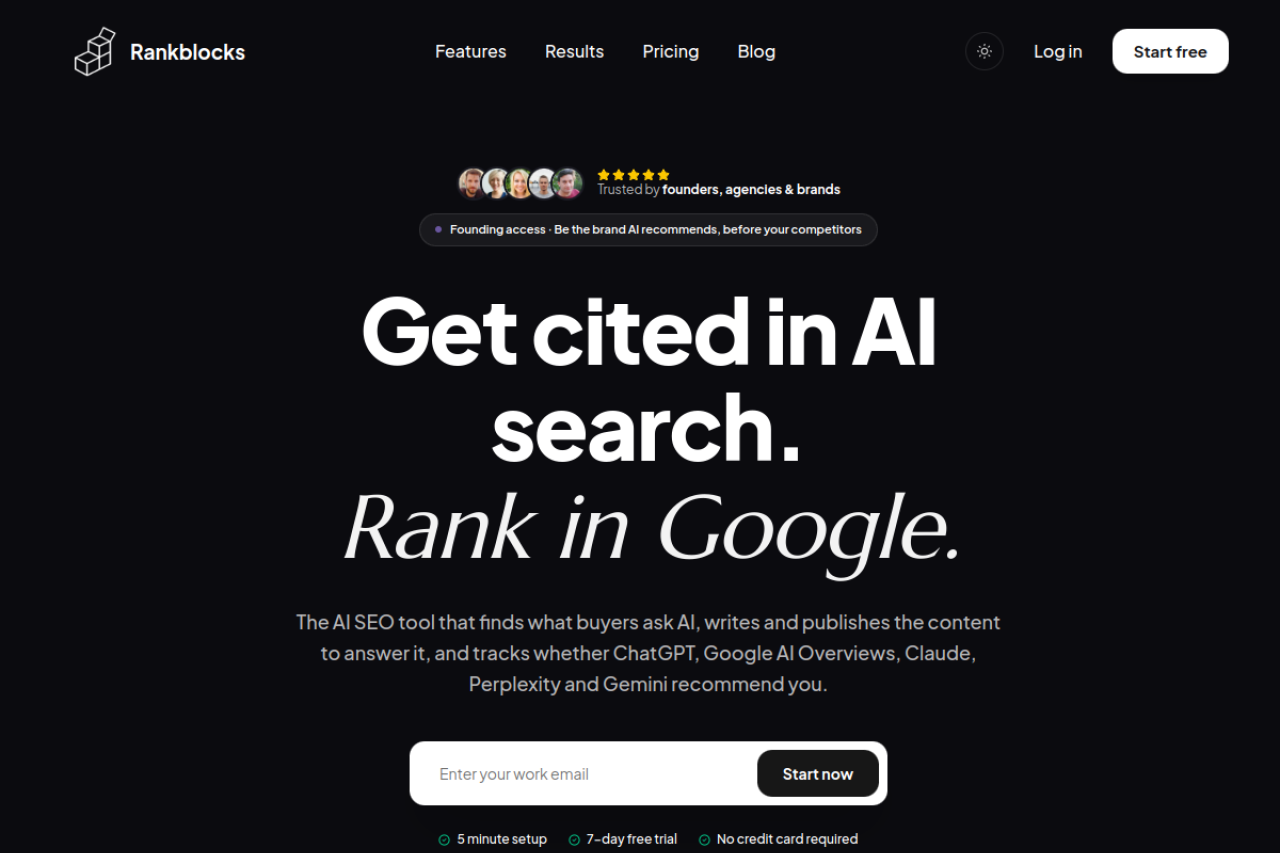
Rankblocks is a full-loop platform built for the combined SEO and AEO workflow. It bundles Content Gap Analysis, a Keyword Rank Tracker, the AI Visibility Monitor, the AI Content Writing Engine, and a Live Search Console Dashboard in one place.
The AI Visibility Monitor tracks your clients' citations across ChatGPT, Claude, Gemini, and Perplexity in one dashboard. You see which buying questions surface a client versus a competitor, so you know exactly where each account wins or loses.
The workflow runs end to end. Content Gap Analysis finds the missing topics, the AI Content Writing Engine writes the article in the client's voice, and it publishes straight to the client's site. No separate content tool, no manual export.
Best for agencies that need to research, produce, publish, and report from one place. Honest note: Rankblocks is a newer entrant. Its best fit is an agency adding AEO as a service line right now and wanting proof of citations to show clients.
Semrush
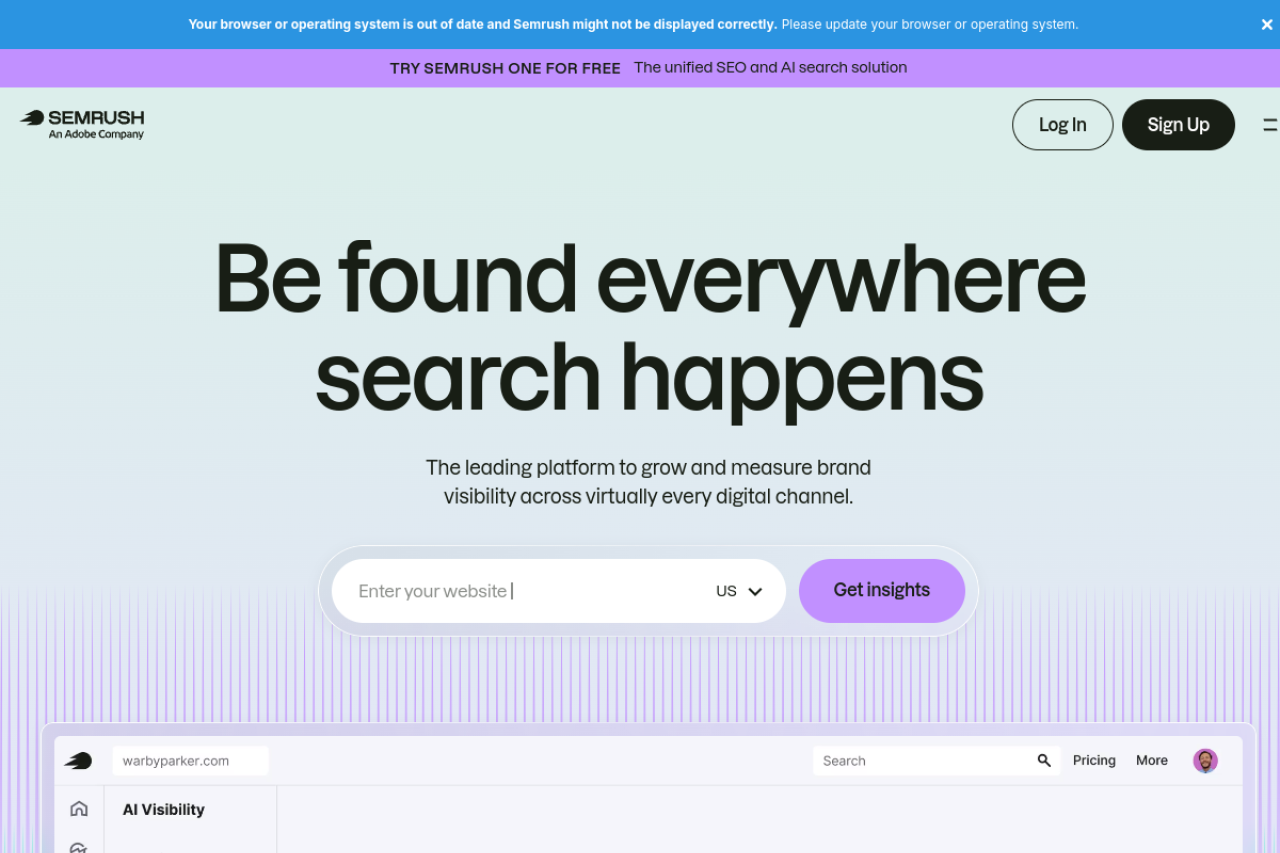
Semrush is an established all-in-one SEO platform with deep keyword and backlink data. Its dataset and competitive research features are hard to beat at scale.
It offers strong multi-client project management and broad third-party integrations. Most agencies already know the interface, which lowers onboarding friction.
The gap is clear. Semrush has no native AI citation or brand mention tracking across LLM answer engines.
Best for agencies that need best-in-class keyword and competitive data at scale. Honest note: you will bolt on add-ons and separate tools to cover AI visibility reporting.
Ahrefs
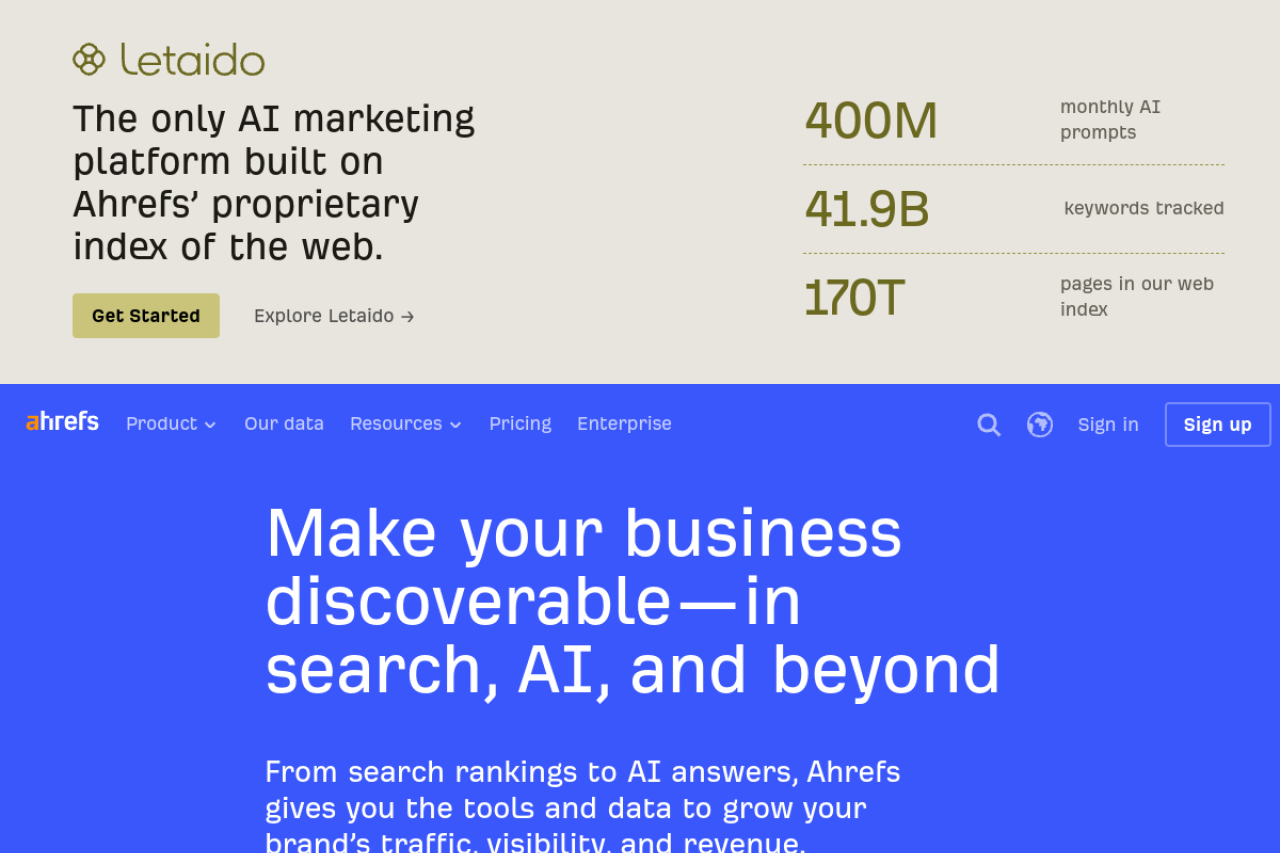
Ahrefs is the industry benchmark for backlink analysis and keyword research depth. Its crawler and link index set the standard many agencies trust.
The site audit and rank tracker handle multi-domain management well. Link-building teams live inside it comfortably.
Ahrefs tracks traditional search signals only. It has no AI citation tracking, so the AEO reporting gap stays wide open.
Best for agencies where link-building and organic keyword strategy dominate the workflow. Honest note: it is a strong execution layer that leaves AI visibility unanswered.
Surfer SEO
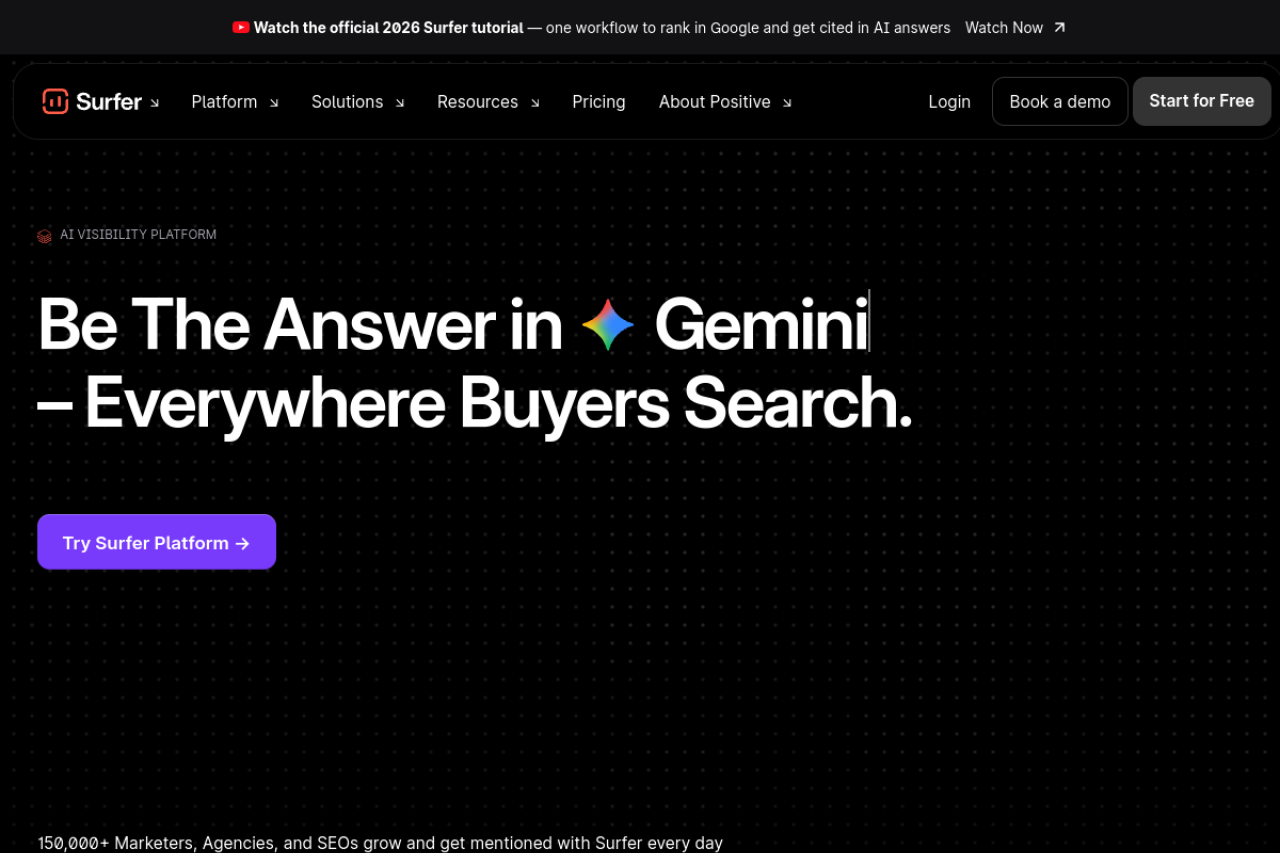
Surfer SEO is an on-page content optimization tool built around SERP data and NLP signals. Writers use it to hit topical depth targets that correlate with higher Google rankings.
It speeds up on-page scoring and content briefs. For high-volume production teams, that saves editing time.
Surfer offers no AI visibility tracking and no multi-client rank or citation dashboards. It optimizes pages, it does not report across accounts.
Best for agencies that handle high-volume content production and on-page scoring. Honest note: it is a content layer, not a full agency workflow platform.
AgencyAnalytics
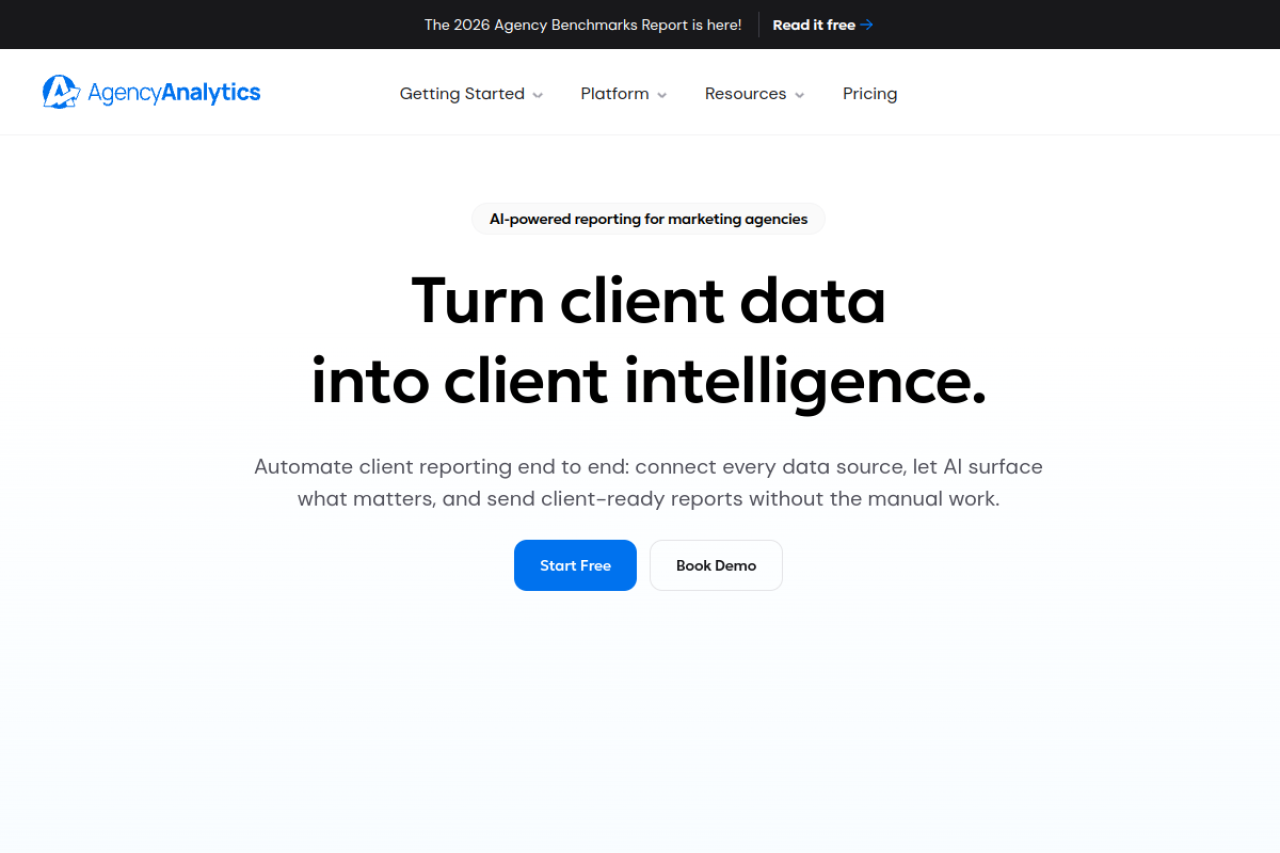
AgencyAnalytics is a reporting-first platform that consolidates data from GA4, GSC, and third-party SEO tools. It exists to make client reporting fast and painless.
White-label client dashboards and automated scheduled reporting are its headline strengths. Agencies drowning in monthly reports feel instant relief.
AI citation tracking is not a native feature. It pulls only from connected tools, so it inherits their blind spots.
Best for agencies whose primary pain point is client reporting automation. Honest note: it is an excellent front-end reporting skin but thin on execution features.
Clearscope
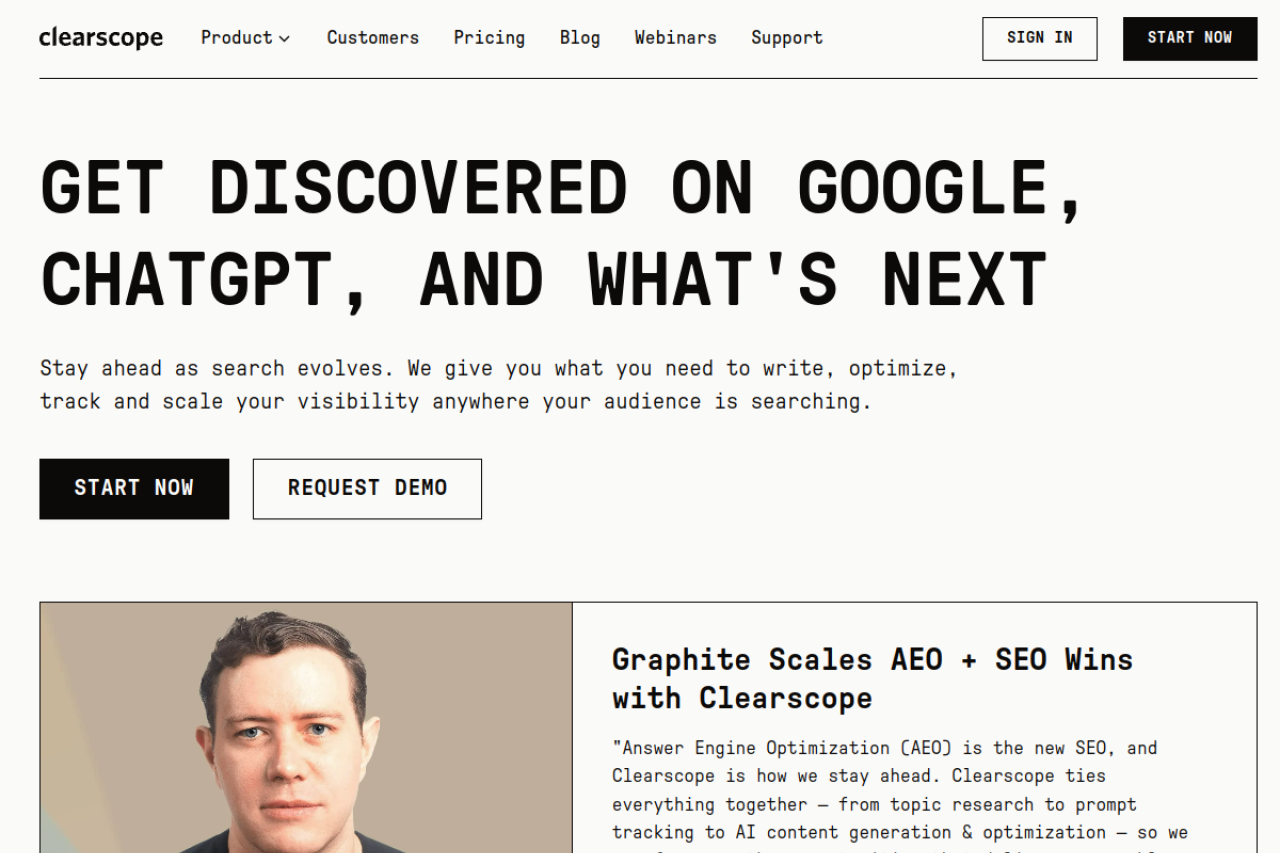
Clearscope is a content optimization and topical authority tool with a clean, writer-friendly interface. Editors like how little it gets in the way.
Keyword grading and content brief generation speed up editorial workflows. Quality-focused teams reach topical depth faster.
It stops at content. Clearscope offers no rank tracking, no AI visibility monitoring, and no agency multi-client dashboards.
Best for agencies running a dedicated editorial team focused on topical depth. Honest note: it is a specialist content tool that needs pairing with a tracking platform.
How the best agency SEO platforms compare at a glance
Map each tool to your workflow gaps using the table below. The pattern jumps out fast.
| Tool | AI citation tracking | White-label reporting | Content publishing | Best for |
|---|---|---|---|---|
| Rankblocks | Yes | Yes | Yes | Full SEO plus AEO loop |
| Semrush | No | Yes | No | Keyword and competitive data |
| Ahrefs | No | Partial | No | Backlink-driven strategy |
| Surfer SEO | No | No | No | On-page content scoring |
| AgencyAnalytics | No | Yes | No | Client reporting automation |
| Clearscope | No | No | No | Editorial content depth |
Most tools cover one or two workflow phases, not the full loop. That is why so many agencies stitch four subscriptions together and still miss AI data. Organic CTR for queries with AI Overviews fell 61% year-over-year, making citation tracking the metric clients now demand.
Only Rankblocks closes AI citation tracking, white-label reporting, and content publishing without a third-party integration. Use the table as a decision rule. If your clients ask about AI visibility, the platform must show a yes in that column.
Pick the platform that matches the gap you need to close
Start with the workflow phase that costs the most time or causes the most client friction. Do not buy the platform with the longest feature list. Buy the one that closes your specific gap.
If AI citations are the gap, only platforms with native LLM tracking fill it. A bolt-on will not show a client why ChatGPT recommends a competitor instead of them.
If reporting is the bottleneck, prioritize white-label automation and scheduled delivery. If content production drags, publishing-integrated tools cut turnaround by days per article, not hours.
Rankblocks closes all three gaps in one place. You find the gap, publish the fix, and prove the result across Google rankings and AI citations. That single loop is the standard clients now expect, whether they run a Shopify store or a B2B SaaS.
Build a stack that reports AI visibility and closes the loop
Clients no longer accept rankings alone. They want to see brand mentions moving in ChatGPT, Perplexity, and Google AI Overviews next to their Google clicks. The best SEO software for agencies now has to measure AI visibility as rigorously as classic SEO.
Rankblocks is the platform built for exactly that. Content Gap Analysis and the Keyword Rank Tracker cover classic SEO, the AI Visibility Monitor tracks citations across ChatGPT, Claude, Gemini, and Perplexity, and the AI Content Writing Engine publishes fixes straight to the client's site. You research, produce, publish, and report from one dashboard instead of juggling Semrush, Ahrefs, a citation tracker, and a content tool.
Test it on one account before you commit to a full switch. Want to see where a client stands in AI answers today? Run a free audit and watch the citations move.
Frequently asked questions about the best SEO software for agencies
What criteria should agencies use to evaluate SEO software today?
Score each platform on six criteria: multi-client management, AI citation tracking, keyword rank tracking with context, content gap analysis by traffic opportunity, white-label reporting, and publish-to-site capability. AI citation tracking is the criterion most legacy tools skip, and it is now the one clients ask about directly.
Which platforms track AI citations across ChatGPT, Perplexity, and Gemini for clients?
Very few classic tools do. Semrush, Ahrefs, Surfer, and Clearscope track traditional search only, and AgencyAnalytics pulls from connected tools. Rankblocks tracks citations and brand mentions natively across ChatGPT, Claude, Gemini, and Perplexity in one dashboard you can white-label for client reporting.
What is the difference between white-label SEO tools and full agency workflow platforms?
White-label SEO tools focus on branded reporting, presenting data under your agency's name. Full agency workflow platforms add research, execution, and publishing on top of reporting. A reporting-only tool shows the problem, while a full platform lets you find the gap, publish the fix, and prove the result.
Do agencies need separate tools for classic SEO and AI-search visibility?
No. AEO, GEO, and classic SEO overlap, so content built to win AI citations also ranks in Google. A platform that covers both, like Rankblocks, removes the tool sprawl of running one stack for rankings and another for citation tracking, saving budget and reporting time.