 Rankblocks
Generative engine optimization tools: the new stack for getting cited by AI search engines

Search no longer ends with ten blue links. Your buyers ask ChatGPT, Perplexity, and Google AI Overviews, then act on the answer they get. Sessions from generative AI platforms grew 796% year-over-year, with conversions up 6,432% in the same period. If that answer skips your brand, the sale walks away without ever seeing you.
That single shift makes generative engine optimization tools a category you cannot ignore. But most roundups just list features and pricing, then leave you guessing which one actually earns a citation.
This article maps each tool to the specific outcome it produces. We chose picks on four criteria: platform coverage, citation depth, content creation, and workflow fit. By the end you will know which stack fits your team, your budget, and your visibility gaps.
What GEO, AEO, and classic search engine SEO actually mean
Three acronyms cause a lot of wasted budget. Let me untangle them fast.
GEO stands for generative engine optimization. It means earning citations inside synthesized LLM answers, the paragraphs ChatGPT or Perplexity write when someone asks a question. Your brand appears as a source the model trusts.
AEO stands for answer engine optimization. It means winning direct-answer surfaces like Google AI Overviews and featured snippets. You capture the box that sits above the classic results.
Classic search engine SEO still tracks keyword rankings, organic clicks, and backlinks on Google. That work never stopped mattering. The gap between answer engine optimization vs generative engine optimization confuses buyers into thinking they need three separate strategies.
They do not. The same authoritative content wins in every channel. A well structured article that ranks on Google gets pulled into AI Overviews and cited by Perplexity. Google search engine optimization and AI visibility feed each other.
The terminology trap costs real money. Owners buy a keyword tool for classic SEO, a monitoring tool for AI, and a course to learn the difference. Then they stitch three dashboards together and still cannot prove the work paid off. Treat GEO vs AEO as one overlapping discipline and the whole thing gets simpler.
What separates a real GEO tool from a traditional SEO platform
Traditional SEO tools track keyword position and backlink counts. They never tell you how ChatGPT describes your brand or whether Gemini recommends a competitor instead. That blind spot is where buyers now decide.
GEO-native tools measure different signals. They track citation frequency, prompt-level visibility, and sentiment across each model. You see the exact question where a rival gets cited and you do not.

Monitoring alone does not fix the problem. Seeing that you are invisible in 40 prompts feels bad, but a dashboard never wrote a single article. You need output too, content built to earn those citations.
That is the content creation gap most tools ignore. To evaluate the options fairly, I scored each one on four criteria.
- AI platform coverage: how many engines it tracks like ChatGPT, Claude, Gemini, and Perplexity.
- Citation depth: whether it shows prompt-level detail and sentiment, not just a vanity mention count.
- Content capability: whether it can write and publish content, or only report gaps.
- Workflow fit: how well it suits your team size, budget, and reporting needs.
Closed-loop platforms beat point solutions stitched together. When one system finds the gap, writes the fix, publishes it, and confirms the citation, you cut weeks off the cycle. Separate tools force manual handoffs where data breaks and time bleeds.
Top 6 generative engine optimization tools for AI search visibility
Here are the six tools worth your evaluation, starting with the only one that closes the full loop, then five strong specialists.
Rankblocks
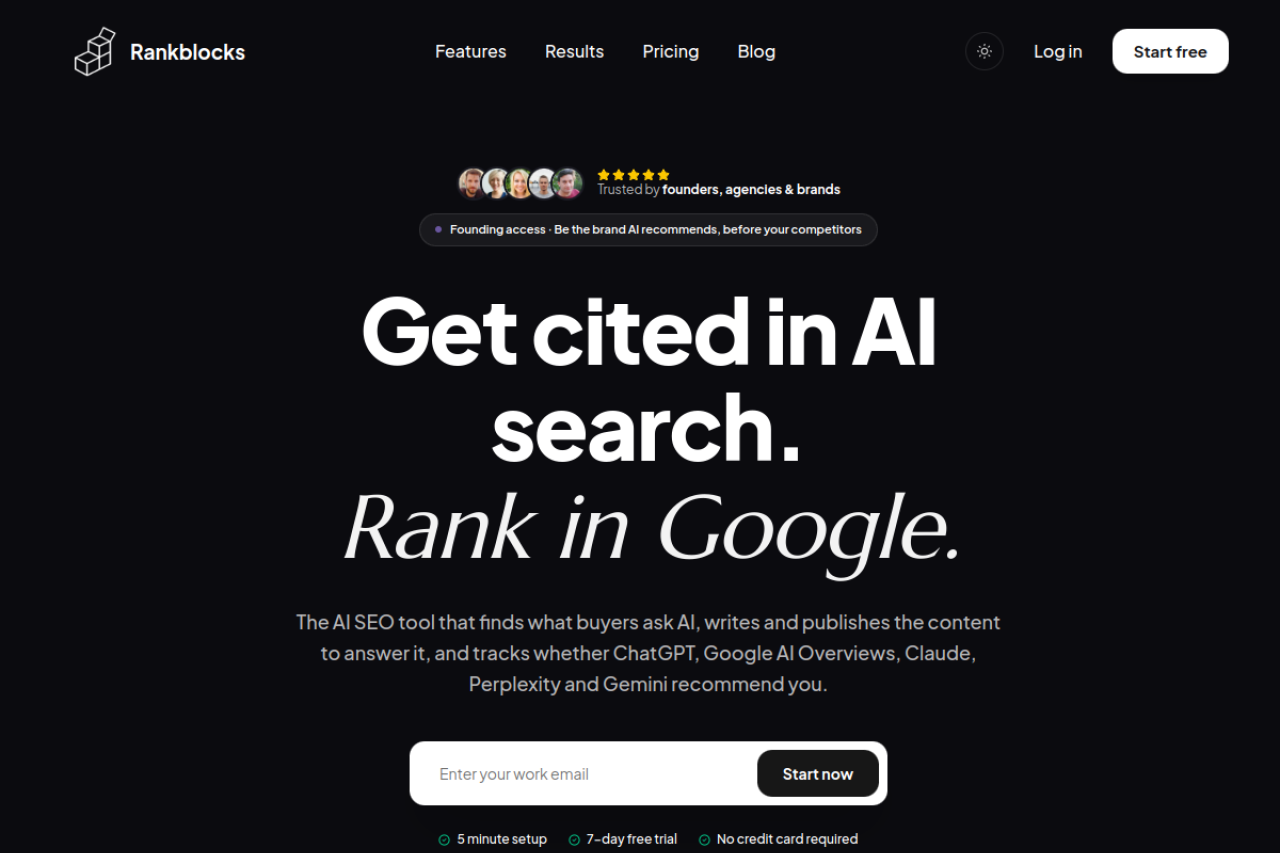
Rankblocks runs the complete closed loop in one platform. It finds the buyer questions where your brand is invisible, writes content built for citations, publishes it, and measures the result. No handoffs, no stitched dashboards.
The AI Visibility Tracker monitors ChatGPT, Claude, Gemini, and Perplexity in one view. It shows which prompts surface your brand and which recommend competitors instead. The AI Content Writing Engine then writes articles engineered to earn citations and rank on Google at the same time.
On the classic SEO side, Content Gap Analysis flags topics rivals rank for that you miss, prioritized by traffic. The Keyword Tracker logs daily positions so you catch drops early.
Best for SEO managers, agency owners, solo operators, and non-technical business owners who want the whole process automated with plain-language proof it is working. The gap Rankblocks fills is the one every monitoring tool leaves open: it fixes the problem it finds.
Profound
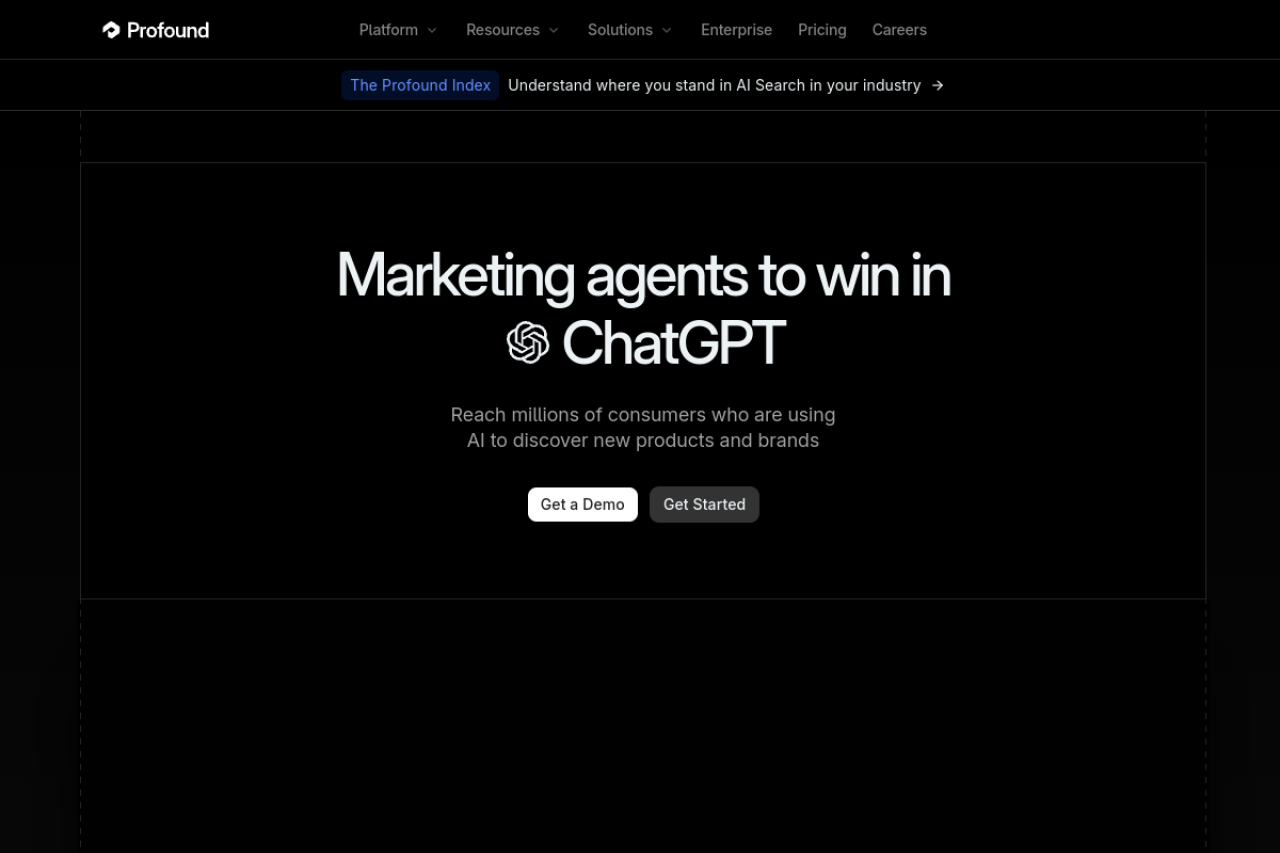
Profound is an enterprise-grade AI visibility platform covering 10-plus AI engines. It delivers rich prompt-level diagnostics and detailed citation audits across models.
Best for large in-house teams that need deep attribution and multi-model data at scale. The prompt diagnostics are genuinely strong for teams with analysts to work them.
The catch is no content creation layer. Profound shows you the gap in high resolution but does not fill it. You still need a separate engine to write and publish the content that earns the citation.
Peec AI
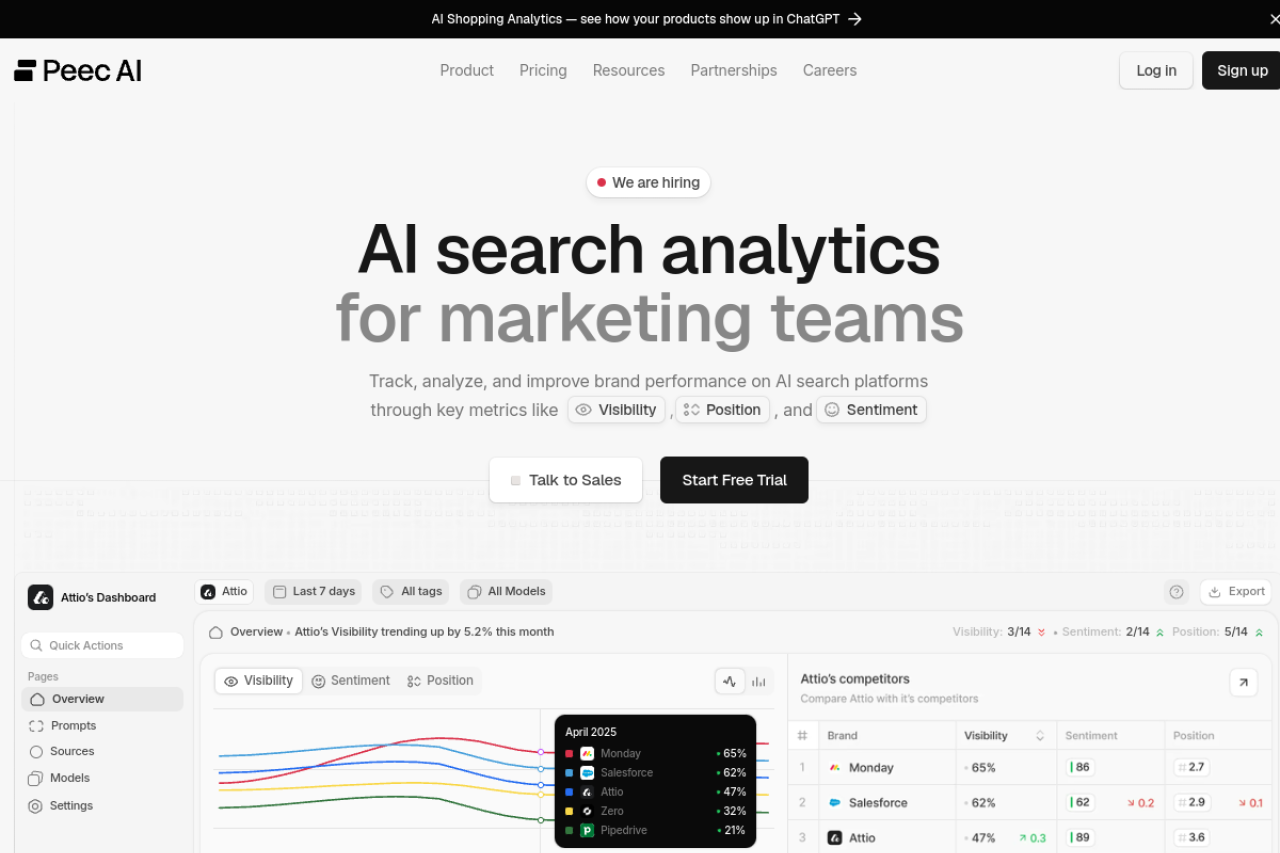
Peec AI is a focused AI brand monitoring and citation tracking tool. It benchmarks how often you and your competitors get mentioned across AI engines, with real-time alerting.
Best for SMBs and agencies that want an affordable way to watch competitor mentions. The low entry price and alerts make it easy to start.
Like Profound, it is monitoring only. Peec AI does not write or publish content to close the visibility gap. Track and alert, yes. Fix, no.
Clearscope
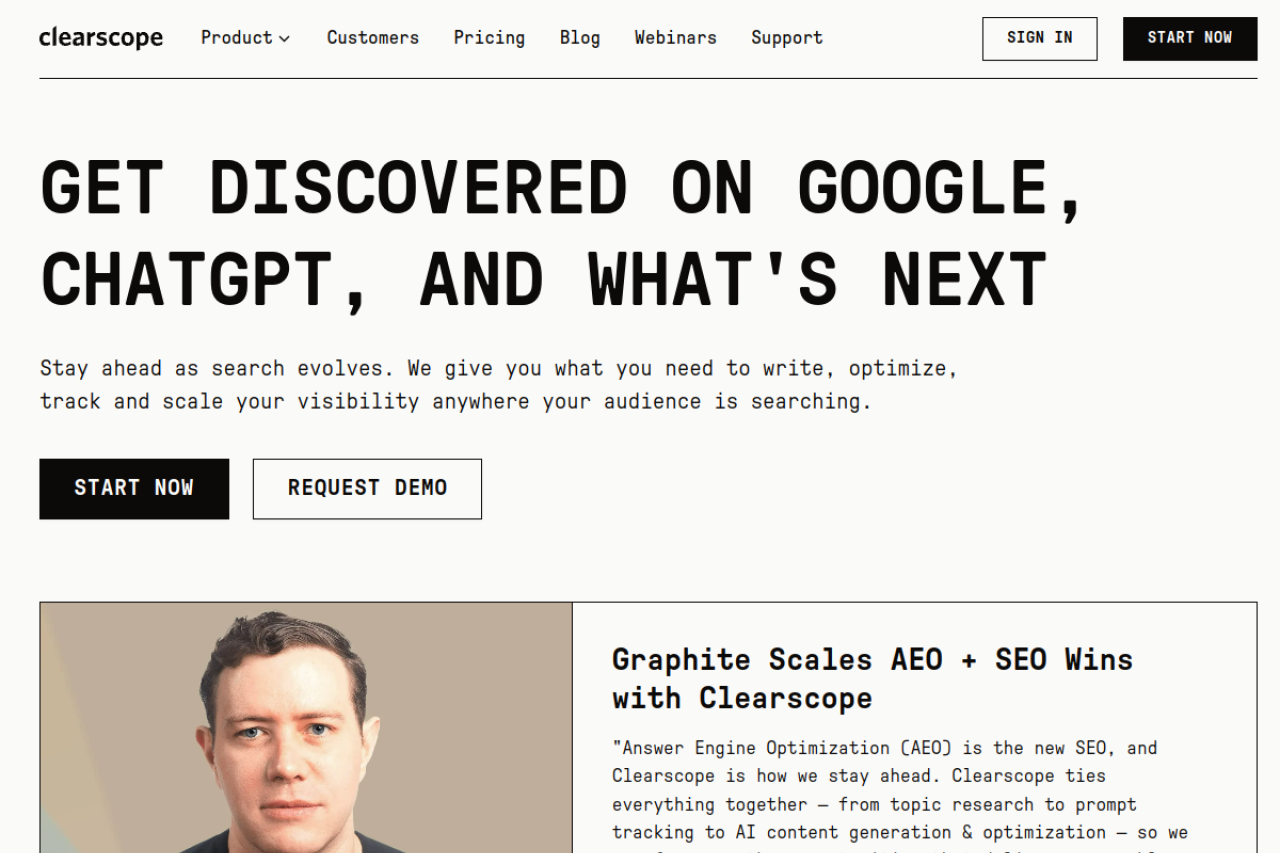
Clearscope is a content optimization platform. It scores your drafts against top-ranking pages so you cover the right topics and terms.
Best for content teams optimizing for Google rankings and topic coverage. Its keyword and topic modeling produces solid briefs for classic SEO work.
The limitation is AI citation tracking, or the lack of it. Clearscope never measures whether your content earns LLM mentions. It sharpens Google rankings but stays blind to how ChatGPT describes you.
Mangools
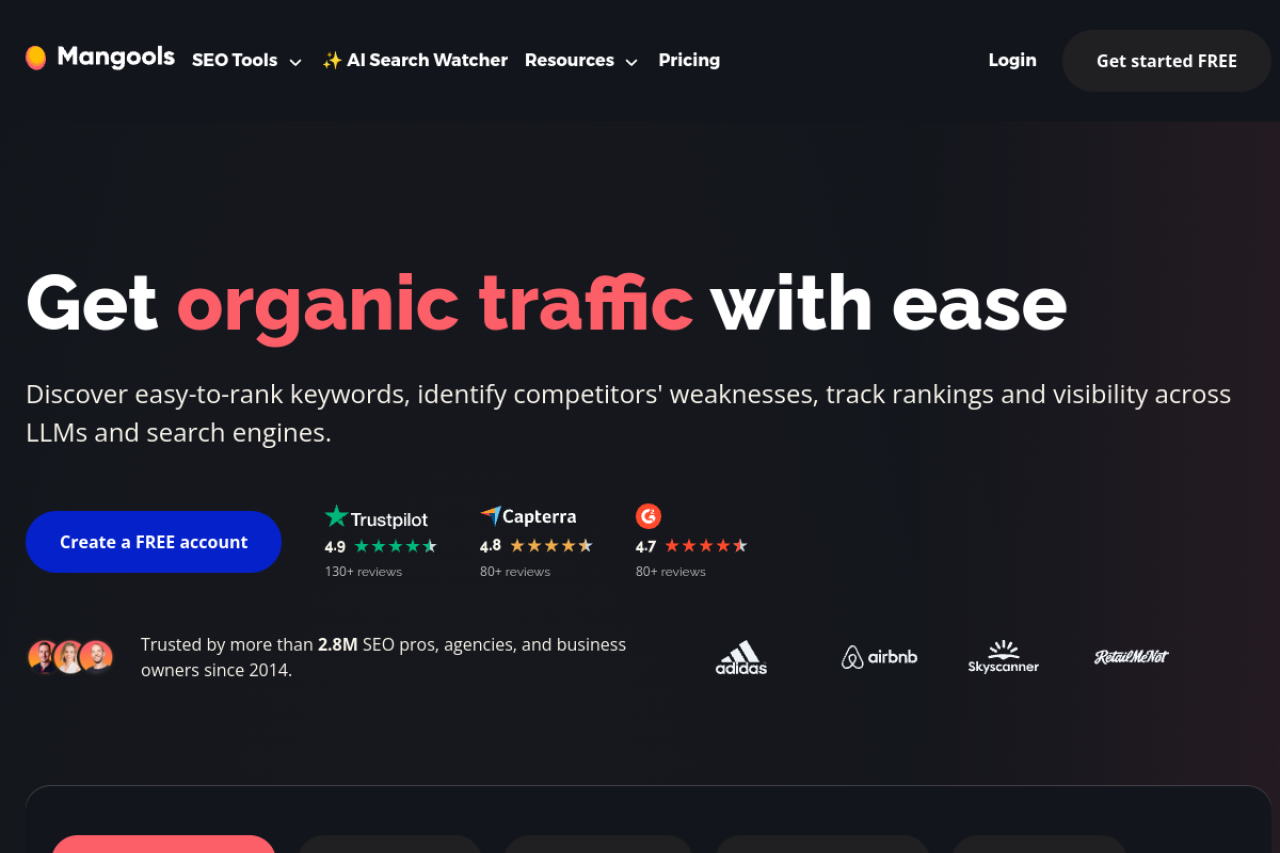
Mangools is a keyword research and rank-tracking suite with an AI Search Grader add-on. It gives small teams affordable keyword tracking plus a basic AI visibility signal.
Best for small teams that want low-cost classic SEO tooling with a first look at AI presence. The UX is clean and the search engine optimization pricing sits well below enterprise platforms.
The AI feature is a surface-level add-on, not a purpose-built citation tracker. It flags a signal but will not tell you which prompts cite a rival or why. Treat it as a nice extra, not a GEO engine.
Searchable
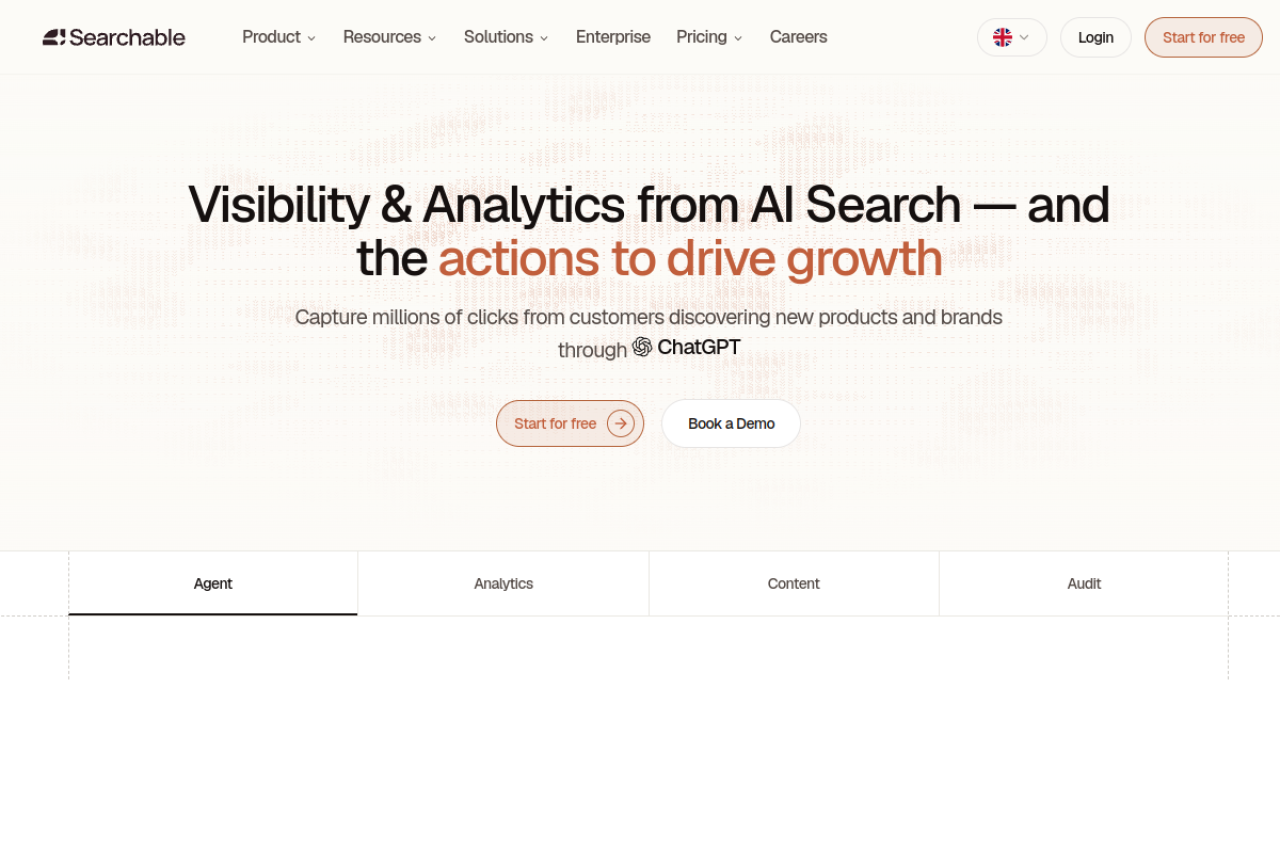
Searchable is an AI search visibility and content discoverability platform. It surfaces the technical gaps that make your content invisible to AI crawlers.
Best for teams that want to optimize existing content for AI bot readability. The technical audits catch structural issues other tools miss.
It skews toward technical audits, though. Content writing and citation measurement stay limited. You learn why AI cannot read your page, but you still need help writing the pages that get cited.
Here is the quick comparison.
| Tool | Tracks AI citations | Writes and publishes content | Best for |
|---|---|---|---|
| Rankblocks | Yes | Yes | Full closed loop, all team sizes |
| Profound | Yes | No | Enterprise attribution |
| Peec AI | Yes | No | SMB competitor monitoring |
| Clearscope | No | Optimizes only | Google content briefs |
| Mangools | Basic signal | No | Affordable keyword tracking |
| Searchable | Limited | No | Technical AI crawler audits |
How the three tool categories form a closed loop
Monitoring, content creation, and rank tracking are not three products. They are three steps of one loop. Skip a step and the whole thing breaks.
Step 1: Monitor. Find the prompts where competitors get cited and you do not. This is where you learn why ChatGPT recommends competitors instead of your brand.
Step 2: Create. Write and publish content engineered to earn those exact citations. A gap you never fill stays a gap forever.
Step 3: Measure. Confirm the new content is earning mentions and moving rankings. Without this, ROI stays invisible and you fly blind.
Break any link and the loop collapses. Monitor without creating and you just document your losses. Create without measuring and you never know what worked.
One unified platform cuts this loop from weeks to days. Instead of exporting from a monitoring tool, briefing a writer, publishing manually, then checking a separate dashboard, you run it in a single marketing analytics flow. The time saved compounds every cycle.
How to pick the right stack for your team size and budget
Your ideal stack depends on who runs it. Match the tool to the team.
- Solo operators and non-technical owners: prioritize full automation and plain-language reporting. You want customers to find you, not a course on GEO SEO tools.
- In-house SEO managers: you need citation tracking beside classic rank and traffic data, in one accountable view.
- Agency owners: white-label reporting and multi-client dashboards are non-negotiable for proving ROI.
- Enterprise teams: depth of attribution and multi-model coverage matter most, budget less so.
Here is the fast decision rule. If a tool shows the problem but cannot fix it, you will need a second tool to do the writing. Two tools mean two bills, two logins, and a manual handoff in between.
Weigh that against a closed-loop platform before you commit. Whether you hire freelance help or DIY, the same math applies: count the total cost of stitching, not just the sticker price.
Get cited before your competitors lock in the answer
AI citations compound like backlinks. Research shows brands achieving both mention and citation signals are 40% more likely to resurface in consecutive AI responses. Early presence reinforces future mentions, because models trust sources they have already cited. The brands that move now build a lead that gets harder to overtake each month.
Brands actively optimizing for AI search report citation rates two to three times higher than passive peers. A Semrush study found that 62% of AI citations do not produce a brand mention, making prompt-level tracking essential. That advantage sits with whoever fills the gaps first.
Rankblocks closes the full loop in one place. Run a free AI audit to see where your brand stands right now. It monitors your presence across ChatGPT, Claude, Gemini, and Perplexity, writes and publishes citation-optimized content, then measures the mentions and rankings you earn. Every other tool on this list leaves the "and fix it" part to you.
Non-technical owners get automation and proof in plain language, no specialist hire required. So which buyer questions leave your brand invisible right now? Check your visibility gaps and let the engine handle the rest.
Frequently asked questions about generative engine optimization tools
What is the difference between GEO tools, AEO tools, and classic SEO tools?
GEO tools track and earn citations inside AI-generated answers like ChatGPT and Perplexity. AEO tools target direct-answer surfaces like Google AI Overviews and featured snippets. Classic SEO tools measure keyword rankings, clicks, and backlinks. The same authoritative content usually wins in all three, so smart teams treat them as one overlapping discipline instead of three budgets.
How do I track whether my content is getting cited by ChatGPT or Perplexity?
Use an AI visibility tracker that queries each model with your target prompts and logs when your brand appears as a source. The best tools show prompt-level detail, sentiment, and how often competitors get cited instead. Track at least 10 prompts over 30 days to see clearly where you win and where you stay invisible.
Which generative engine optimization tools also write and publish content?
Most tools on this list only monitor, so the count is short. Rankblocks writes and publishes articles engineered for AI citations and Google rankings through its AI Content Writing Engine. Profound, Peec AI, and Searchable report gaps but do not fill them, while Clearscope optimizes drafts you supply. That "write and publish" gap is what separates a closed-loop platform from a monitor.
What does a minimum viable GEO stack look like for a small team?
A minimum viable stack tracks your AI visibility, writes content to fill the gaps it finds, and measures the citations you earn back. A single closed-loop platform covers all three without a specialist hire or an enterprise budget. Start with one tool, add a few competitors, track 10 prompts for a month, and let the data guide what you publish next.