 Rankblocks
Best SEO rank tracker: how to pick the right tool
Ranking #1 in Google while ChatGPT never mentions you is a real visibility gap. The SERP stopped being ten blue links. Now buyers ask AI assistants what to buy, and your clients feel that shift in their pipeline. Gartner predicts traditional search engine volume will drop 25% by 2026 due to AI chatbots.
Agencies now answer two questions, not one. "Where do we rank?" and "Does ChatGPT cite us?" Most best SEO rank tracker roundups score tools on accuracy and price, then skip AI-search readiness entirely.
This list adds the missing layer. It ranks tools on both Google positions and AI citations. We judged each pick on accuracy, update frequency, multi-client workflow, white-label reporting, and AI visibility. Use it to pick the right SEO keyword rank tracker for a multi-client agency stack.
What a keyword rank tracker actually needs to do
A rank tracker monitors keyword positions across SERPs over time. It saves you from typing queries into a browser all day. That is the baseline, and every tool below clears it.
Update frequency changes how fast you catch drops. Daily updates flag a slide within 24 hours. Weekly updates let a client's traffic bleed for six days before you notice. For agencies, that lag costs renewals.
Location granularity matters just as much. National keywords need clean data-center queries. Local campaigns need city and ZIP-code precision, since a plumber in Dallas ranks differently block by block.
Then there is the new layer. AI citation tracking shows whether ChatGPT, Perplexity, and Google AI Overviews mention your client's brand. This is no longer optional. AEO and classic SEO now reinforce each other, so a full keyword rank checker without AI coverage leaves half the report blank.
That is the real split. A classic SEO keyword rank tracker shows Google positions. In 2025, 58.5% of US searches ended without any click to an external website, making AI citation visibility even more critical. A full AI-search visibility tool shows where models cite you or your competitor.
Five criteria that separate great rank tracking software for agencies
Not every tool fits an agency running fifteen client accounts. Score your shortlist against these five points before you commit budget.
- Accuracy and data freshness. The best tools cross-reference multiple data centers to cut anomalies. You want positions you can defend, not numbers that jump for no reason.
- Multi-site management. You should switch between client accounts without extra logins or tab chaos. A clean workspace saves hours every week across a portfolio.
- White-label reporting. Branded, client-ready exports let you invoice against a deliverable. If the report carries the vendor's logo, you cannot charge for it as your own.
- AI Overview and AI citation monitoring. Surface brand mentions across ChatGPT, Perplexity, and Gemini. This is the differentiator agencies can sell and put on an invoice.
- Search Console integration. A plain-language view of clicks, impressions, and quick-win keywords beats digging through raw dashboards. It turns data into a story clients understand.

Weight these to your workflow. A local agency prizes ZIP-code accuracy. A content shop prizes AI citations. Rank the five, then read the picks below through that lens.
Top 7 SEO rank tracker tools for agencies managing multiple clients
Here are seven tools, honest pros and cons, and who each one fits. We led with the one platform that covers Google positions and AI citations together.
Rankblocks
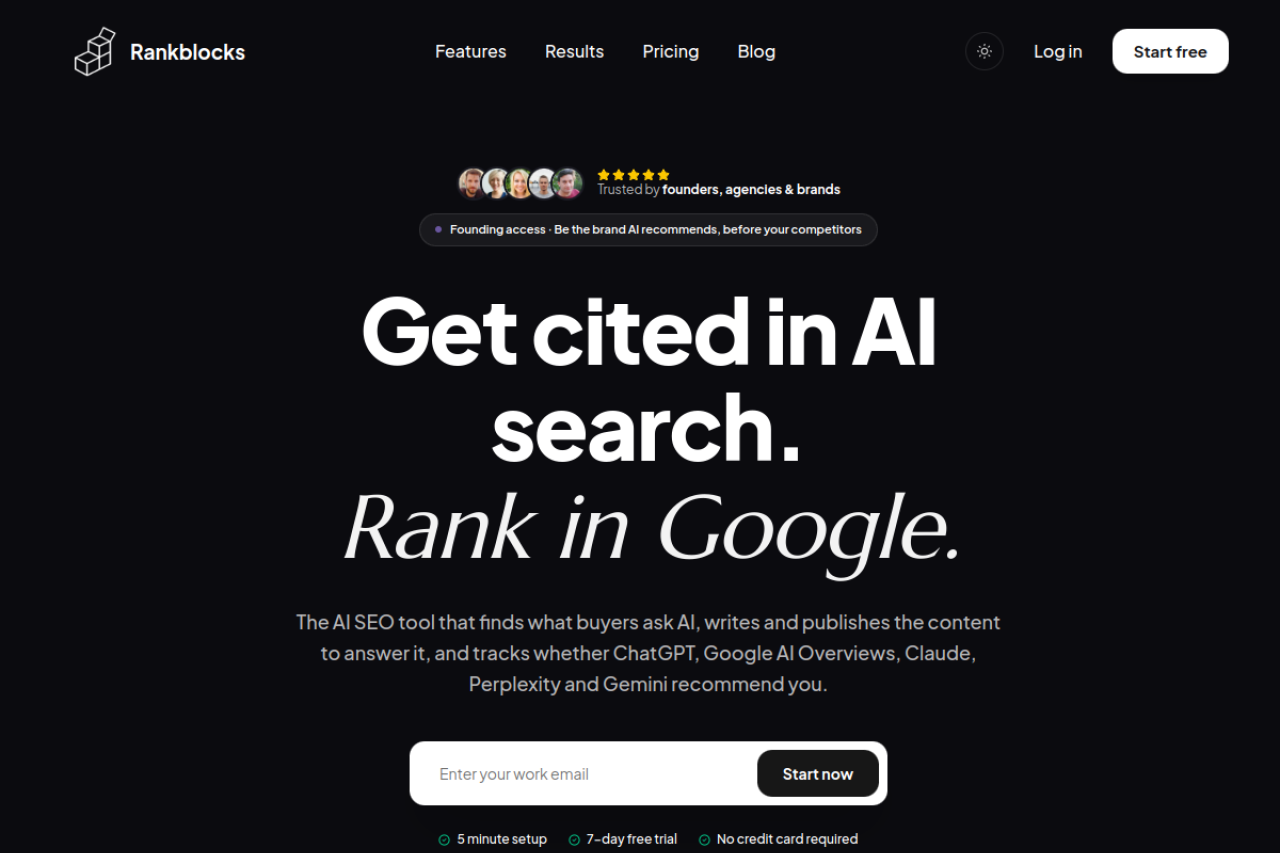
Rankblocks pairs a Keyword Rank Tracker and a Live Search Console Dashboard in one platform. You track keyword positions over time, with position history and SERP context, and catch drops before they cost traffic.
The AI Visibility Monitor tracks citations across ChatGPT, Claude, Gemini, and Perplexity. You see which buying questions surface you versus a competitor, so you know exactly where you win or lose in AI answers.
Content Gap Analysis surfaces competitor keyword wins and prioritizes them by traffic opportunity. The AI Content Writing Engine then publishes articles built to win citations, straight to the client's site, in their voice.
Best for: agencies that need one platform to track Google positions and AI-answer citations, without a fragmented tool stack.
Semrush
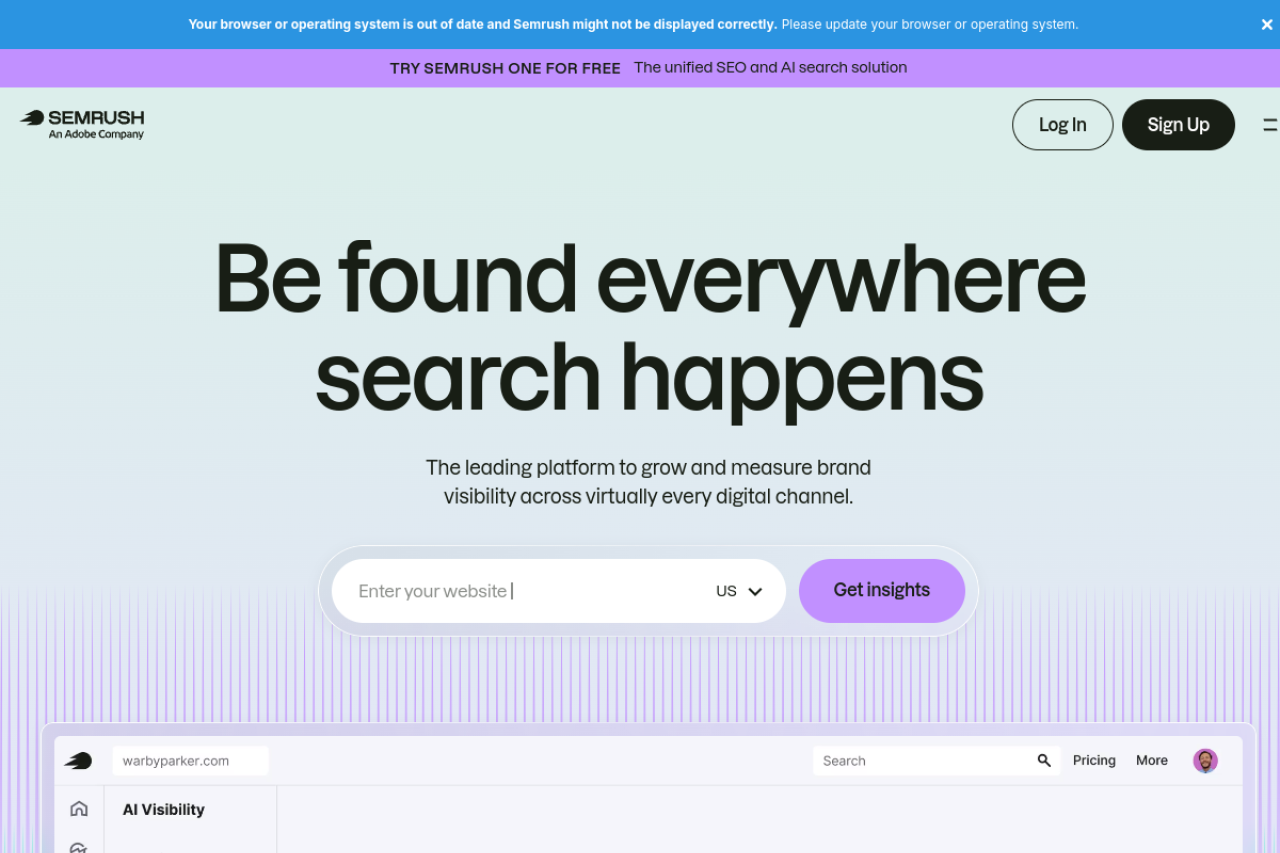
Semrush is the industry-standard all-in-one suite with deep position tracking and competitor data. Its keyword database is enormous, and its SERP feature coverage is broad.
Best for: large agencies with budget for a premium, feature-dense stack.
Pro: daily updates, a massive keyword database, and wide SERP feature tracking. Con: it gets expensive at scale, and its AI citation tracking is limited next to dedicated tools.
Ahrefs
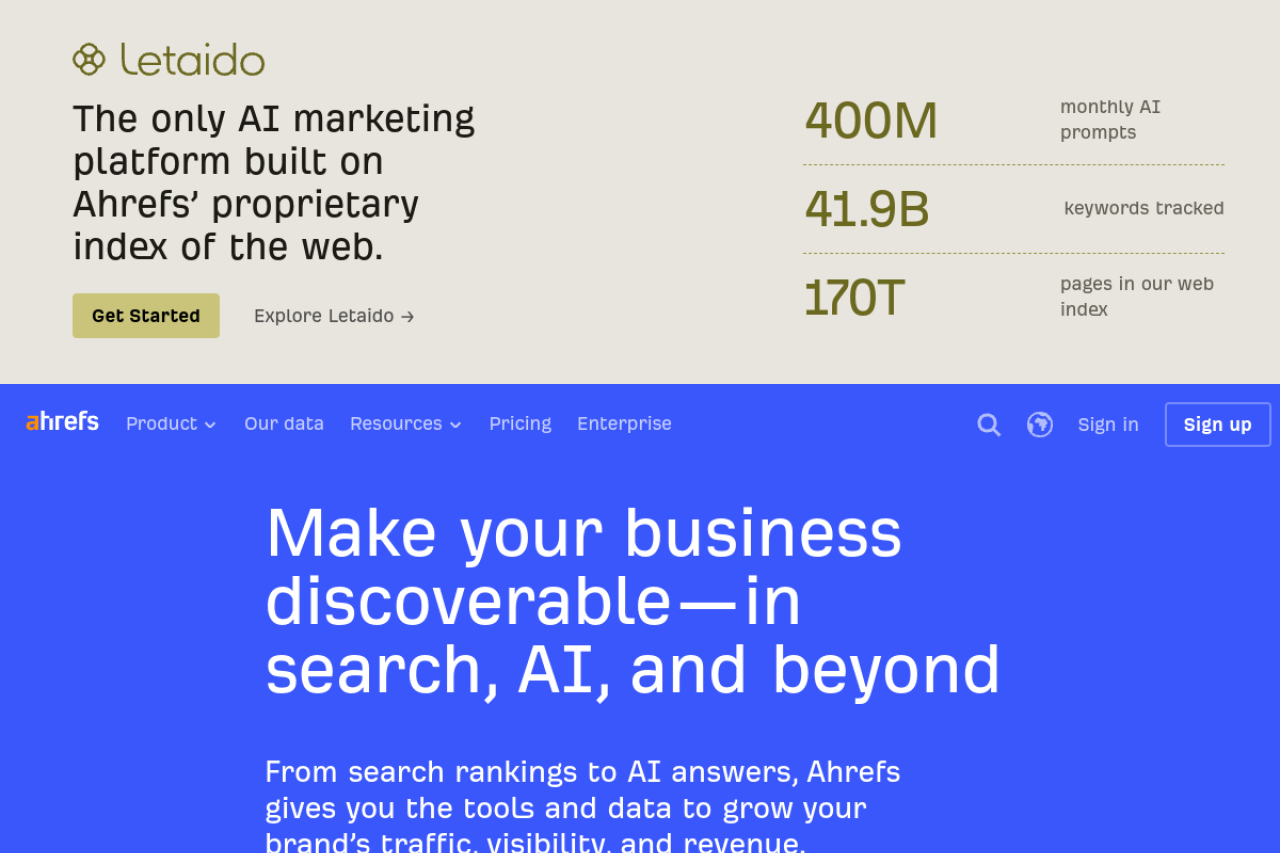
Ahrefs offers a strong rank tracker backed by a large keyword database spanning most countries. Its SERP snapshots are accurate and its data stays clean.
Best for: agencies that prioritize backlink analysis alongside ranking data.
Pro: reliable, trustworthy data and clear SERP history. Con: no native AI citation or AI Overview monitoring, so the AI layer stays dark.
SE Ranking
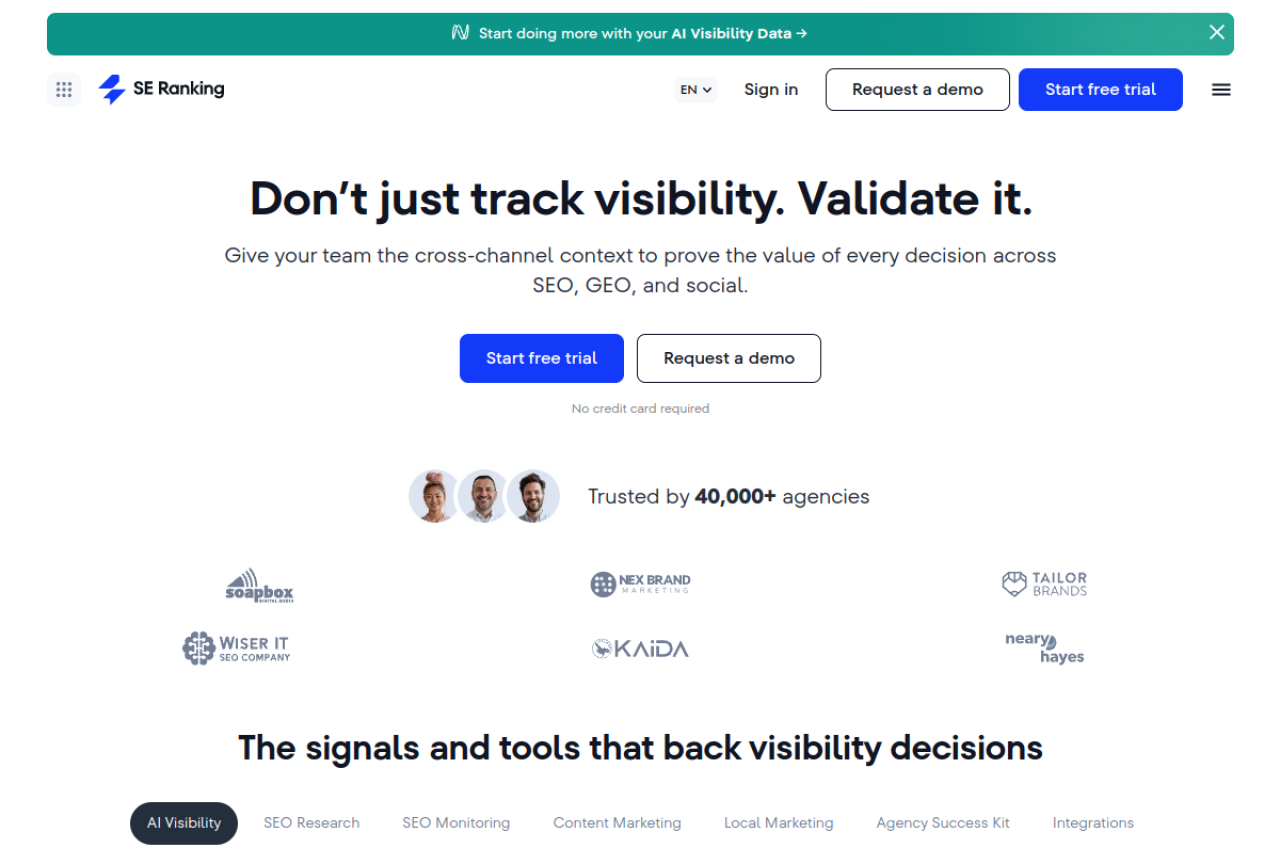
SE Ranking is a mid-market tool with white-label reports and a growing AI visibility module. It balances price and features for smaller shops.
Best for: smaller agencies that want affordability with some AI-search coverage.
Pro: flexible pricing tiers and white-label client portals included. Con: its AI visibility tracking is less granular than dedicated AEO platforms.
Nightwatch
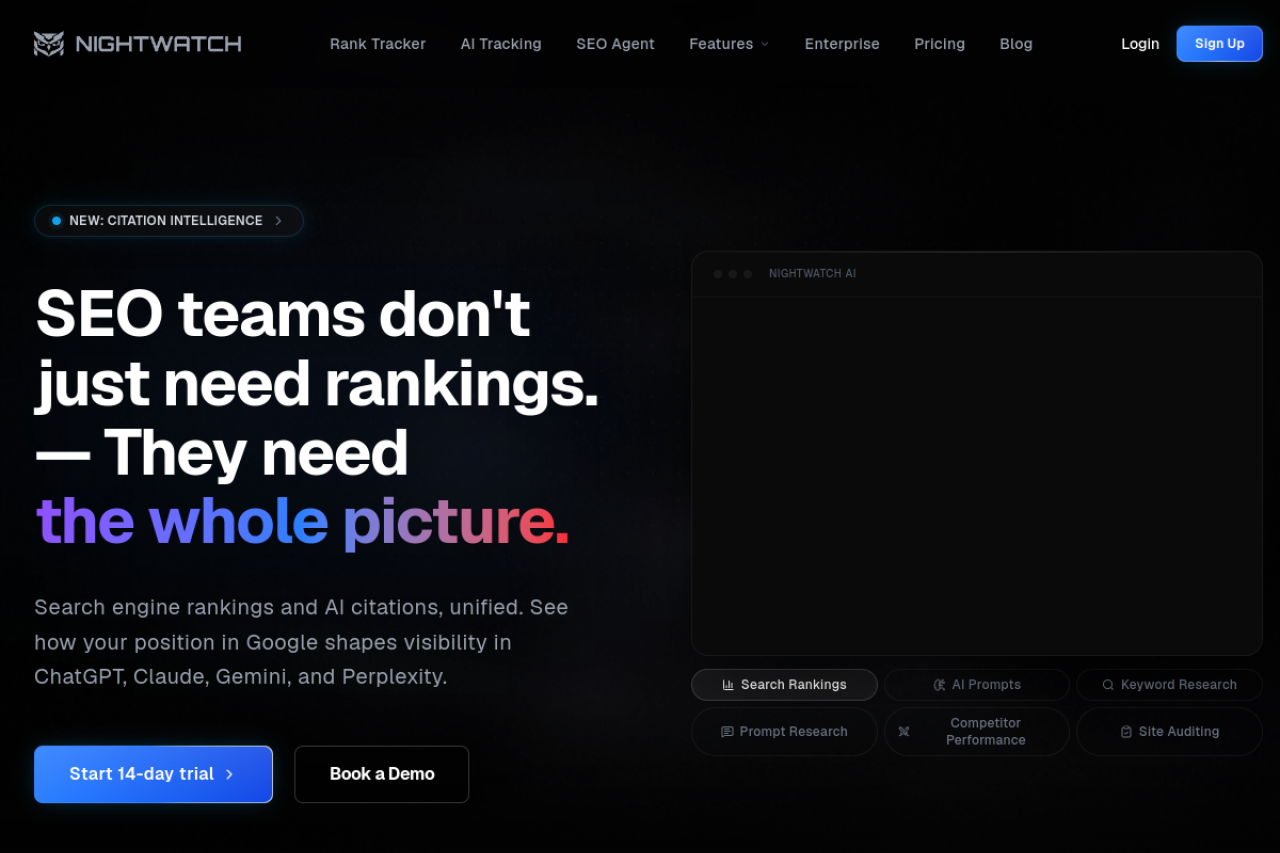
Nightwatch is an agency-focused tracker with ZIP-code precision and daily ranking updates. It shines on hyper-local work.
Best for: agencies running local SEO campaigns across many client sites.
Pro: visual rank-change graphs and affordable per-keyword pricing. Con: its AI citation monitoring is nascent and not a core feature yet.
AccuRanker
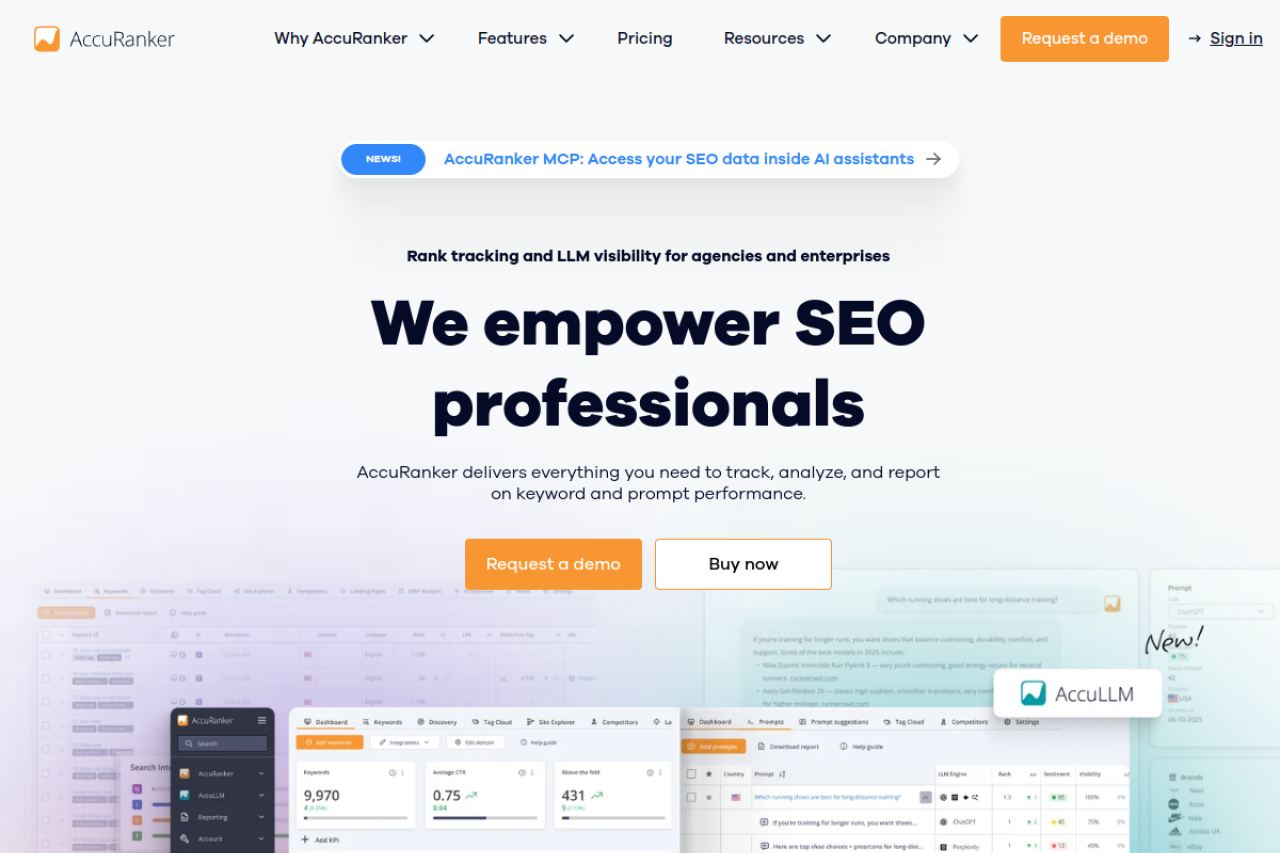
AccuRanker is a fast, dedicated rank tracker known for on-demand refreshes and clean dashboards. When you need a position now, it delivers.
Best for: agencies that need instant rank updates and simple client reporting.
Pro: the fastest on-demand refresh speed on the market and easy client sharing. Con: rank tracking only, with no content creation, GSC integration, or AI citation layer.
Surfer SEO
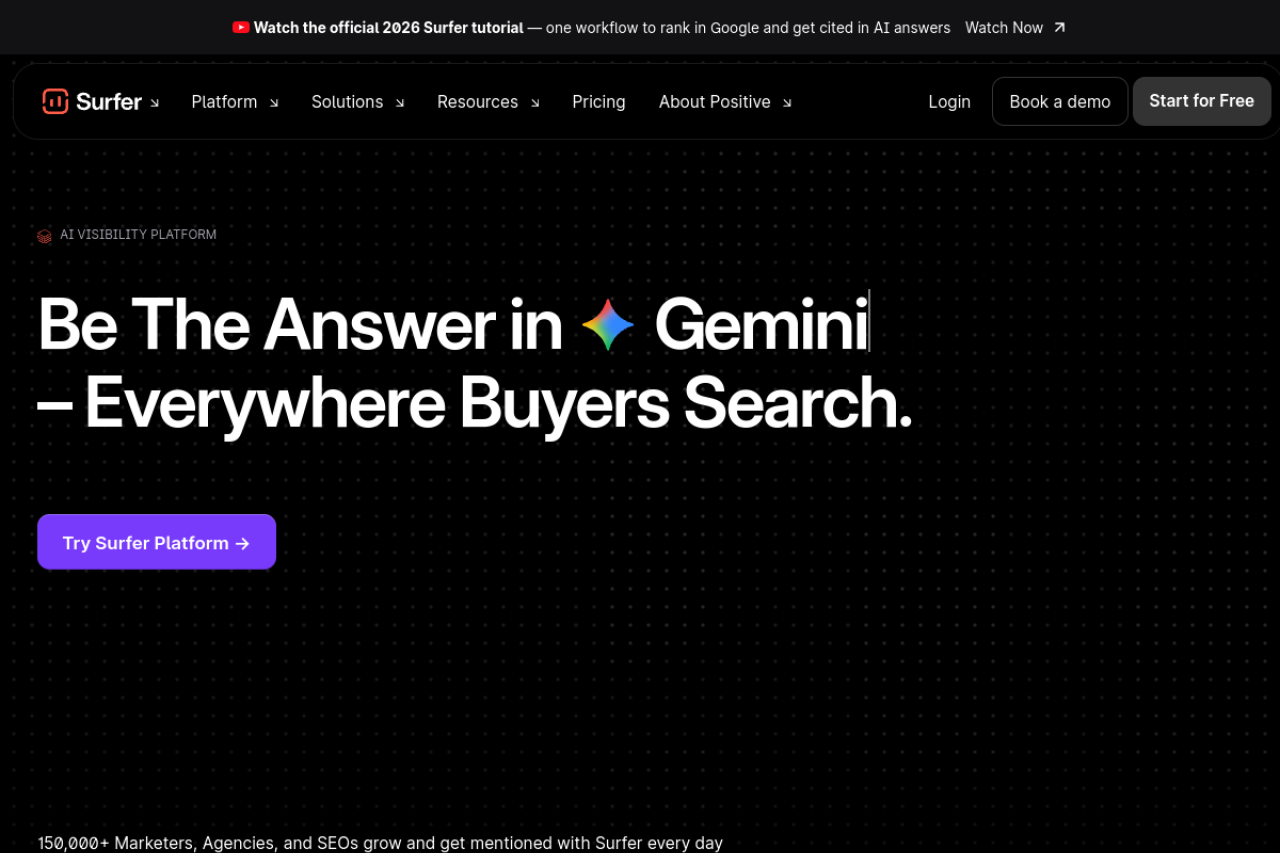
Surfer SEO is a content optimization tool with a rank tracking layer built in. Its strength is the loop between content score and ranking movement.
Best for: content-heavy agencies that optimize and track in the same tool.
Pro: a tight feedback loop between content and rankings. Con: rank tracking is secondary here, with no AI citation or multi-AI-platform monitoring.
At a glance: how these tools stack up on the criteria that matter
Read the table below to see who covers Google positions only versus positions plus AI-answer visibility. The first column is the tool. The last column is the honest verdict.
| Tool | Daily updates | AI citations | Best for |
|---|---|---|---|
| Rankblocks | Yes | Yes, four models | Google plus AI in one platform |
| Semrush | Yes | Limited | Large, well-funded stacks |
| Ahrefs | Yes | No | Backlink-led research |
| SE Ranking | Yes | Basic module | Affordable white-label work |
| Nightwatch | Yes | Nascent | Local, ZIP-level campaigns |
| AccuRanker | On demand | No | Fast, simple reporting |
| Surfer SEO | Yes | No | Content-first teams |
Only Rankblocks covers keyword tracking, GSC reporting, and AI citations in one platform. Most others cover Google or AI mentions, never both.
Pricing scales sharply with keyword volume or client count on the premium suites. If you pay for two tools today, one rank tracker and one AI checker, you can consolidate and cut the second bill.
How to check website rank for a keyword without skewing your results
Manual searching from your own browser lies to you. Google personalizes results by history, login, and location, so the position you see is not the position a stranger sees. To check website rank for a keyword accurately, you need a neutral source.
Rank trackers query Google from neutral data centers to return true positions. Incognito mode helps a little, but it does not remove IP and location bias. You still get a warped snapshot.
Agency-grade tools run queries from the target city or ZIP code. That local accuracy matters when a client competes street by street, not nationally.
Here is the clean workflow.
- Set up tracked keywords once. Add each client's target terms into the tracker and assign the right location.
- Read clean data daily. Let the tool pull neutral positions on a schedule instead of eyeballing SERPs.
- Stop refreshing SERPs by hand. Manual checks waste hours and produce numbers you cannot trust or report.
This is the difference between a best keyword tracking tool and a browser tab. One gives you data you can invoice against. The other gives you guesswork.
Pick the tool that tracks where your clients actually win business
Google rankings and AI citations are now one proof-of-performance report, not two. Your client does not care which channel sent the buyer. They care that they got found and got picked.
Agencies that show AI citation wins can charge more and hold clients longer. It is a differentiator you put on a deliverable, something ChatGPT recommending your client instead of a competitor proves in plain sight. One platform covering both cuts the cost and lag of a fragmented stack.
Rankblocks combines the Keyword Rank Tracker, the Live Search Console Dashboard, Content Gap Analysis, and the AI Visibility Monitor. You find the gap, publish the fix, and measure the result in one place, with no extra retainer. That is the full proof-of-performance report for a multi-client agency.
Want to map your first client's Google gaps and AI citation gaps in one session? Run a free audit and see where they show up and where they vanish.
Frequently asked questions about the best SEO rank tracker
What is the best SEO rank tracking software for agencies?
The best pick depends on whether you need AI-search coverage. For agencies tracking Google positions and AI citations together, Rankblocks handles both in one platform. Semrush and Ahrefs remain strong for classic position and backlink data, but they leave the AI citation layer thin.
How is AI citation tracking different from classic keyword rank tracking?
Classic rank tracking measures your position for a keyword in Google's ten links. AI citation tracking measures whether ChatGPT, Perplexity, or Gemini names your brand in their answer. You can rank #1 in Google and still be invisible in the AI response, which is why agencies now track both.
Which rank tracking tools offer white-label reporting for client delivery?
SE Ranking includes white-label client portals, and Semrush and AccuRanker support branded exports. Rankblocks turns Google Search Console into plain-language, client-ready reporting you can hand off directly. Confirm the tier, since white-label features often sit behind a higher plan.
How do I check a website's rank for a keyword without skewing results?
Never trust your own browser, since Google personalizes results by login and location. Use a rank tracker that queries from neutral data centers and, for local work, from the target city or ZIP code. Set the keywords up once and read the clean daily data instead of refreshing SERPs by hand.
What features separate the best keyword tracking tools from all-in-one SEO suites?
Dedicated trackers focus on refresh speed, location precision, and clean reporting. All-in-one suites add backlink data, site audits, and competitor research at a higher price. The modern differentiator is AI citation monitoring, which most suites still treat as an afterthought rather than a core report.
What is the best tool for tracking local SEO rankings across multiple clients?
Nightwatch stands out for local work with ZIP-code precision and daily updates across many sites. SE Ranking also handles local tracking well at a mid-market price. For agencies that want local positions plus AI-answer visibility in one place, Rankblocks covers both without a second tool.