 Rankblocks
The Best Software for AI Visibility in Search: A Practical Buyer's Breakdown

Buyer behavior flipped. People now ask ChatGPT, Perplexity, Gemini, and Claude instead of clicking ten blue links. Your customers form opinions inside an AI answer, before they ever land on your site.
That shift makes finding the best software for AI visibility in search a real business decision, not a nice-to-have. The problem is that most tools on this SERP monitor mentions and stop. They tell you the gap exists, then leave you to fix it yourself.
This breakdown matches each best AI visibility tool to a specific buyer type and use case, not a padded feature list. We picked tools on three things: coverage across all major AI engines, whether they close the find-write-publish-measure loop, and fit for different team sizes and budgets.
What AI visibility software actually tracks vs. classic SEO rank tracking
AI visibility measures whether your brand appears in ChatGPT, Perplexity, Gemini, Claude, and Google AI Overviews answers. Classic rank tracking asks a different question. It checks if you sit at position one on a results page.
Those are not the same fight anymore. In an AI answer, you are either in the response or you are invisible. Recent studies show 68% of Google searches now end without a single click, which erodes the value of a top-ten ranking on its own.
Good AI citation tracking goes past a raw mention count. It captures context, sentiment, and which sources the AI platforms pull from when they build an answer. That last part matters, since being cited means the model treats you as a trusted source. AI platforms generated 1.13 billion referral visits in June 2025, a 357% jump from the year before.
Here is the framing that saves you money. Treat AEO, GEO, and SEO as one overlapping discipline. The same content that earns AI citations also ranks on Google, so you build once and win in both places.
Most tools ignore the second half of the job. Detecting absence is step one. Fixing it with published content is step two, and few platforms do both.

How to choose the best AI visibility tool for your team
Four buyer profiles land on this keyword, each with a hard requirement. Non-technical owners want customers to find them on Google and in AI assistants, with zero interest in learning the tools. In-house SEO managers need AI citation tracking bolted onto an existing stack.
Agency owners need white-label reporting and content at scale across many clients. Solo founders need fast setup and clear ROI without a team.
Score every tool against four criteria before you pay.
- AI engines monitored. Does it cover all five major engines, or only two?
- Content creation capability. Can it write and publish, or only alert you?
- Reporting depth. Daily data, striking-distance keywords, client-ready views.
- Budget range. Match the price to real output, not to a dashboard.
Watch for the monitoring-only trap. A tool that alerts without helping you act costs double the time, because you still hire a writer and stitch the workflow together. Team size sends a clear signal. Solo operators need speed, agencies need multi-client views.
Here is the decision shortcut. If your brand is invisible in AI answers today, a dashboard alone will never fix that. You need something that acts on the gap.
Top 6 AI visibility monitoring tools for AI search visibility optimization
We ranked these on coverage, whether they close the loop, and buyer fit. Rankblocks leads because it handles detection through publishing in one system. The rest earn their spots for specific use cases.
Rankblocks: best for teams that want the full find-write-publish-measure loop on autopilot
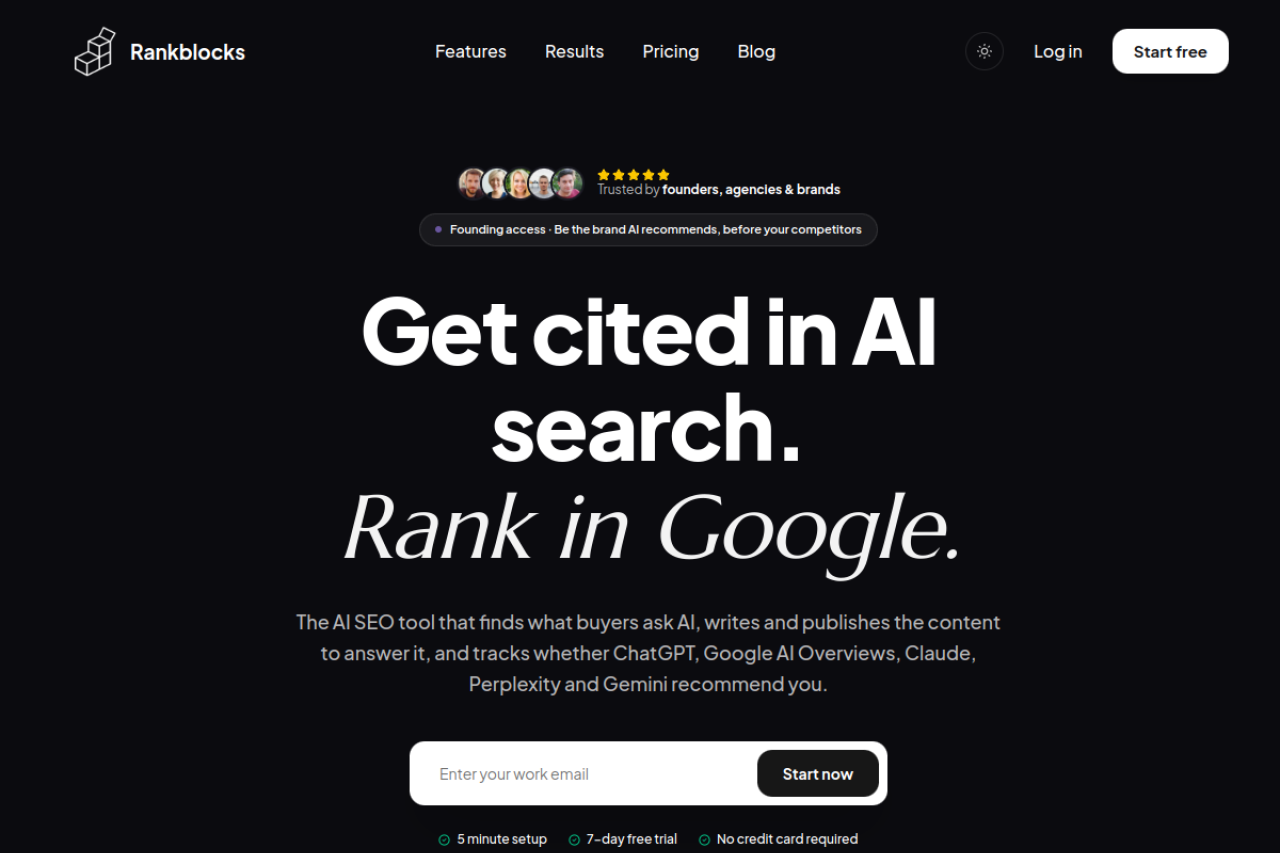
Rankblocks runs the whole cycle without you stitching tools together. The AI Visibility Tracker spots citation gaps across ChatGPT, Claude, Gemini, and Perplexity, so you see which prompts surface competitors instead of you.
The AI Content Writing Engine then writes and publishes articles engineered to earn citations and rank on Google. No separate content workflow, no manual handoff. The Live GSC Dashboard and Keyword Tracker close the loop with daily rankings and Google Search Console data.
It fits non-technical business owners, in-house SEO managers, agency owners, and solo operators who want measurable results in plain language. You get proof it is working, not a pile of alerts.
Honest limit. Rankblocks is a newer entrant, so it does not carry the brand-name recognition of enterprise incumbents yet. If a logo on a slide matters more than closing the gap, weigh that.
Profound: best for enterprise teams needing deep AI search intelligence
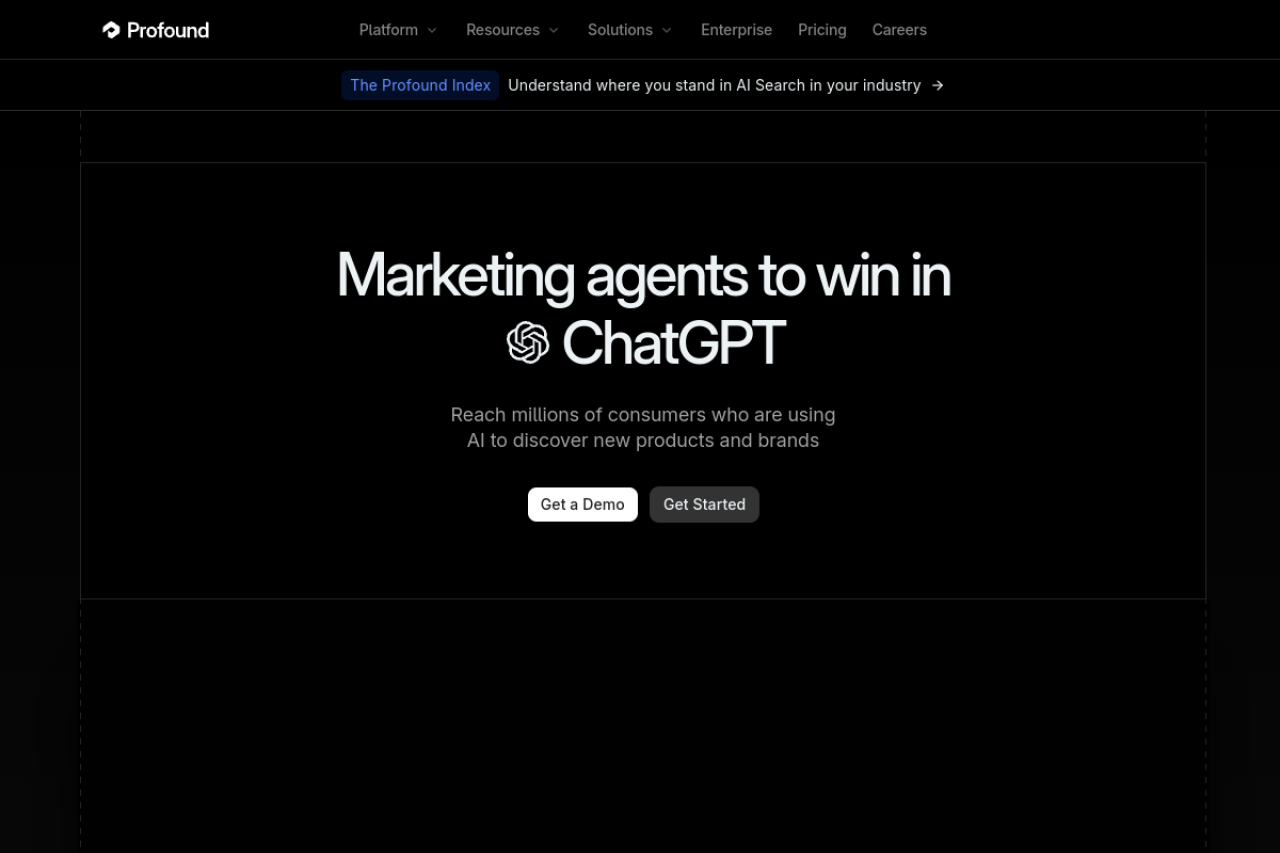
Profound tracks brand mentions across ChatGPT, Perplexity, Claude, Gemini, Grok, Copilot, and more. Its standout feature is real-user prompt volume data drawn from anonymized consumer panels, which shows what people actually ask.
It fits large organizations with dedicated analysts and custom reporting needs. If you have a team to interpret the data, the depth pays off.
The catch is execution. Profound has no built-in content creation engine, so the monitoring data feeds a separate publishing workflow you build yourself. Sales-driven pricing and setup complexity make it a poor fit for most SMBs.
Peec AI: best for mid-market brands focused on share-of-voice monitoring
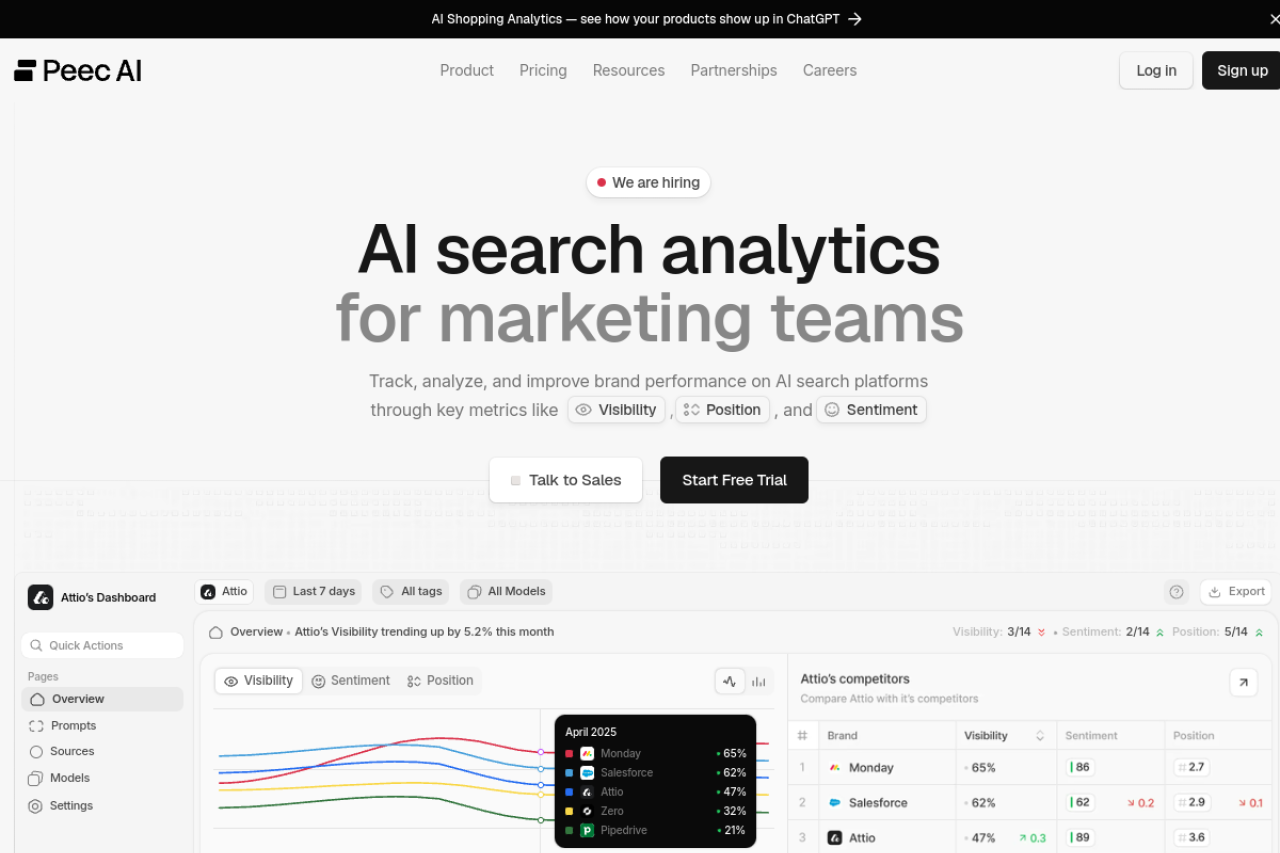
Peec AI tracks brand visibility across ChatGPT, Perplexity, Google AI Overviews, and DeepSeek at the base tier. The dashboard centers on prompts, not keywords, and surfaces visibility, ranking, and sentiment inline.
It fits mid-market B2B and consumer brands that need prompt-based monitoring without a full SEO suite. The clean interface makes share-of-voice easy to read at a glance.
Two honest limits. Peec offers no content creation tooling, and Claude, Gemini, and AI Mode sit behind enterprise add-ons at extra cost. Prompt volumes are capped, and it finds gaps it will not fix for you.
Clearscope: best for editorial teams optimizing content quality for AI answers
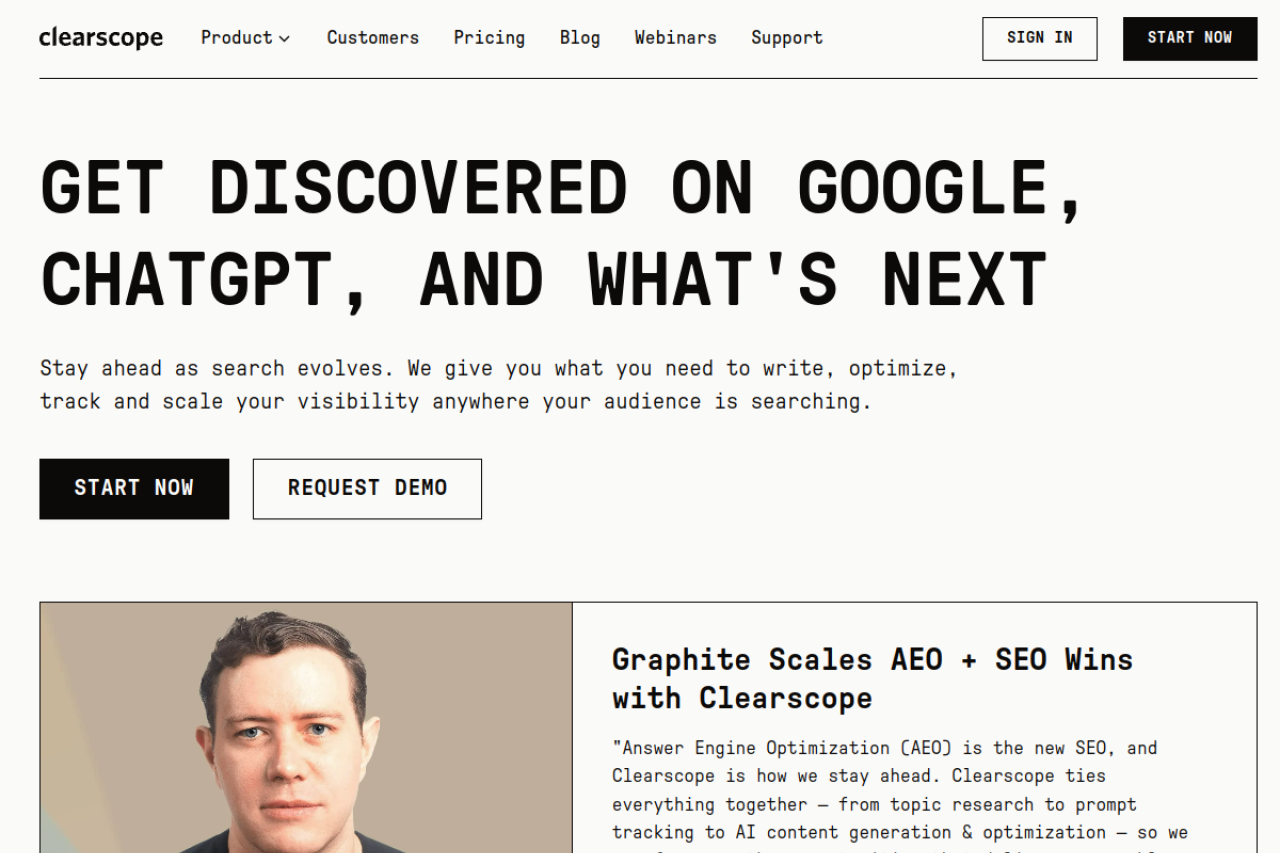
Clearscope grades drafts against top-ranking pages and tracks brand mentions in ChatGPT and Gemini responses. Its A++ to F grading plugs straight into Google Docs, which writers love.
It fits mid-market in-house SEO and content teams with an active, editor-led publishing cadence. If you already write a lot and want quality control, it sharpens every draft.
The limits are coverage and price. AI engine tracking stops at ChatGPT and Gemini, with no Perplexity, Claude, or Copilot. The premium floor starts at 129 dollars per month, and it generates no content by design.
Mangools: best for budget-conscious users who need classic SEO plus light AI grading
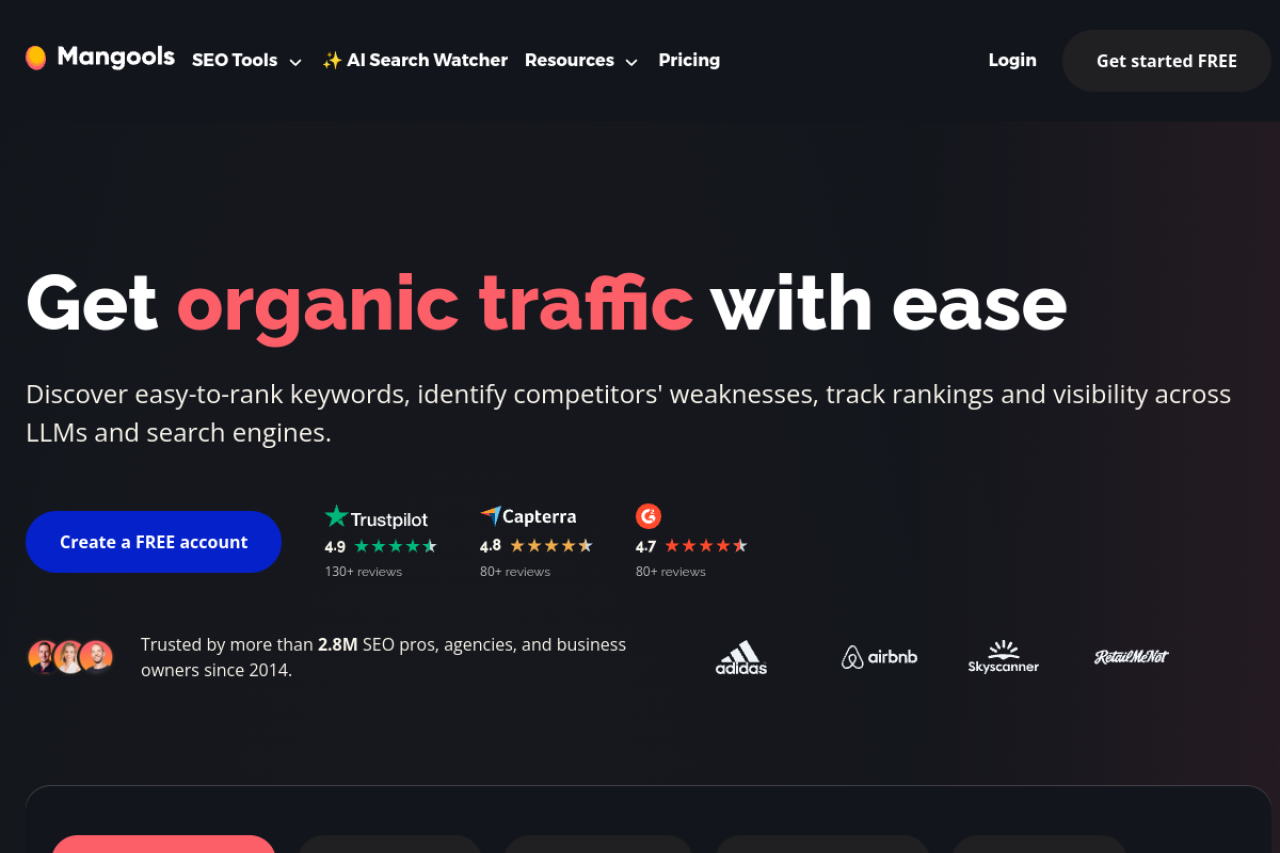
Mangools bundles a full SEO toolkit. KWFinder handles SEO search keywords, SERPWatcher tracks rankings, and its backlink tools round out the classic set. An AI Search Grader adds lightweight prompt tracking for basic AI visibility checks.
It fits bloggers, affiliate marketers, and small agencies that prioritize keyword and rank data over deep AI citation tracking. Beginners praise the interface, since there is no steep learning curve.
Honest limit. Site audits stay shallow, and there is no content generation or multi-engine AI citation monitoring. Mangools is strong on classic search engine optimization, lighter on the AI answer side.
Searchable: best for local and ecommerce businesses wanting simplified AI search presence
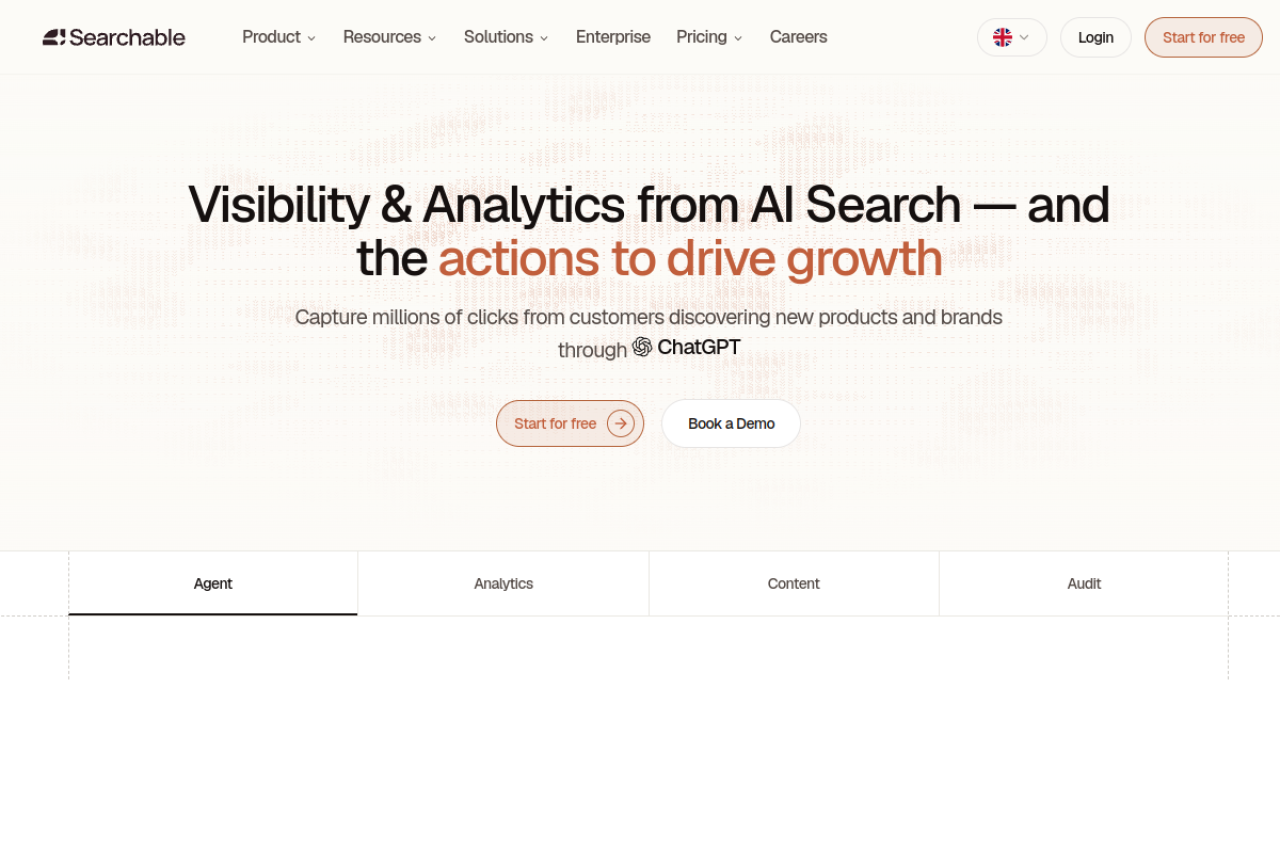
Searchable helps local and ecommerce brands show up in AI-generated answers without technical setup. It surfaces where a business appears and where competitors outperform it in AI responses.
Onboarding is straightforward and aimed at non-technical owners who have no time for complex dashboards. It fits local service businesses, tradespeople, and small shops that want AI presence without an SEO learning curve.
Honest limit. The feature set is narrower than full-stack platforms. It does not cover the content creation or publishing side, so you still handle the fix elsewhere.
At-a-glance comparison of AI visibility tools
Here is the quick scan across coverage, content, buyer fit, and price. Read the "content built in" column first. Monitoring without content output leaves the gap wide open.
| Tool | AI engines covered | Content built in | Best buyer type | Starting price |
|---|---|---|---|---|
| Rankblocks | ChatGPT, Claude, Gemini, Perplexity | Yes, writes and publishes | Owners, SEO managers, agencies, solo ops | Contact for plans |
| Profound | 7+ engines incl. Grok, Copilot | No | Enterprise analyst teams | Sales-driven |
| Peec AI | ChatGPT, Perplexity, AI Overviews, DeepSeek | No | Mid-market B2B and consumer | Mid-tier subscription |
| Clearscope | ChatGPT, Gemini | No (grading only) | Editorial content teams | From 129 dollars/mo |
| Mangools | Major platforms, light grading | No | Bloggers, small agencies | Budget subscription |
| Searchable | AI answer engines | No | Local and ecommerce shops | Entry-level |
Only Rankblocks covers the four core engines and publishes content to close the gap. Profound covers the widest engine list, but hands you the fix. For agency buyers, white-label and multi-client reporting matter, so confirm those before you commit.
Price alone is a poor proxy for value. A cheap dashboard that leaves you writing content by hand costs more in labor than a system that acts. Compare the best AI visibility tools on workflow, not sticker price.
Pick the tool that closes the loop, not just opens the dashboard
The core rule is simple. Match the tool to your workflow, not to the longest feature list. A dozen engines you never act on beat nothing.
Non-technical owners and solo operators need autopilot, from gap detection to a published article to ranking proof. SEO managers and agency owners need daily data, client-ready marketing analytics, and content at scale. Monitoring-only tools leave a manual execution gap that erodes ROI over weeks, not months.
Rankblocks closes that gap in one loop. The AI Visibility Tracker finds where your brand is absent, the AI Content Writing Engine publishes citation-ready articles, and the Live GSC Dashboard tracks what moves. No extra tools, no manual handoff, no waiting on a freelancer.
That end-to-end system is why Rankblocks earns the top spot in this best software for AI visibility in search roundup. If ChatGPT recommends your competitors today, a dashboard will not change that on its own. Published content will. AI search optimization drives citation gains through published content, not dashboard alerts alone.
Want to see exactly which AI engines skip your brand right now? Run a free audit and get the gap list in minutes.
Frequently asked questions about the best software for AI visibility in search
What exactly does AI visibility software track, and how is it different from classic rank tracking?
AI visibility software tracks whether your brand appears, gets cited, and is recommended inside AI answers from ChatGPT, Perplexity, Gemini, Claude, and Google AI Overviews. Classic Google Search Console rank tracking only checks your position on a results page. The difference matters because AI answers often end the search with zero clicks.
Which AI visibility tools cover all five major engines, ChatGPT, Claude, Gemini, Perplexity, and Google AI Overviews?
Coverage varies widely, so check before you buy. Profound spans the most engines including Grok and Copilot, while Rankblocks covers ChatGPT, Claude, Gemini, and Perplexity plus Google data through its Live GSC Dashboard. Clearscope stops at ChatGPT and Gemini, and Peec AI gates some engines behind enterprise tiers.
Can any tool detect my AI visibility gaps and automatically create content to fix them?
Yes, but very few do both. Most tools on this list, including Profound, Peec AI, and Searchable, monitor gaps and stop there. Rankblocks is the outlier, since its AI Content Writing Engine writes and publishes citation-engineered articles right after the tracker finds the gap.
How do I choose the right AI visibility tool for my budget and team size?
Match the tool to your workflow and headcount. Solo operators and non-technical owners need fast setup and autopilot, so pick a tool that publishes content, not just alerts. Agencies need white-label multi-client reporting, and enterprise teams with analysts can absorb complex platforms like Profound. Compare AI visibility service providers on output, not price.
What results, in real numbers or timeframes, can I expect after using one of these tools?
Expect a clear gap report within minutes of connecting your data, showing which prompts skip your brand. Meaningful citation and ranking gains usually build over weeks as new content gets indexed and cited. Tools that only monitor delay results, since you still need time to write and publish the fix yourself.