 Rankblocks
The Best AI Visibility Tools for Brands That Want to Appear in AI Answers

Buyers stopped scrolling ten blue links. They ask ChatGPT, Perplexity, Gemini, and Claude first, then click. AI platforms generated 1.13 billion referral visits in June 2025, a 357% increase from June 2024. If your brand never surfaces in those answers, you lose the sale before the search even ends.
Most tracking tools show you the bad news and stop there. They flag that a competitor got cited, then leave the fix entirely to you. That gap is the difference between a chart and a result.
This list ranks the best AI visibility tools on one axis that actually matters. Does the tool stop at the alert, or does it help you close the gap it found? Every pick gets a clear best-for label, so you can match a tool to your team size and workflow in minutes, not weeks.
What AI visibility tools actually are, and why search engine optimisation tools alone are not enough
AI visibility tools track how often, and in what context, an AI answer mentions or cites your brand. They measure citation frequency, brand mentions, sentiment, and share of voice across large language models.
Classic search engine optimisation tools miss this entirely. Rank tracking tells you where a page sits on Google, but it says nothing about what ChatGPT recommends when a buyer asks for the best option. You can rank number one and still get zero AI citations. Around 80% of cited URLs do not rank in Google's top 100 results for the same query.
Google webmaster tools and search console webmaster tools remain useful for clicks and impressions. They just answer a different question. LLM visibility depends on what the model pulls into its answer, not where a link sits in the SERP.
The metrics that matter here are specific. Track prompt-level mentions, the source pages that earn citations, sentiment, and competitor share of voice. When you understand what these tools track, the picture gets clear fast.
AEO, GEO, and classic SEO are not rivals. They reinforce each other. Content built to earn an AI citation usually ranks well on Google too, because both reward clear, authoritative answers. Visitors from AI search tools spend 68% more time on site than those from traditional organic search.
What separates a real AI visibility platform from a basic monitoring dashboard
A monitoring dashboard tells you what happened. A real platform helps you change what happens next. Here is where the two split.
- Multi-LLM coverage. The minimum bar covers ChatGPT, Perplexity, Claude, Gemini, and Google AI Overviews. Fewer engines means blind spots.
- Prompt-level tracking. You need the exact queries where your brand shows up and where competitors win instead. Aggregate scores hide the money prompts.
- Citation source attribution. Know which pages earn citations so you invest in the right content, not guesswork.
- The actionability gap. This is the single biggest differentiator. Does the tool only alert you, or does it help you write and publish the fix?
- Team-fit signals. A solo operator needs fast setup. An agency needs white-label reporting. An in-house SEO needs tracking and content in one view.
That last point decides most purchases. If your stack requires three tools to find a gap, write content, and measure results, you are paying three bills and toggling three tabs. The move from tracking to earning citations is the whole game.

Top 6 AI visibility tools for brands that want citations, not just charts
Six tools, one honest criterion. Does it close the loop, or does it stop at the alert? Rankblocks leads because it does the full loop, then each option follows with what it does well and where it falls short.
Rankblocks
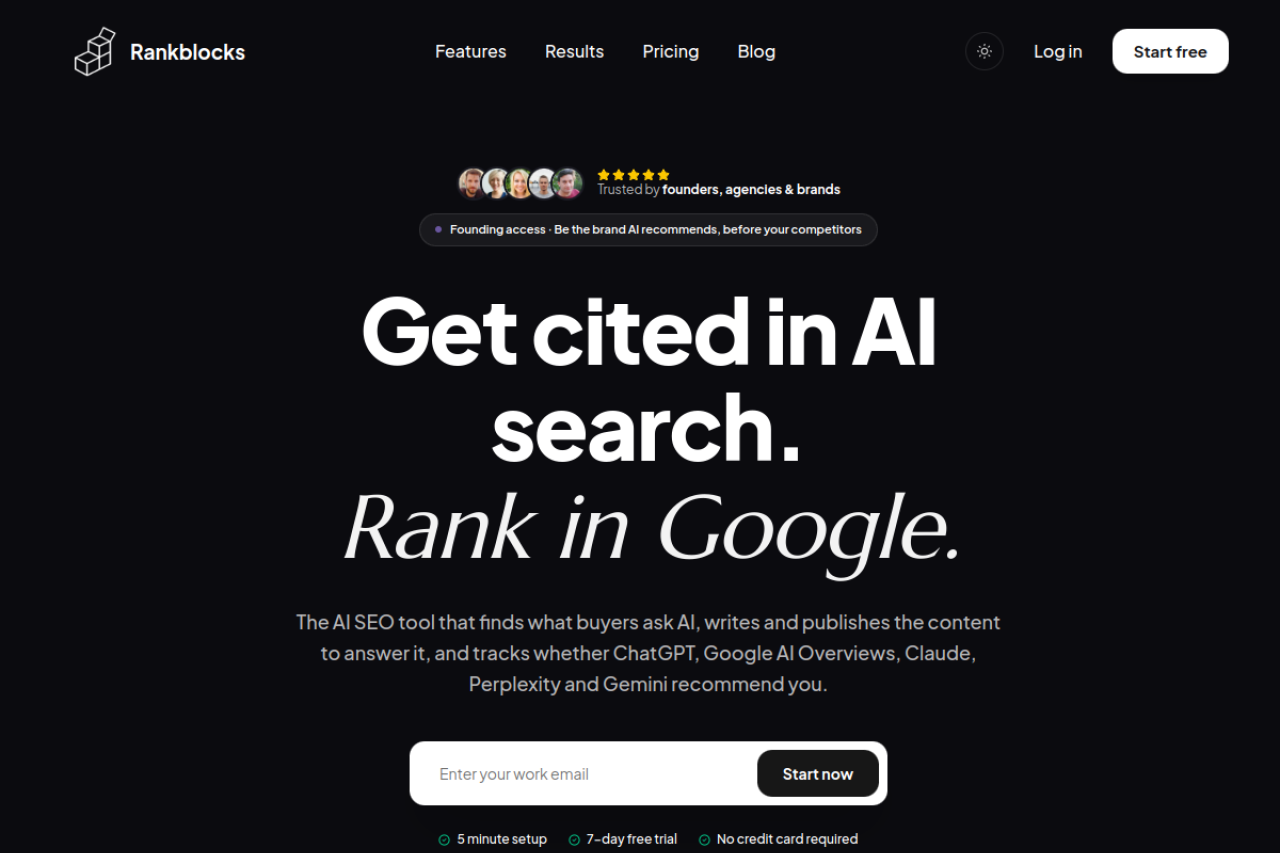
Rankblocks runs the full loop in one platform. The AI Visibility Tracker finds the gaps, the AI Content Writing Engine publishes the fix, and the Live GSC Dashboard measures the result. No stitching tools together.
The Tracker covers ChatGPT, Claude, Gemini, and Perplexity with prompt-level citation data, so you see the exact queries where competitors win. The Content Gap Analysis then flags topics you are missing, and the Writing Engine writes content engineered to earn those citations, using your Brand Kit for voice.
The Live GSC Dashboard keeps classic Google performance in the same screen, updated daily. You watch AI citations and rankings together, no toggling.
Best for in-house SEO managers, agency owners, and non-technical local or ecommerce business owners who want the whole find-write-publish-measure process on autopilot.
Peec AI
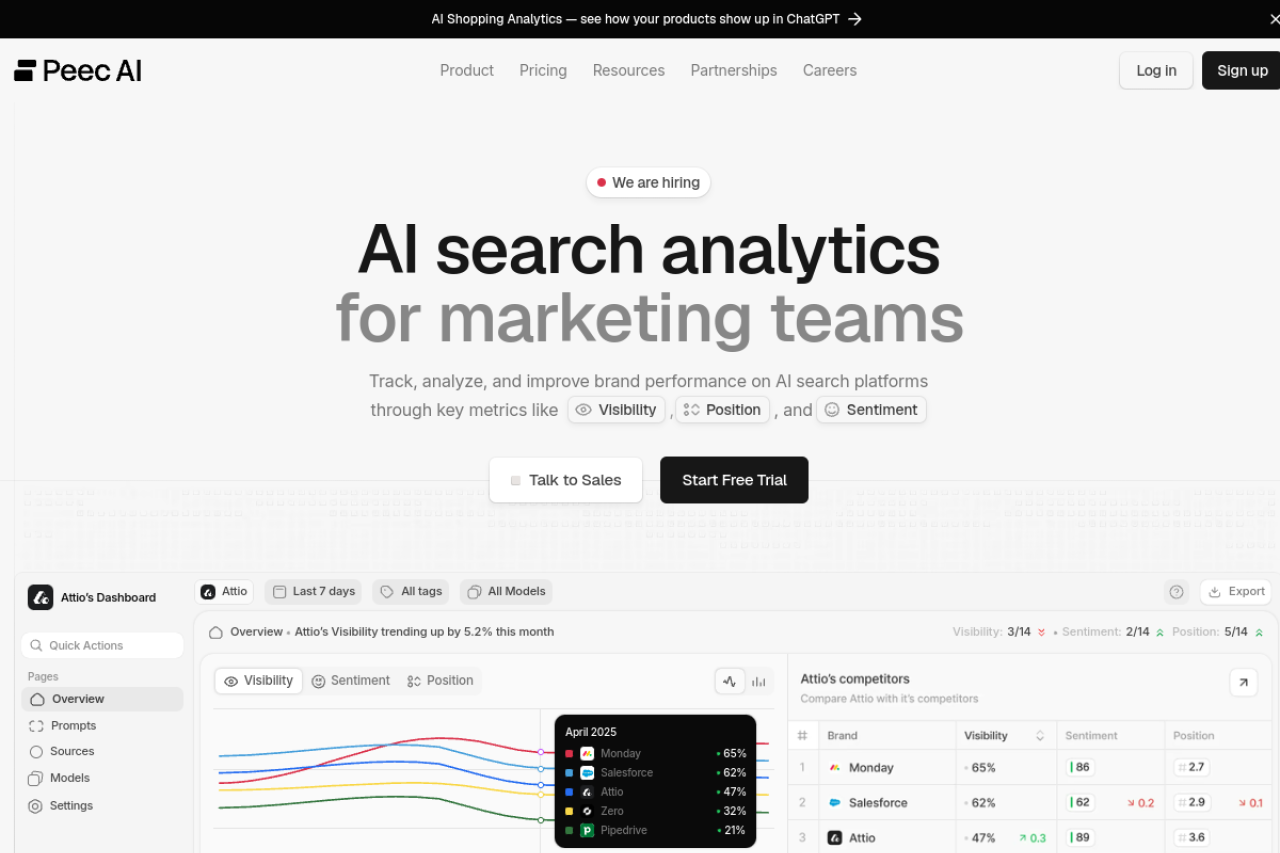
Peec AI is a monitoring platform that tracks brand mentions across major LLMs. It reports prompt-level share of voice and benchmarks you against competitors.
Pro. Strong multi-LLM coverage and a solid prompt frequency methodology. The data is clean and easy to read.
Con. It stops at the alert. No content creation or publishing workflow ships with it, so you still need a separate way to fix what it finds.
Best for teams that already run a content production process and only need the tracking layer added on top.
Profound
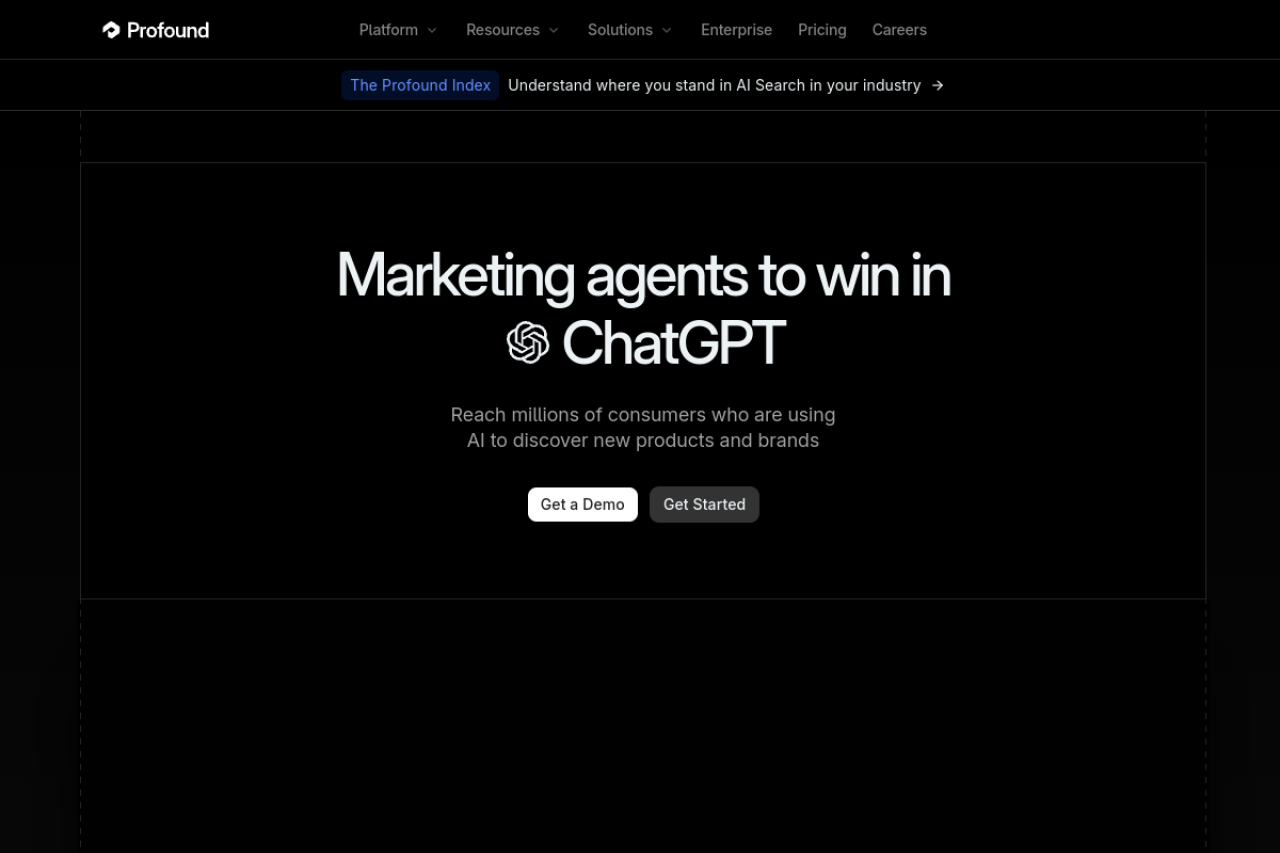
Profound is enterprise-grade AI search intelligence. It goes deep on citation analysis and conversation demand, aimed at large brands with real budget.
Pro. The widest engine coverage on this list, tracking up to 10 AI engines including ChatGPT, Perplexity, Gemini, Claude, Copilot, and Grok at the enterprise tier. Source-level intelligence is strong.
Con. Enterprise pricing and complexity make it a poor fit for small teams or solo operators, and setup takes time.
Best for large in-house teams and enterprise brands that need deep prompt monitoring at scale.
Mangools
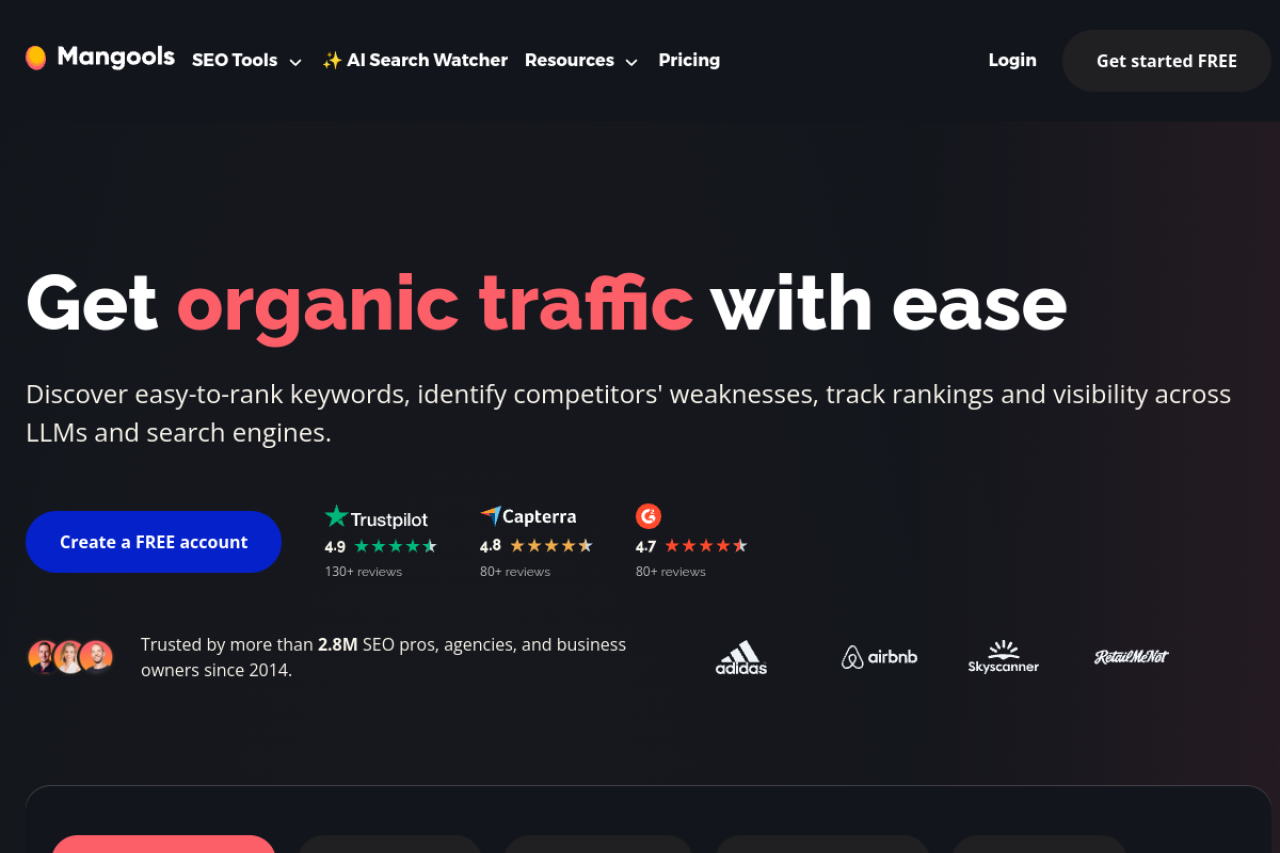
Mangools built its name as an affordable classic SEO suite with keyword tracking and SERP tools. It later added AI visibility features for teams that want monitoring beside standard rank tracking.
Pro. Familiar interface for existing users and a competitive price for the SEO feature set. If you already use it, the add-on is low friction.
Con. The AI visibility layer is narrower than dedicated platforms, and it covers fewer LLMs. Treat it as a starter, not a full solution.
Best for small teams already using Mangools for SEO who want a basic AI monitoring add-on.
Clearscope
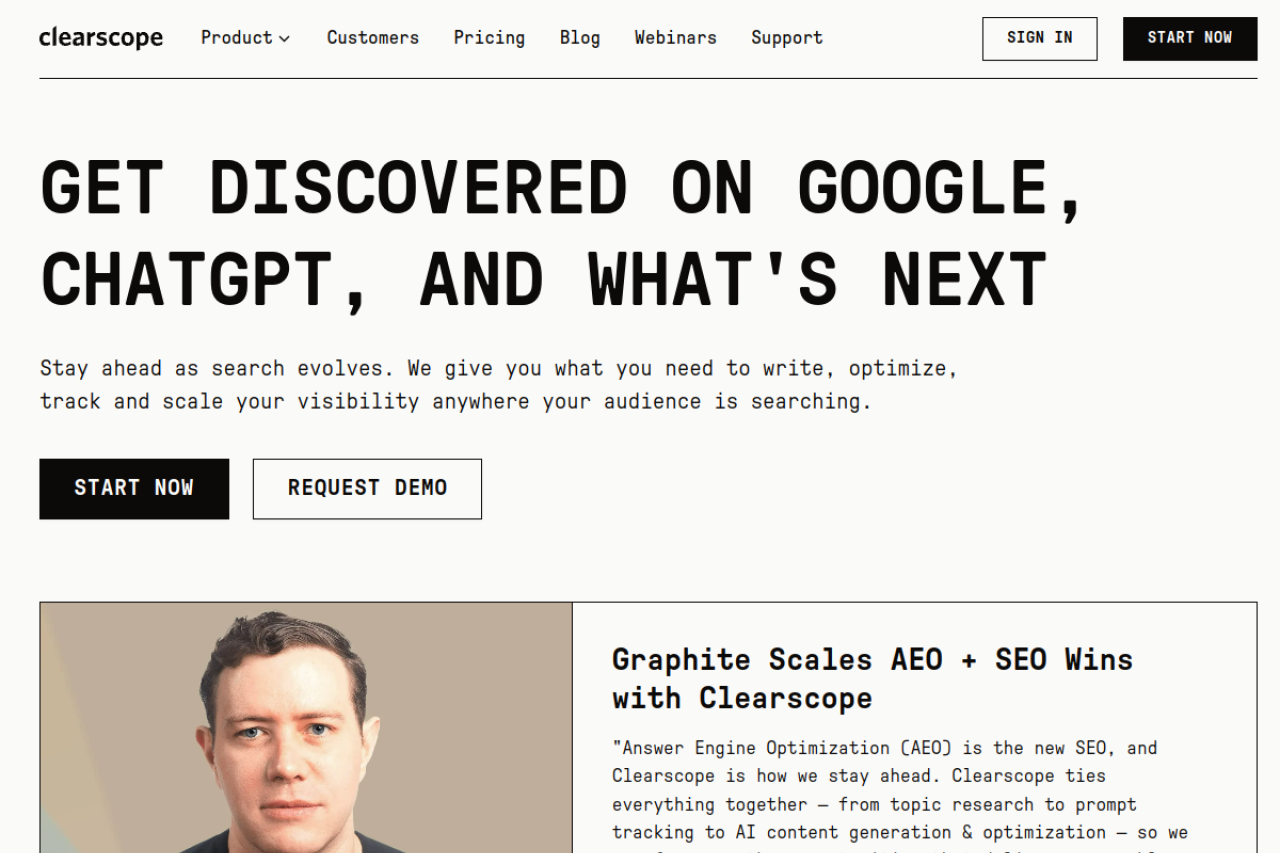
Clearscope is a content optimization platform built around semantic relevance and topical authority scoring. It helps writers produce content that satisfies both Google quality signals and LLM citability criteria.
Pro. Strong NLP-based content grading and clean integrations with popular CMS platforms. Writers like the guidance.
Con. It does not track AI citations or monitor brand mentions across LLMs directly. You get better content, not visibility data.
Best for content teams that prioritize on-page quality and topical depth over real-time AI mention tracking.
Searchable
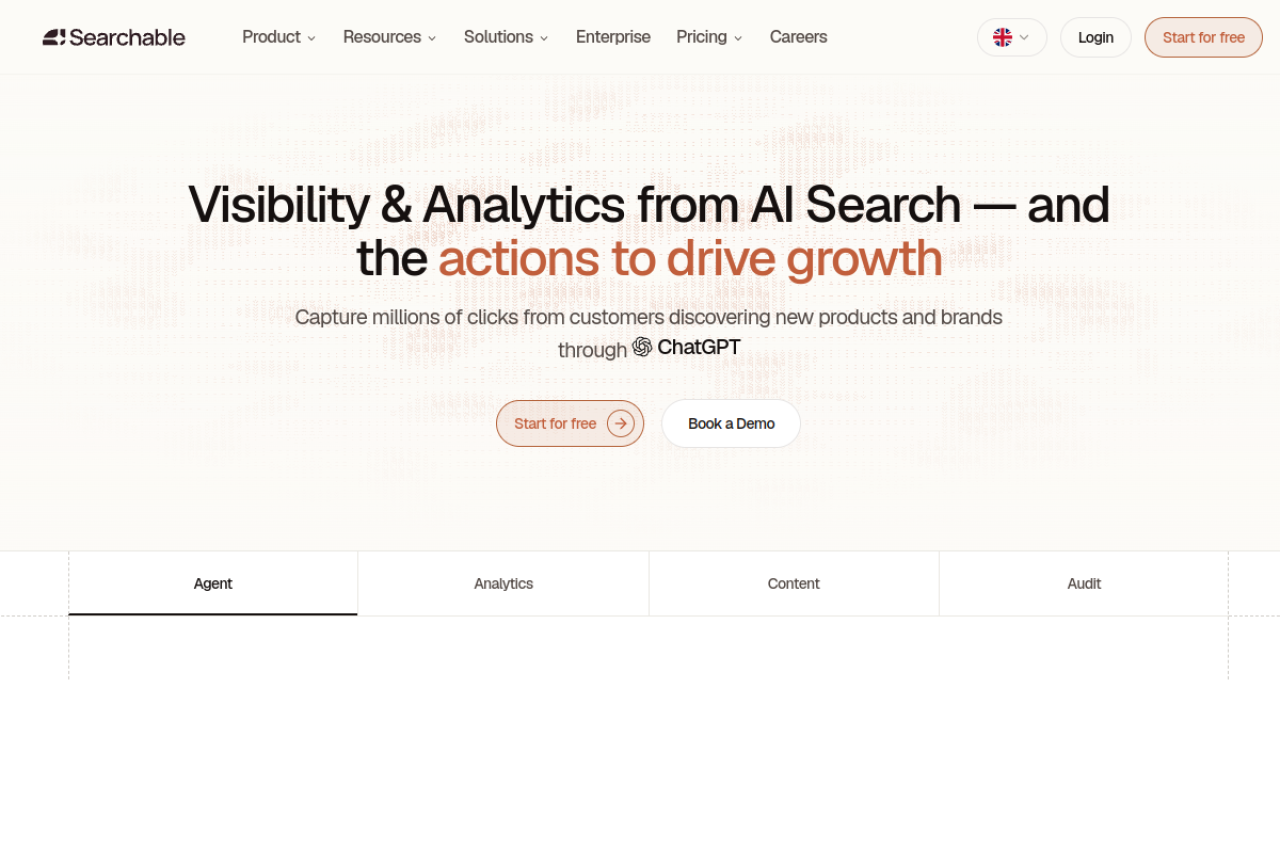
Searchable is an AI search visibility tool built around monitoring brand mentions and prompt tracking. It covers core LLMs and surfaces competitor share-of-voice data for benchmarking.
Pro. Straightforward setup and accessible reporting suit non-technical users well. You get a view fast.
Con. Monitoring only. It does not connect insights to content creation or publishing, so the fix stays on your plate.
Best for business owners and small teams that want a simple view into where their brand appears in AI answers.
Quick comparison: which tool fits your situation
Use this table as a starting point, not a substitute for a trial. Each cell gives one honest phrase so you can spot your profile fast.
| Tool | LLM coverage | Content creation built in | Classic SEO integration | Best for |
|---|---|---|---|---|
| Rankblocks | ChatGPT, Claude, Gemini, Perplexity | Yes, writes and publishes | Live GSC Dashboard, daily | Full closed loop, SMB to agency |
| Peec AI | Major LLMs | No | Limited | Teams with existing content flow |
| Profound | Up to 10 engines | No | Limited | Enterprise, deep monitoring |
| Mangools | Fewer LLMs | No | Strong classic SEO suite | Existing Mangools users |
| Clearscope | Not tracked directly | Optimization, not publishing | CMS integrations | On-page content teams |
| Searchable | Core LLMs | No | Limited | Simple monitoring for SMBs |
The clear split runs down the "content creation" column. Only Rankblocks moves from monitoring to a published fix in the same tool. Pricing ranges from enterprise (Profound) to mid-market and SMB-friendly options across the rest, so match budget to team before you shortlist.
Pick the tool that matches where your traffic gap actually is
Start with one hard truth. If tracking has no content workflow attached, the data is just noise. You will collect beautiful charts and watch competitors keep winning the prompts where ChatGPT recommends them.
Second, treat AEO, GEO, and classic SEO as one discipline. The right tool handles all three together, because the same content that earns an AI citation also ranks on Google. Splitting them across generative engine optimization tools, AEO tools, and separate rank trackers wastes budget and time.
Third, team size and budget set the real shortlist, not feature count. An enterprise stack overwhelms a solo operator, and a basic monitor underserves an agency running ten clients.
Rankblocks solves the closed-loop problem for every segment. It finds the gaps, writes the content, publishes it, and measures citations and rankings in one place on autopilot. That means choosing the right AI visibility service stops being a three-tool decision. It also keeps citations, mentions, and rankings together so you see proof it works, in plain language. For budget-conscious teams, the cheapest AI visibility path still closes the loop.
Want to know which AI answers your brand is missing from right now? Run your free audit and see the gaps in minutes.
Frequently asked questions about the best AI visibility tools
What features separate a real AI visibility platform from a basic monitoring dashboard?
A real platform covers multiple LLMs, tracks prompt-level mentions, attributes citations to source pages, and helps you fix the gaps it finds. A basic dashboard stops at the alert. The actionability gap, whether the tool connects tracking to content and publishing, is the single most important difference.
Which AI visibility tools also help you create and publish content to fix citation gaps?
Rankblocks is the tool on this list that finds gaps, writes content, and publishes it in one loop, using its AI Content Writing Engine. Most others, including Peec AI, Profound, and Searchable, focus on monitoring only. Clearscope helps optimize content but does not track AI citations or publish for you.
How do these tools handle classic SEO signals like Google Search Console alongside AI citation tracking?
Rankblocks connects to Google Search Console in one click and shows clicks, impressions, CTR, and striking-distance keywords next to AI citation data, updated daily. Most dedicated AI monitors offer limited or no GSC integration, so you often need separate google webmaster tools to see classic performance.
What is the best AI visibility tool for a small team or agency with a limited budget?
Rankblocks fits small teams and agencies because it replaces three separate tools with one closed loop, which cuts cost and toggling. Mangools works as a low-cost add-on if you already use it for classic SEO. Match the shortlist to budget and team size first, then trial before you commit.
How do AEO, GEO, and traditional SEO work together, and which tools support all three in one workflow?
AEO, GEO, and traditional SEO reinforce each other, since content that earns AI citations usually ranks on Google too. Understanding AEO versus GEO helps you plan one workflow, not three. Rankblocks supports all three in a single platform by tracking AI answers and Google rankings together.
Is there an open-source or DIY option for tracking AI search visibility?
You can DIY basic tracking by manually prompting ChatGPT, Perplexity, and Gemini, then logging mentions in a spreadsheet. It works at tiny scale but breaks fast, since it misses prompt coverage, citation sources, and daily changes. No mature open-source platform matches dedicated tools on multi-LLM coverage and actionability.