 Rankblocks
What to look for in a leading AI visibility metrics platform

Buyer behavior flipped. Millions of questions now go to ChatGPT, Perplexity, and Google AI Overviews instead of ten blue links. Your customers ask AI assistants, and the answer either mentions your brand or it recommends a competitor. An analysis of 2.3 billion site sessions found generative AI referral traffic grew 796% from January 2024 to December 2025.
Most platforms count mentions and stop at the dashboard. You end up with data and no action, staring at a pretty chart that never turns into revenue. That is a glorified mention counter, not a leading AI visibility metrics platform.
This article gives you six concrete evaluation criteria, a ranked tool list, and a summary table. You leave with a checklist that separates closed-loop platforms from tools that only report numbers. Pick with confidence, not guesswork.
What AI search visibility tools actually measure and why classic SEO metrics fall short
AI visibility measures how often your brand appears as a mention or citation across ChatGPT, Claude, Gemini, and Perplexity. It answers one question. When someone asks an AI assistant, does your brand show up or does a rival get named instead?
Keyword rankings alone miss this entirely. Roughly 60% of Google searches now end without a click, and AI answers absorb that intent before anyone reaches a result page. By early 2026, that figure had climbed to 68% of U.S. searches, a 7.5-point jump in just two years, per SparkToro research. Rank one all you want. If the AI overview cites someone else, you lose the customer.
Good ai search visibility tools track three core metrics. Citation frequency counts how often AI engines reference you. Share of voice compares your mentions against named competitors. Mention sentiment flags whether the AI frames you positively.
AEO, GEO, and classic SEO are one overlapping discipline, not three separate workflows. The same content that earns AI citations also ranks on Google. Many legacy tools bolt on AI tracking without connecting it to content action, so you see the gap but never close it.
6 criteria that separate a leading platform from a dashboard with a logo
Feature lists lie. Use these six criteria to test whether a platform actually moves the needle or just decorates your monitor.
- Multi-engine coverage. The platform must track all four major LLMs plus Google AI Overviews. Coverage of one engine tells you almost nothing, since buyers hop between ChatGPT, Gemini, Perplexity, and Claude in a single week.
- Prompt-level tracking. You need to see exactly which queries surface your brand and which skip it. A raw score hides the buyer questions where you stay invisible, and those questions are where you lose deals.
- Competitive benchmarking. A real platform shows share of voice against named rivals, not a vague industry average. You want to know precisely which competitor the AI recommends instead of you.
- Citation and source tracking. The tool must identify which content earns AI references. That tells you what works so you can produce more of it, instead of guessing at random.
- Closed-loop content action. This is the line most tools fail to cross. A leading platform points to what to write next and, ideally, writes it, rather than dumping numbers and wishing you luck.
- Google Search Console integration. AI and classic SEO data belong in one place. One-click GSC access surfaces striking-distance keywords and top pages so you prioritize fast.

Score each platform against all six. Anything that stalls on criterion five leaves the content work on your desk. That is the difference between a platform for seo that earns citations and a spreadsheet with extra steps.
Top 6 AI visibility metrics platforms for AEO and GEO
Here are six llm visibility tools ranked against the criteria above. Rankblocks leads because it closes the loop, and the rest follow with honest pros and cons.
Rankblocks
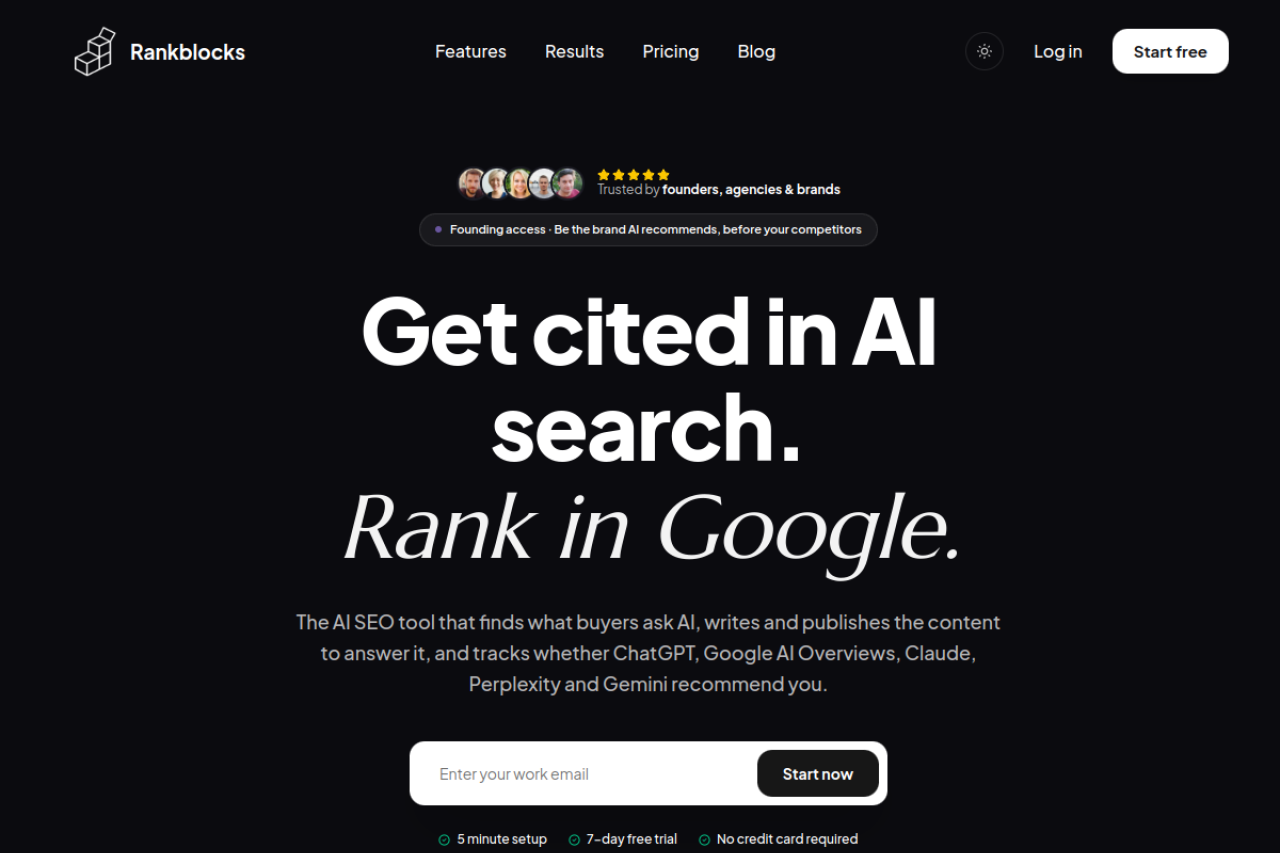
Rankblocks is a closed-loop platform that combines the AI Visibility Tracker, Content Gap Analysis, and AI Content Writing Engine in one workflow. It tracks your brand citations and mentions across ChatGPT, Claude, Gemini, and Perplexity, then acts on what it finds.
The AI Content Writing Engine automatically writes and publishes AEO-engineered articles that feed back into the tracker. Spot a blind spot, generate content, publish, and watch citations grow. The Live GSC Dashboard and Keyword Tracker unify AI and classic SEO data without a second subscription.
Best for in-house SEO managers, agency owners, founders, and non-technical business owners who want the full find-write-publish-measure loop automated. The main tradeoff is that it does the writing for you, so control freaks who love hand-crafting every sentence will need to adjust.
Peec AI
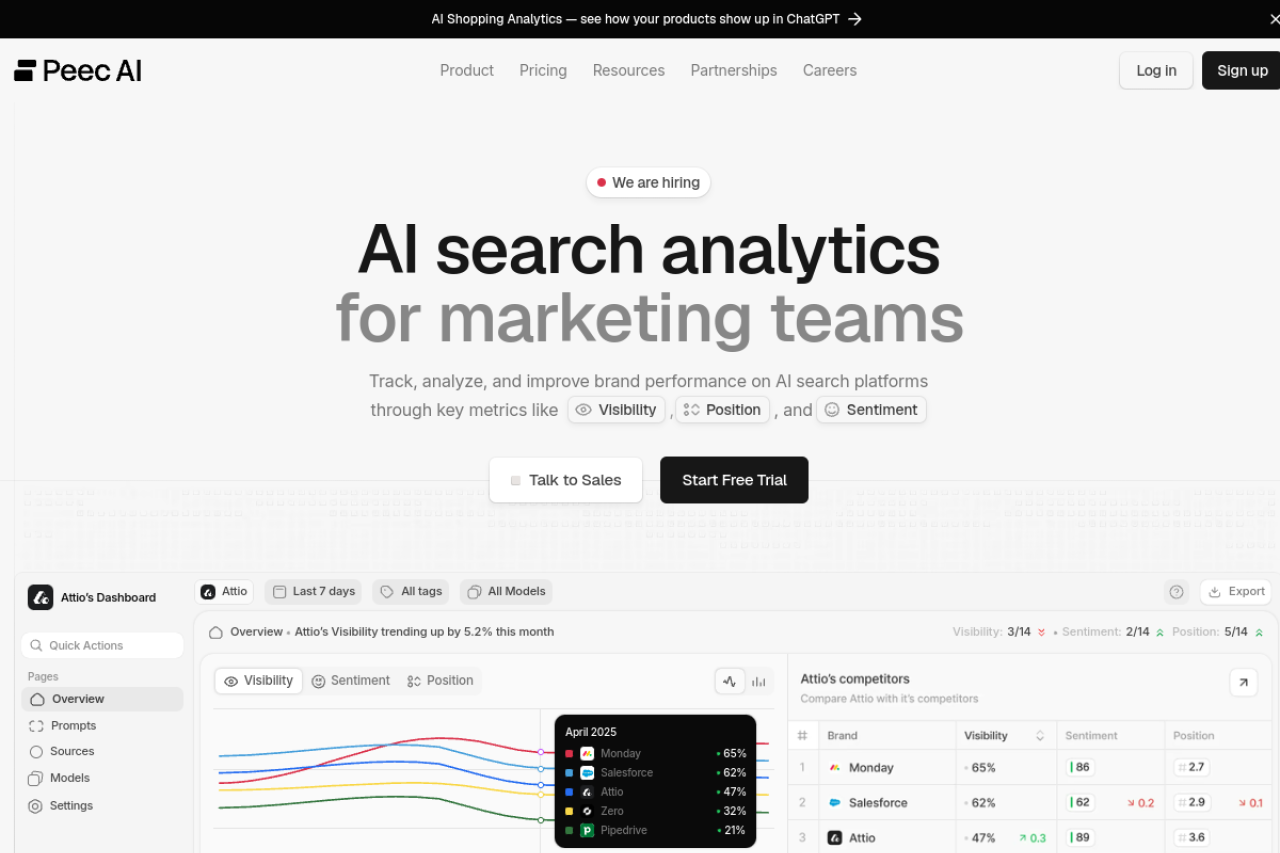
Peec AI is a dedicated AI mention tracker focused on share of voice and competitor benchmarking. It covers the major LLMs and builds sentiment analysis into its mid-tier plans, which helps you gauge tone alongside frequency.
Best for small to mid-sized teams that want clean dashboards and reliable share-of-voice data. The limitation is clear. Peec AI offers no content generation and no automated fix workflow, so you identify gaps and then solve them manually.
Profound
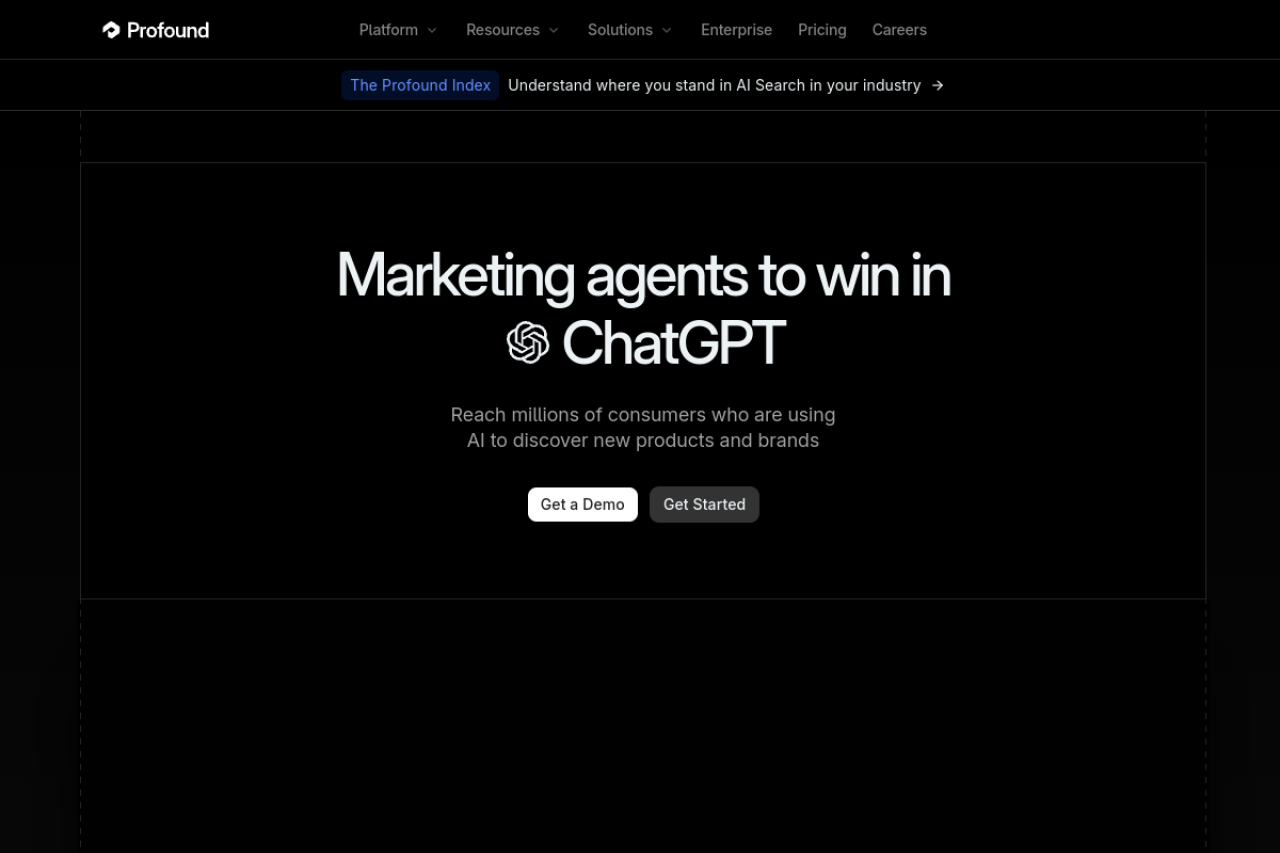
Profound is an enterprise-grade AI visibility platform that tracks more than ten AI engines with crawler-level data. It brings strong multi-language and multi-country coverage and holds SOC 2 Type II certification, which large buyers ask for.
Best for large enterprises and agencies that need the deepest tracking and raw data coverage available. The interface can feel technical for non-SEOs, and content writing still requires a separate tool. You get depth, but you assemble the rest of the stack yourself.
Mangools
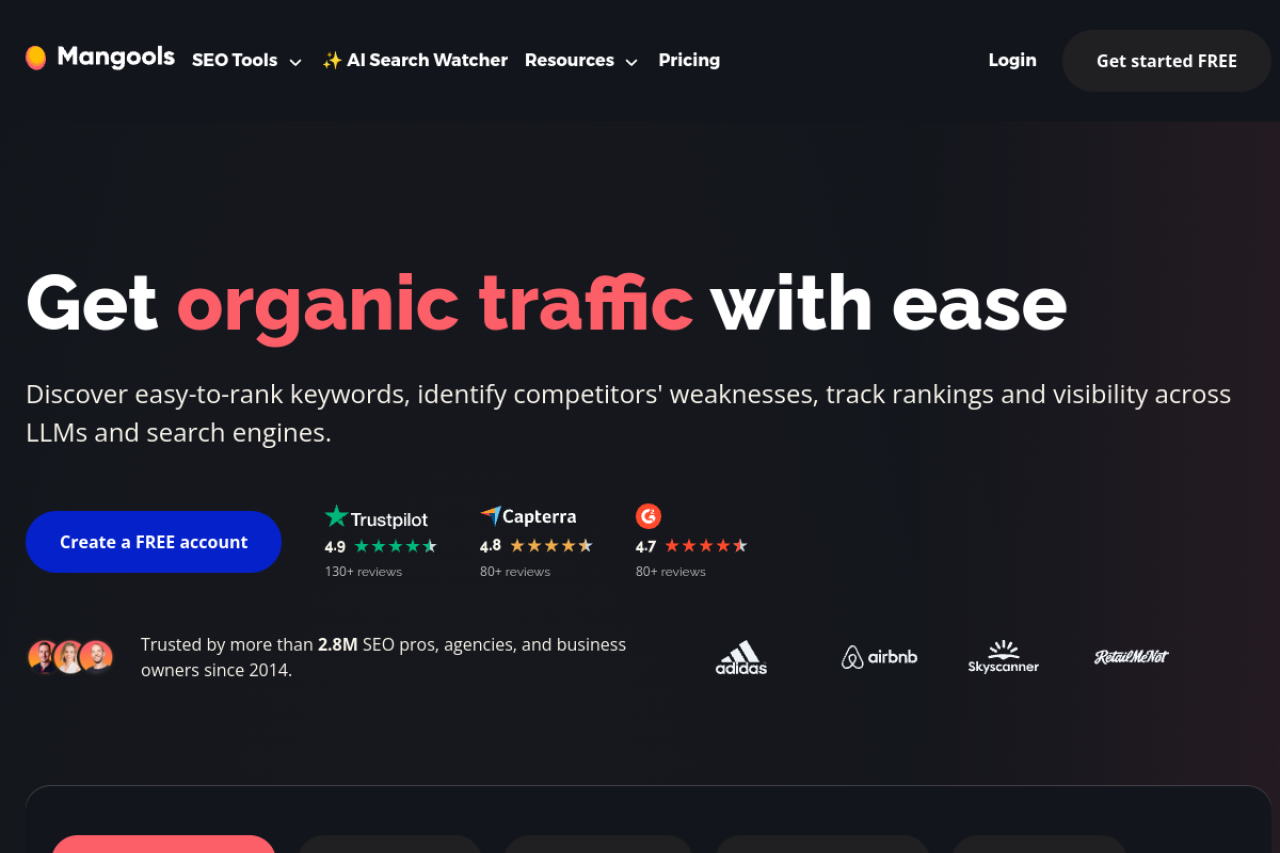
Mangools is an established SEO suite that added AI visibility tracking to its existing keyword and rank tools. Teams already living inside Mangools get AI tracking without leaving a familiar workflow.
Best for SMB teams that want AI tracking alongside keyword and SERP features under one login. The limitation is that AI visibility is a newer layer on a platform built for traditional rank tracking, so the depth trails dedicated tools.
Clearscope
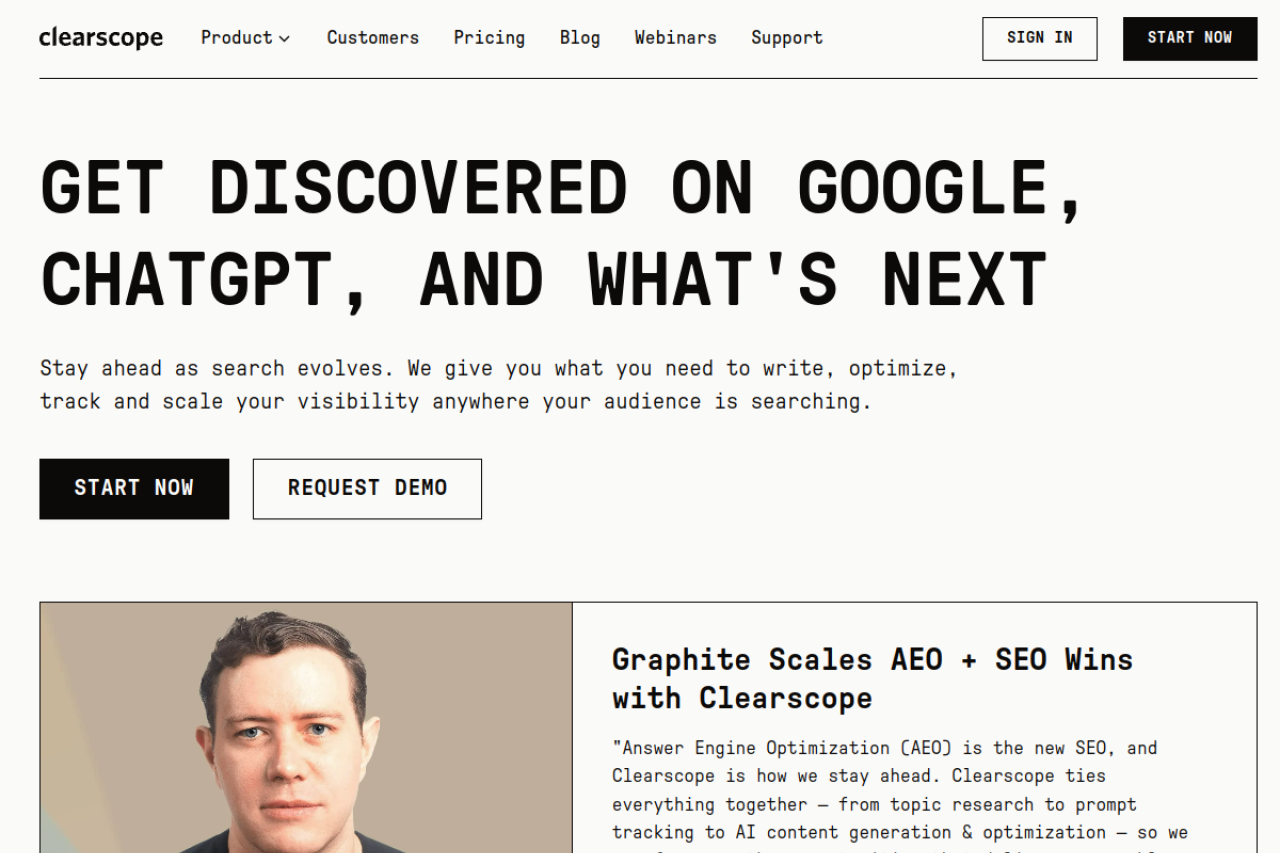
Clearscope is a content optimization platform built around topical relevance scoring and content grading. It helps writers hit semantic coverage targets that improve both Google rankings and AI citation odds, which supports the answer engine optimization side of the work.
Best for content teams who want structured optimization guidance per article. The limitation is that Clearscope tracks content quality, not live AI citations or mention frequency across LLMs. It sharpens your drafts but never tells you if ChatGPT actually cites you.
Searchable
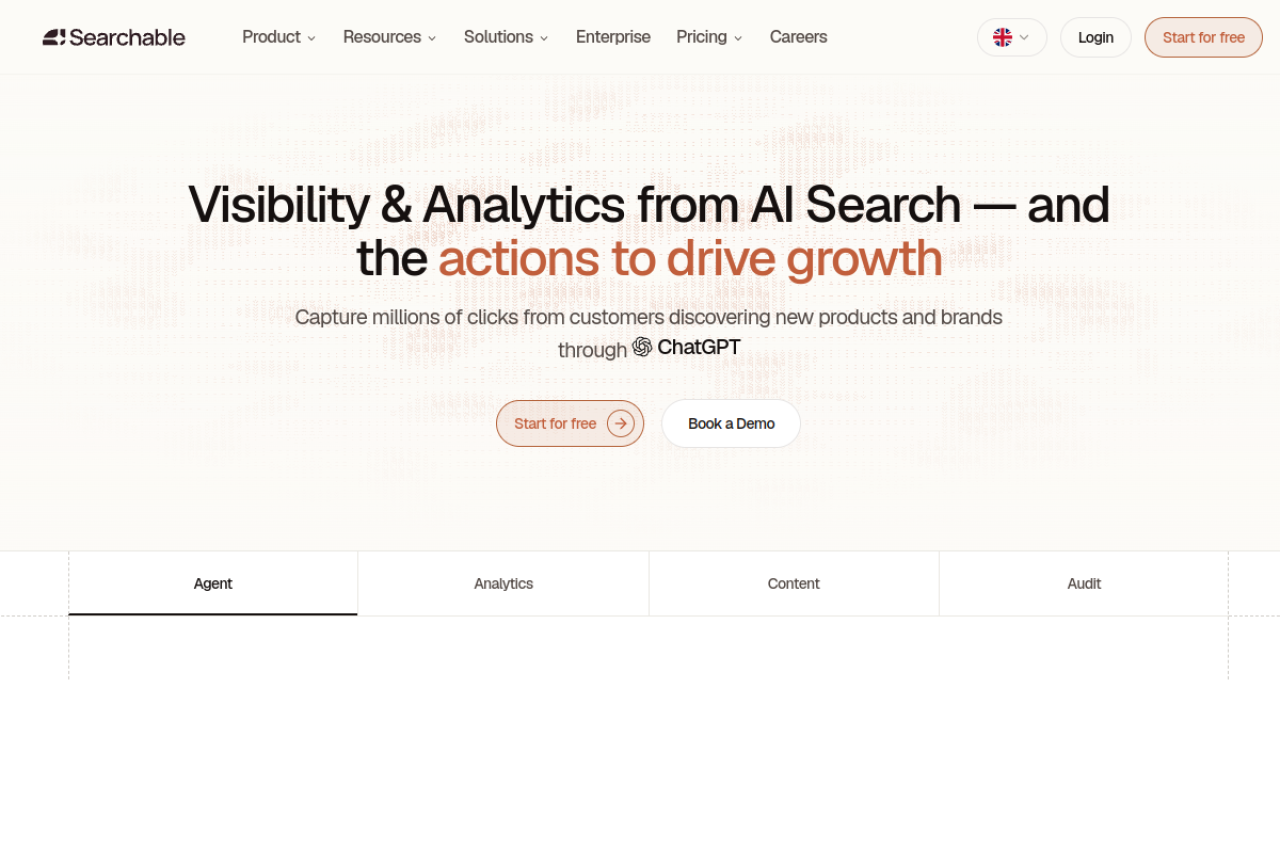
Searchable is an accessible entry-level AI visibility tool with tiered plans for basic monitoring needs. It covers the primary AI engines with prompt tracking and mention-frequency reporting, which is enough to start.
Best for solo operators and non-technical business owners starting their ai visibility tracking journey. The limitation is thin competitive benchmarking and no integrated content publishing workflow, so you outgrow it once you get serious.
At a glance, platform comparison summary
Use this table to scan the field fast. It maps each tool against the criteria that matter most for a real buying decision.
| Platform | Multi-engine coverage | Content action | GSC integration | Best-fit audience |
|---|---|---|---|---|
| Rankblocks | 4 LLMs + AI Overviews | Writes and publishes | Yes, one-click | SEO managers, agencies, founders, SMBs |
| Peec AI | Major LLMs | No | No | Small to mid-sized teams |
| Profound | 10+ engines | No | No | Enterprises, large agencies |
| Mangools | Newer AI layer | No | Limited | SMB SEO teams |
| Clearscope | Content grading only | Optimization guidance | No | Content teams |
| Searchable | Primary engines | No | No | Solo operators, non-technical owners |
Only one platform on this list automates the full find-write-publish-measure cycle. The others stop at reporting or optimization, which means your team still carries the writing.
Pricing accessibility varies. Peec AI, Mangools, and Searchable court SMB budgets, while Profound targets enterprise spend. The right choice depends on your team size, technical depth, and whether you need content action built into the tool.
Pick the platform that turns data into citations, not just reports
Multi-engine coverage is the floor, not the ceiling. Every tool here tracks LLMs to some degree. What matters is what happens after the data arrives.
If the platform stops at a dashboard, your team still carries all the content work. You spot the gap, then spend the next month writing, editing, and publishing while competitors get cited. The best platforms connect citation blind spots directly to content actions and measure the results.
Rankblocks closes that full loop automatically. The ai brand visibility tool spots where you are invisible, the AI Content Writing Engine generates and publishes AEO content, and the tracker watches citations grow. Spot, write, publish, measure, all in one place. That is what a leading AI visibility metrics platform should do, and it is exactly why ChatGPT recommends competitors when your content is missing.
Want to know which AI answers your brand is missing right now? Run a free audit and see where you stand today.
Frequently asked questions about leading AI visibility metrics platforms
How do you measure AI visibility across multiple LLMs in one platform?
You measure AI visibility by tracking how often your brand appears as a mention or citation across ChatGPT, Claude, Gemini, and Perplexity from a single dashboard. A dedicated platform runs your target prompts against each engine and reports citation frequency, share of voice, and sentiment. That gives you one score instead of five separate manual checks.
What separates a dedicated AI visibility platform from an SEO suite that added tracking as an afterthought?
A dedicated platform builds every feature around AI citations from the ground up, while a bolted-on layer treats AI tracking as an extra tab on a rank tracker. The dedicated tool covers more engines, tracks prompt-level results, and often connects gaps to content action. Suites like Mangools work fine for keywords but trail on AI depth.
How do you track and increase your AI visibility score over time?
You track it by monitoring citation frequency and share of voice weekly across each LLM, then compare movement against named competitors. You increase it by publishing content engineered for AEO that answers the exact buyer questions where you stay invisible. A closed-loop platform automates this by writing and publishing that content, then measuring the lift.
Which metrics matter most for AI search visibility reporting, citation frequency, share of voice, or sentiment?
Citation frequency matters most because it counts how often AI engines actually reference you, which drives discovery. Share of voice ranks second, since it shows whether rivals get named instead of you. Sentiment adds context by flagging negative framing, but a mention with neutral tone still beats being absent.
Does an AI visibility platform need to connect to Google Search Console to be useful?
Yes, GSC integration matters because AEO and classic SEO are one discipline, and the same content wins both. Connecting Search Console surfaces striking-distance keywords, top pages, and daily click data next to your AI citation metrics. That single view lets you prioritize fast instead of jumping between separate tools.