 Rankblocks
Best Keyword Rank Tracking Tools: How to Choose the Right One

Most rank tracker roundups grade tools on UI and price. They skip the one thing agencies now report on every month, AI citation coverage. That gap costs you client trust.
Here is the problem. A large share of Google queries now trigger AI Overviews, so position alone tells half the story. AI Overviews now appear on approximately 48–50% of all US Google Search queries, up from just 6.49% in January 2025. Your client can sit at #1 and still vanish from the answer above it. Studies show top-ranking pages lose up to 34.5% of clicks when an AI Overview appears above them.
Agencies face a dual reporting job. You have to prove Google positions AND AI citation visibility across many client sites. This list of the best keyword rank tracking tools adds a third lens to the classic criteria, so your keyword rank finder also shows where clients win in AI answers.
What keyword rank tracking software actually measures now
Keyword rank tracking software monitors keyword positions across search results over time. It records daily position, SERP features, position history, and the delta between your client and their competitors.
That classic output still matters. Agencies use it to catch drops, prove trend direction, and justify retainers. Tracking keyword rankings this way remains the baseline of any client report.
But a new gap opened. A brand can hold position #1 and be completely absent from the AI Overview sitting above that link. Standard keyword rank software does not flag that miss.
The AI citation layer
AI citation tracking is a distinct measurement layer, not a feature bolted onto a rank tracker. It answers a different question. When someone asks ChatGPT or Perplexity for a recommendation, does your client get cited?
Agencies need both layers to give clients an accurate visibility picture. Google positions show the classic SERP. AI citation data shows the answer engines where a growing share of buying decisions now happen. A 2025 study of nearly 2,800 consumers found that 58% of people use AI tools in their product research.

How to find the right keyword rank tracking tool for your agency
Google accuracy and update frequency are the non-negotiable baseline. If the numbers drift, your client catches it before you do. Any google keyword rank tracker you shortlist must refresh reliably.
Next, look at multi-client structure. You need isolated workspaces with no data crossover between accounts. One client's keywords must never bleed into another's report.
Then weigh reporting. White-label branding, scheduled delivery, and client portal access turn raw data into a deliverable. That is where a keyword rank checker online earns its retainer.
Use this checklist when you evaluate any tool:
- Google accuracy with daily or on-demand refresh you can trust
- Multi-client workspaces with isolated accounts and clean separation
- White-label reporting with custom branding and scheduled sends
- AI citation coverage across ChatGPT, Perplexity, Gemini, and Claude
- Integration fit so data does not live in two disconnected dashboards
AI citation coverage is the new differentiator. Tools that cover only Google leave a blind spot your competitors will exploit. For a deeper breakdown of platform trade-offs, the best SEO software for agencies pairs well with this list.
One platform versus a two-tool stack is the final call. One tool that covers both surfaces cuts sprawl. Choosing to optimize for AI search without compounding tool costs is a realistic outcome with the right stack. A minimal two-tool stack only works when a legacy tracker already owns Google and integrates cleanly with an AEO monitor.
Top 7 keyword rank tracking tools for agencies
We picked these on four criteria. Google accuracy, multi-client scalability, white-label reporting, and AI citation coverage. For background on how AI search engines decide what to cite, understanding how AI search works informs every tool decision on this list. Rankblocks leads because it covers both surfaces in one platform.
Rankblocks
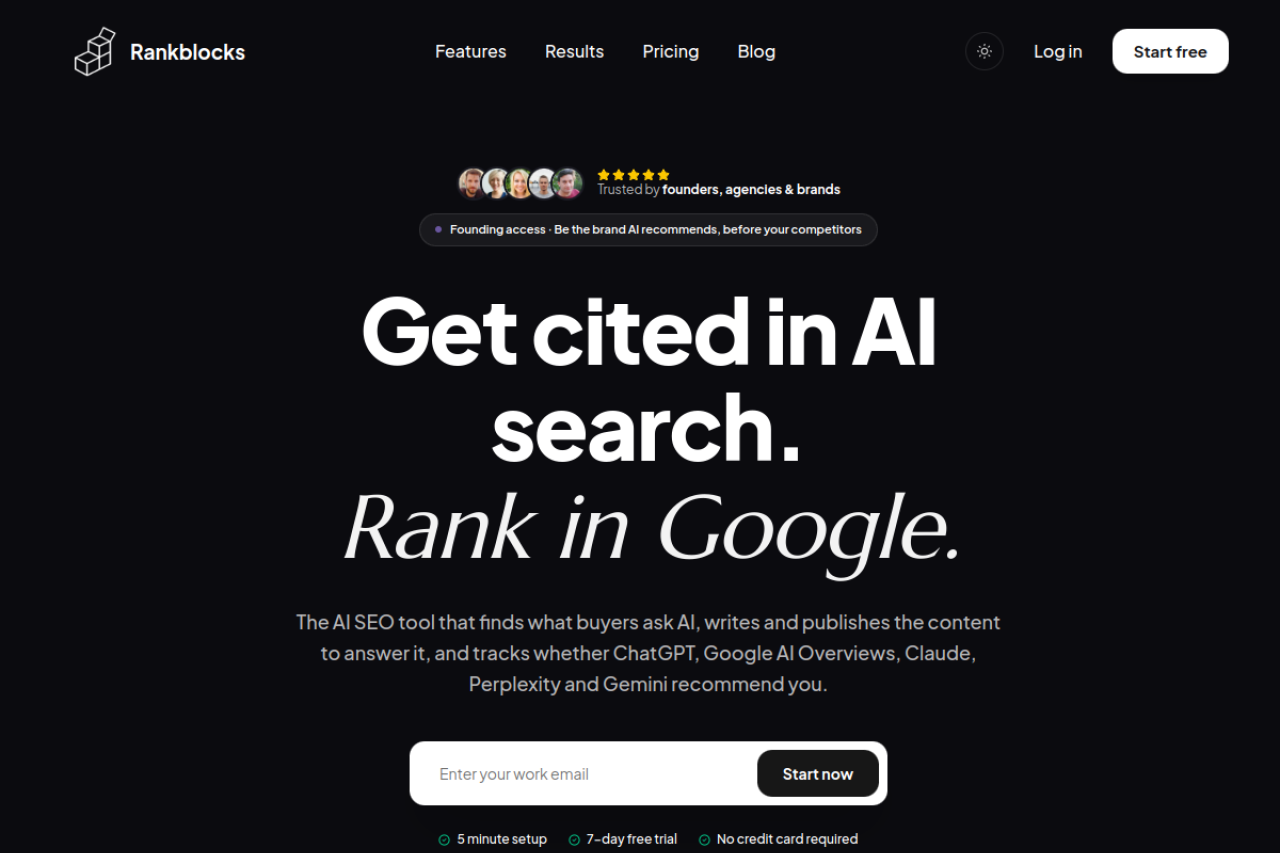
Rankblocks combines a Keyword Rank Tracker with position history and a Live Search Console Dashboard that reads in plain language. You get clicks, impressions, CTR, and keywords one step from the top without digging through raw exports.
The AI Visibility Monitor tracks brand mentions and citations across ChatGPT, Claude, Gemini, and Perplexity in one place. Content Gap Analysis surfaces competitor keywords, so every published piece targets real demand. That puts keyword gap analysis and rank tracking under one login.
Best for: agencies that want Google rankings and AI citation tracking without a second disconnected tool. Honest limit: it is built for content-led, AEO-forward workflows, not technical crawls or link-audit suites.
Semrush
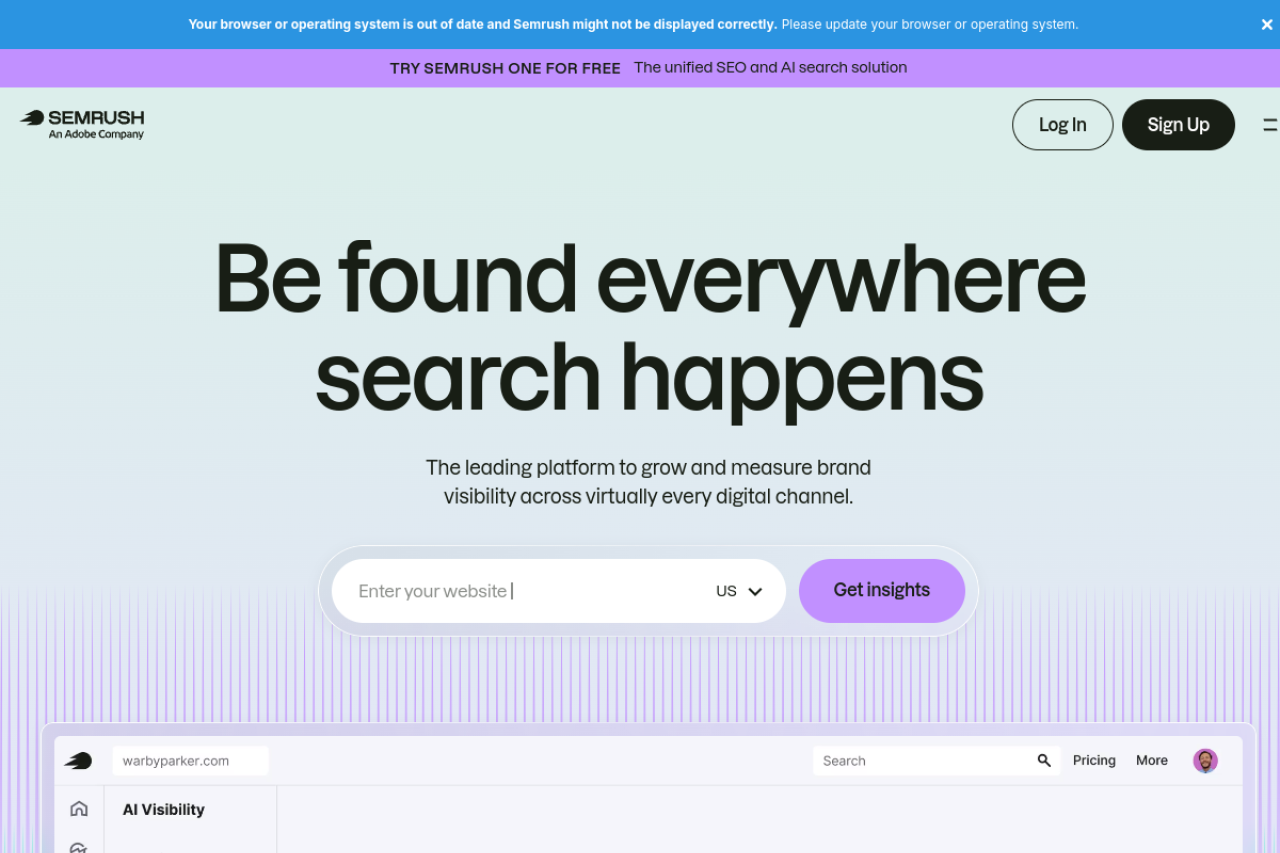
Semrush offers large-scale position tracking with daily updates and SERP feature monitoring across client accounts. Its AI Visibility Toolkit extends a familiar suite into AI Overview data.
Best for: agencies already inside the Semrush stack who want AI Overview signals layered on. Honest limit: the breadth of features adds cost and complexity for teams that only need rank tracking and reporting.
Ahrefs
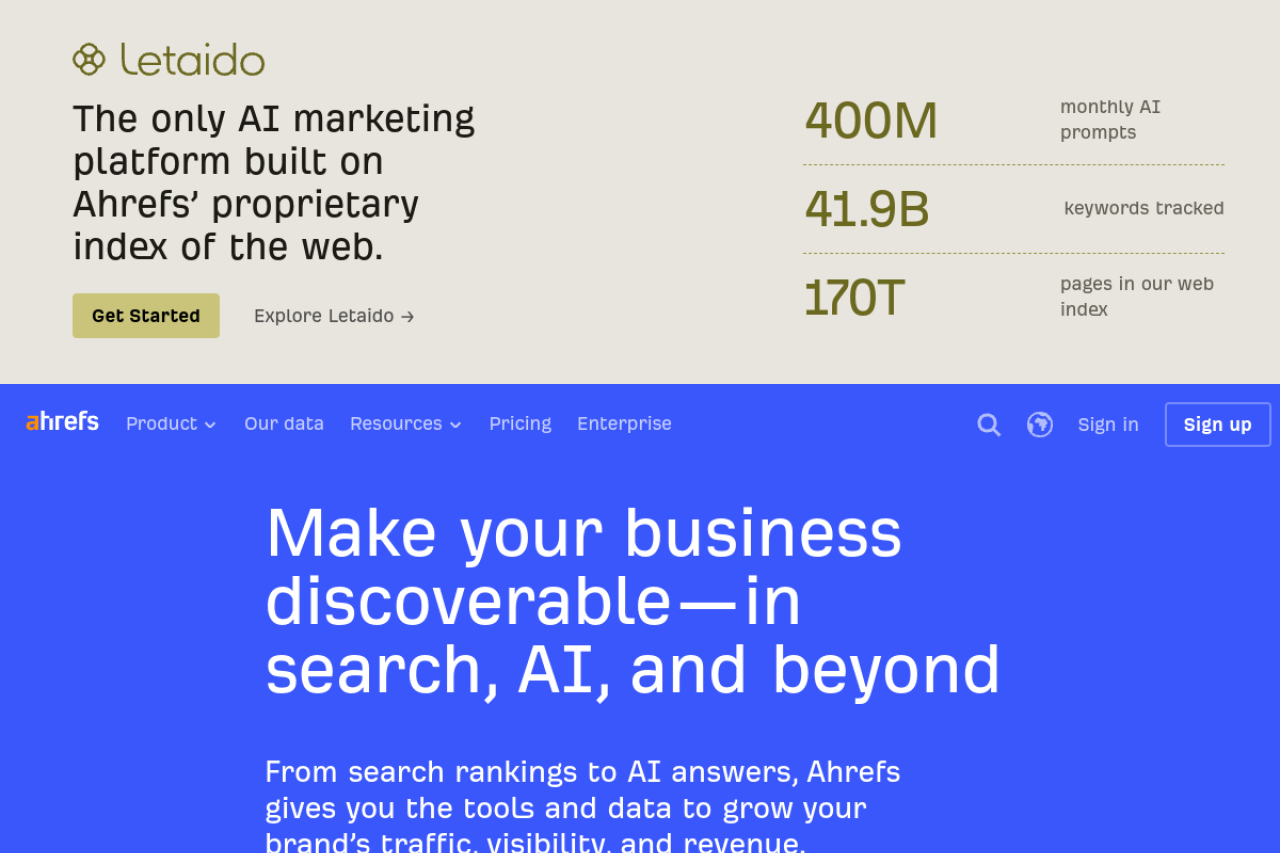
Ahrefs pairs a Rank Tracker with a large keyword database and strong competitor gap analysis. Its Brand Radar feature extends tracking into AI citation territory for existing users.
Best for: agencies prioritizing backlink-heavy research alongside keyword position monitoring. Honest limit: its AI citation depth is narrower than dedicated AEO platforms, so answer-engine coverage stays thin.
AccuRanker
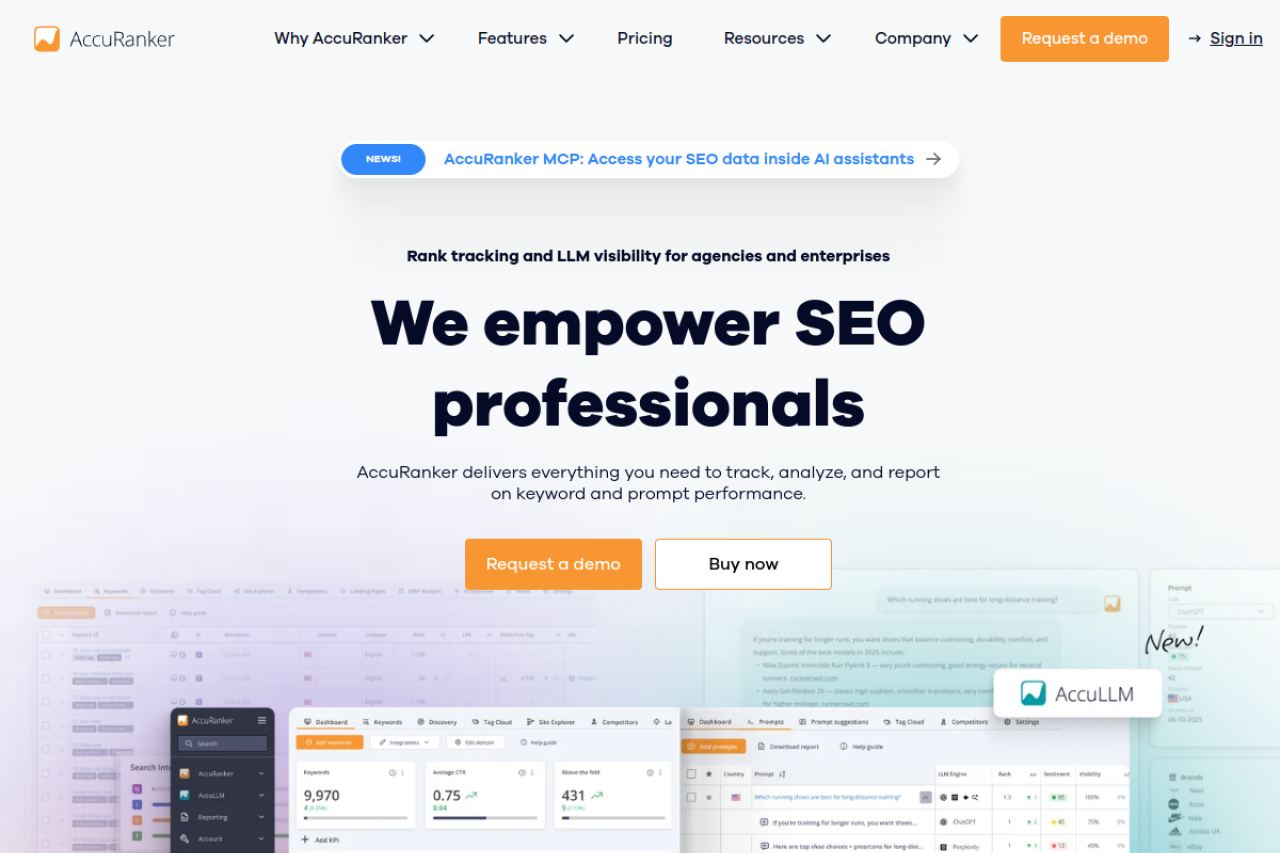
AccuRanker delivers on-demand rank refresh and real-time position updates built for fast diagnostics. Its share-of-voice reporting and keyword grouping make structured client deliverables straightforward.
Best for: agencies that need instant real-time keyword ranking during algorithm updates or penalty investigations. Honest limit: it focuses on Google positions, so AI citation coverage lags purpose-built tools.
SE Ranking
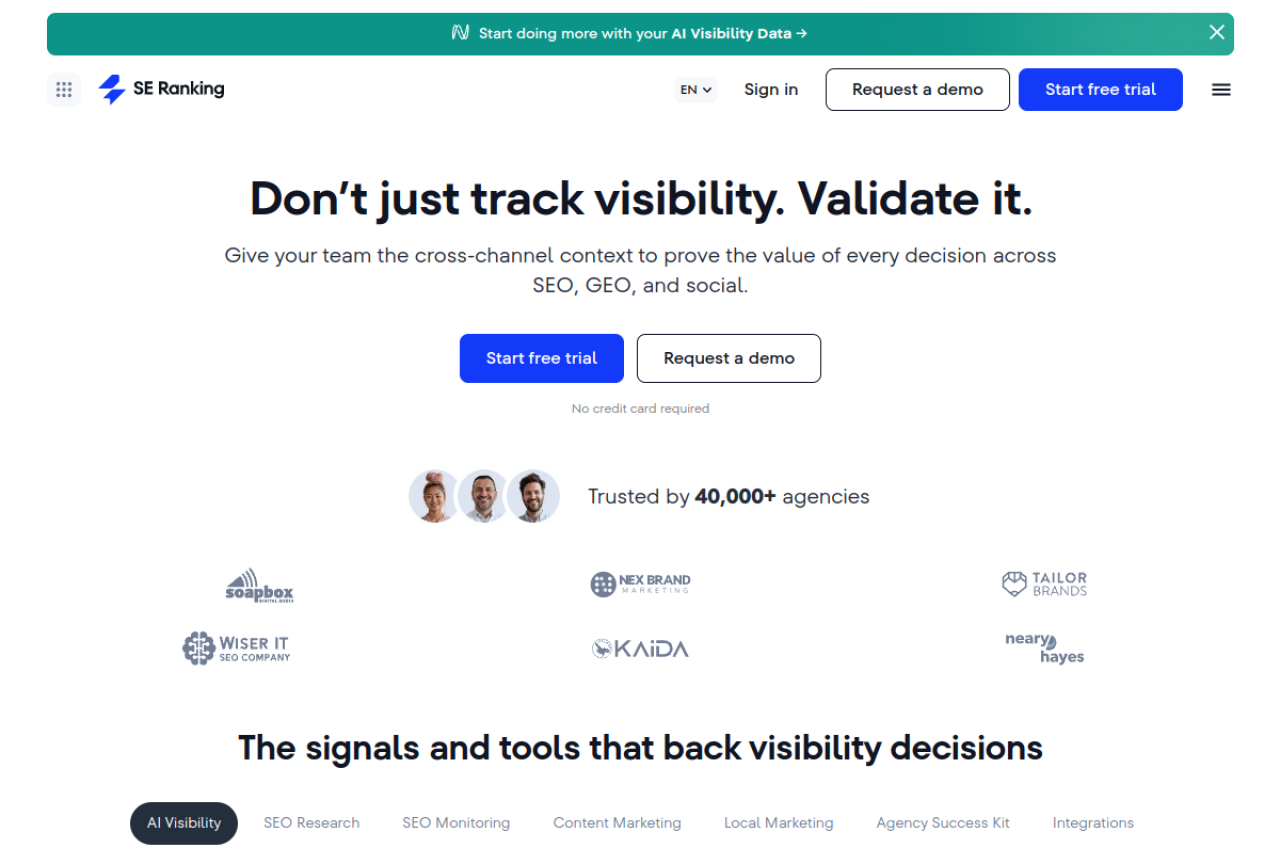
SE Ranking runs on verified data infrastructure with a stated accuracy commitment after Google changed data parameters in 2025. It offers multi-client management, white-label reports, and Looker Studio integration at competitive prices.
Best for: agencies tracking high keyword volumes across many client domains on a tighter budget. Honest limit: its AI visibility module is newer and less mature than dedicated AEO tracking tools.
Nightwatch
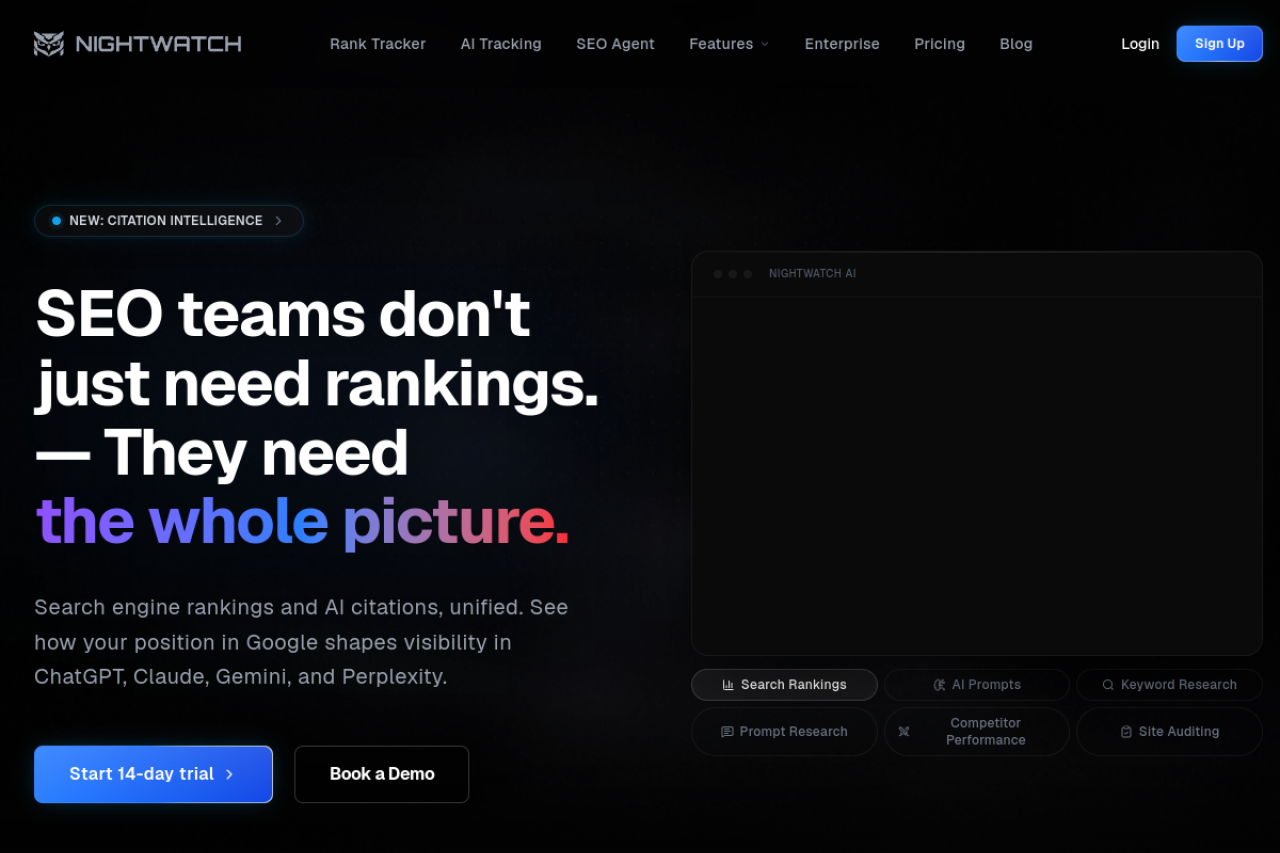
Nightwatch handles local rank tracking at city level and adds AI Overview monitoring in one dashboard. Visual rank-change graphs and white-label reports keep client delivery simple.
Best for: agencies with local SEO clients who need geo-granular data plus AI Overview detection. Honest limit: its AI tracking covers Overviews but not conversational engines like ChatGPT or Perplexity natively.
AgencyAnalytics
AgencyAnalytics combines rank tracking with 85-plus integrations into one white-label marketing report. Scheduled branded reports, client portals, and multi-channel data land in a single monthly view.
Best for: agencies that want rank tracking as one module inside a broader multi-channel report. Honest limit: rank updates default to weekly on lower plans, and AI citation data is not native.
Here is the at-a-glance comparison so you can shortlist fast.
| Tool | AI citation coverage | Best for |
|---|---|---|
| Rankblocks | ChatGPT, Claude, Gemini, Perplexity | Google plus AI in one platform |
| Semrush | AI Overviews via toolkit | Existing Semrush stack users |
| Ahrefs | Limited via Brand Radar | Backlink-heavy research teams |
| AccuRanker | Limited | Fast Google diagnostics |
| SE Ranking | Newer module | High-volume, budget-conscious agencies |
| Nightwatch | Overviews only | Local SEO with geo data |
| AgencyAnalytics | Not native | Multi-channel client reports |
What a strong agency rank tracking report must include
A snapshot number proves nothing to a client. Your report needs keyword positions with history and clear trend direction. Show whether a term climbed or slipped over 30 and 90 days.
Add SERP feature flags. Mark where AI Overviews, featured snippets, or local packs appear for each tracked keyword. That context explains why a #1 ranking may still lose clicks.
Include AI citation data. Show which buying questions surface the client versus a competitor in AI answers. This is the layer standard trackers skip, and it is exactly what proves you are ahead. Only 17% of AI Overview citations come from pages ranking in the organic top 10, so position data alone misses most of the citation picture. Agencies that want the full method can review how to track AI citations across these platforms.
Connect Google Search Console too. Tie clicks, impressions, CTR, and keywords near the top directly to positions. Reading keyword ranking history alongside GSC data shows cause and effect, not just a number.
Finally, add the competitor delta. Clients want share of voice shifting, not their own numbers in isolation. Show them gaining or losing ground against named rivals, and the report writes its own value.
One platform or two? Pick the stack that ends tool sprawl
When one platform covers both Google and AI citations, use it and cut the second tool. Fewer logins mean faster reporting and cleaner data. That is the whole point.
When a legacy tracker already owns Google, add a focused AEO monitor only if it integrates cleanly. If data lives in two separate dashboards, reporting doubles and accuracy suffers. The seams show in front of clients.
Agencies with clients asking about AI search are already behind if they hold no citation data at all. The tipping point is simple. One combined platform beats two tools the moment your client count passes five. The breakdown of AI visibility tools explains what each layer actually tracks.
Ready to prove rankings and AI citations in one report
Here is the honest summary. Standard rank trackers show Google positions and stop there. But when half a client's target keywords trigger an AI-generated answer with citations, position alone is an incomplete story. Your client wants to know if they are one of those citations.
Rankblocks closes that gap in one place. The AI Visibility Monitor tracks mentions and citations across ChatGPT, Claude, Gemini, and Perplexity. The Keyword Rank Tracker and Live Search Console Dashboard handle Google positions and plain-language reporting. Content Gap Analysis then feeds an AI Content Writing Engine so you research, publish, and report both surfaces without agency retainers or fragmented tools.
That is one platform for the whole loop, from finding the gap to proving the result to clients. It ends the two-dashboard problem and gives you a differentiator that is hard to replicate.
Want to see if ChatGPT already cites your client? Run a free audit and find the buying questions where your brand is invisible.
Frequently asked questions about best keyword rank tracking tools
Which keyword rank tracking tools also show AI citation data?
Rankblocks tracks citations across ChatGPT, Claude, Gemini, and Perplexity alongside Google positions in one platform. Semrush, Ahrefs, and Nightwatch add partial AI signals, mostly AI Overviews. Dedicated AEO coverage across conversational engines remains rare, so verify each tool covers the engines your clients ask about.
How do I track keyword rankings across multiple client sites efficiently?
Use a tool with isolated multi-client workspaces so no data crosses between accounts. Group keywords by client and domain, then schedule white-label reports for automatic delivery. This removes manual exports and keeps every client report accurate and branded without extra headcount.
Which rank tracker is most accurate for Google positions?
Accuracy depends on data infrastructure and refresh frequency, not brand name. After Google changed its data parameters in 2025, some budget trackers grew less reliable, while tools with verified data held up. Test any google keyword rank tracker against Search Console before you trust it in a client report.
What should a client rank tracking report include to prove ROI?
Include keyword positions with history and trend direction, SERP feature flags, and the competitor delta. Add Google Search Console data tying clicks and impressions to positions, plus AI citation data showing where the client surfaces in AI answers. Together these prove movement, not just a static snapshot.
Do I need a separate AI visibility tool or can one platform do both?
One platform can do both, and it usually should once you manage more than five clients. Splitting Google tracking and AI citation tracking across two dashboards doubles reporting time and hurts accuracy. A combined platform keeps data unified and your client reports consistent.