 Rankblocks
AI tool vs AI agent: key differences for search teams

Your B2B buyers ask ChatGPT and Perplexity for software picks before they ever click a link. Only 22% of marketers currently track AI visibility and traffic, which means most brands are flying blind. That is your new pipeline, and most founders do not see it.
Here is the trap. Most founders reach for AI tools when they need AI agents, then wonder why nothing gets faster. Others over-engineer agents for a job a simple tool handles in seconds.
The wrong call leaves your brand invisible in AI-generated answers, where buyers now decide. This piece gives you a plain-language framework for the ai tool vs ai agent question, built for search teams who need results, not theory.
What is an AI tool vs an AI agent, in plain language
An AI tool takes an input, returns an output, and stops. You type a prompt, it writes a meta description, you approve or reject it. A human drives every action. The tool never decides what to do next.
An AI agent works differently. It reads context, picks the next step, and acts without you holding its hand. Give it a goal like "find gaps and draft the article," and it chains tasks until the goal is met.
Autonomy is the real dividing line here, not price or how smart the model sounds. A cheap script can be an agent. A pricey model can still be a plain tool.
Memory matters too. Agents remember past interactions and adjust. Tools stay stateless, forgetting everything the moment the session ends.
Save this cheat sheet and share it with your team.
| Trait | AI tool | AI agent |
|---|---|---|
| Action model | You approve each step | Acts on its own |
| Memory | Resets each session | Retains past context |
| Best fit | Single, predictable task | Multi-step, adaptive work |

How AI copilots and AI assistants fit the spectrum
Tools and agents are not the only two options. A few labels sit between them, and mixing them up costs you clarity.
An AI copilot lands in the middle. It suggests the next move, but a human approves every action. Think of GitHub Copilot or a writing assistant that proposes lines you accept or skip.
An AI assistant like Siri is a bounded tool with a conversational wrapper. It answers, sets timers, and pulls facts, but it stays inside a fixed set of tasks. It does not chase a broader goal.
Agentic AI sits above single agents. It orchestrates several agents toward one larger outcome, coordinating research, drafting, and publishing as a system.
So where do ChatGPT, Perplexity, Claude, and Gemini land? On their own, they are powerful tools. You prompt, they answer. They shift toward agent behavior only when wrapped in a system that lets them plan, call other tools, and act without you. That difference between an AI agent vs AI assistant decides how much work you still do by hand.
Why the AI tool vs AI agent distinction changes your search visibility
This is not a technical debate for engineers. It decides whether buyers find you in AI answers.
B2B buyers adopt AI search 3x faster than consumers, according to Forrester. Your customers ask ChatGPT which platform to buy, and that answer either names you or names a competitor. Getting cited is now a pipeline event, not a vanity metric.
AI answers pull from content with entity coherence, cluster depth, and semantic density. That structural work sits outside most agency mandates and never shows in a standard dashboard. Winning citations in AI answers takes deliberate content built to be quotable.
Here is the catch. An AI tool hands you a suggestion. Only an AI agent closes the loop from a content gap to a published article. Use point tools alone, and a human still stitches every step by hand.
The two tracks reinforce each other. A large share of AI Overview citations come from pages already ranking in Google's top ten, so classic SEO and AEO are one discipline, not two. Recent Ahrefs data across 863,000 keywords found 38% of cited pages ranked in the organic top 10. Content that wins a citation usually ranks too. That is why treating SEO vs GEO vs AEO as separate silos wastes budget and effort.
The n8n AI agent vs AI tool node: a real workflow example
Want to see the difference in practice? Open n8n. It treats tools and agents as distinct node types on the same canvas, which makes the split concrete.
An AI tool node in n8n does one task per trigger. It classifies text, extracts a field, or generates a summary, then passes the result downstream. Predictable in, predictable out, no judgment involved.
The AI Agent node works on a different level. You hand it a goal. It selects which tools to call, loops until the job is done, and self-corrects along the way. No hand-holding required. That n8n agent vs AI tool node distinction is the whole lesson in one screen.
Why does this matter for AEO? A content workflow has predictable steps like fetching keyword data and pulling SERP context. It also has judgment calls like deciding which gap to target and how to frame an answer for citation.
The takeaway is simple. Agents handle the judgment calls. Tools handle the predictable steps. A strong stack uses both, with the agent orchestrating the tools instead of a human doing it by hand.
When to use an AI tool and when to use an AI agent for search and AEO
Neither wins outright. The job decides.
Use an AI tool for single, predictable tasks. A keyword lookup, schema markup, a meta description, or a title variant. These have clear inputs and clear outputs, so autonomy adds nothing.
Use an AI agent for multi-step, adaptive work. Gap analysis to draft to publish to measured citation is one connected loop. Each step depends on the last, and the path shifts based on what the data shows.
The stakes are real. Tools keep you in task mode, where you save minutes per task but still run the whole play yourself. Agents reshape how the team operates, so publishing scales without more headcount.
Use this decision rule. If a human must approve every micro-step, you have a tool problem, not an agent.
- Single task with fixed output, choose a tool.
- Multi-step goal that adapts to data, choose an agent.
- Work that still eats three hours a week by hand, you own a tool stack, not an agent.
That last signal is the honest one. If your "AI workflow" still costs you real hours every week, you are stitching tools, not running an AI agent for content creation.

Top 5 AI search visibility tools and agents for content and AEO teams
These options span the range from full-loop agents to focused tools. Each earns a place for a different reason, so match the pick to your job.
| Tool | Type | Core strength | Best for |
|---|---|---|---|
| Rankblocks | Full-loop agent | Gap to publish to citation | Founders with no SEO team |
| Profound | Tracking tool | Enterprise mention data | Large brand teams |
| Peec AI | Tracking tool | Competitive benchmarking | Teams wanting AI-mention data |
| Otterly.AI | GEO tracker | Daily prompt monitoring | Teams needing history |
| Surfer SEO | On-page tool | Content scoring | Google-ranking priority |
Rankblocks
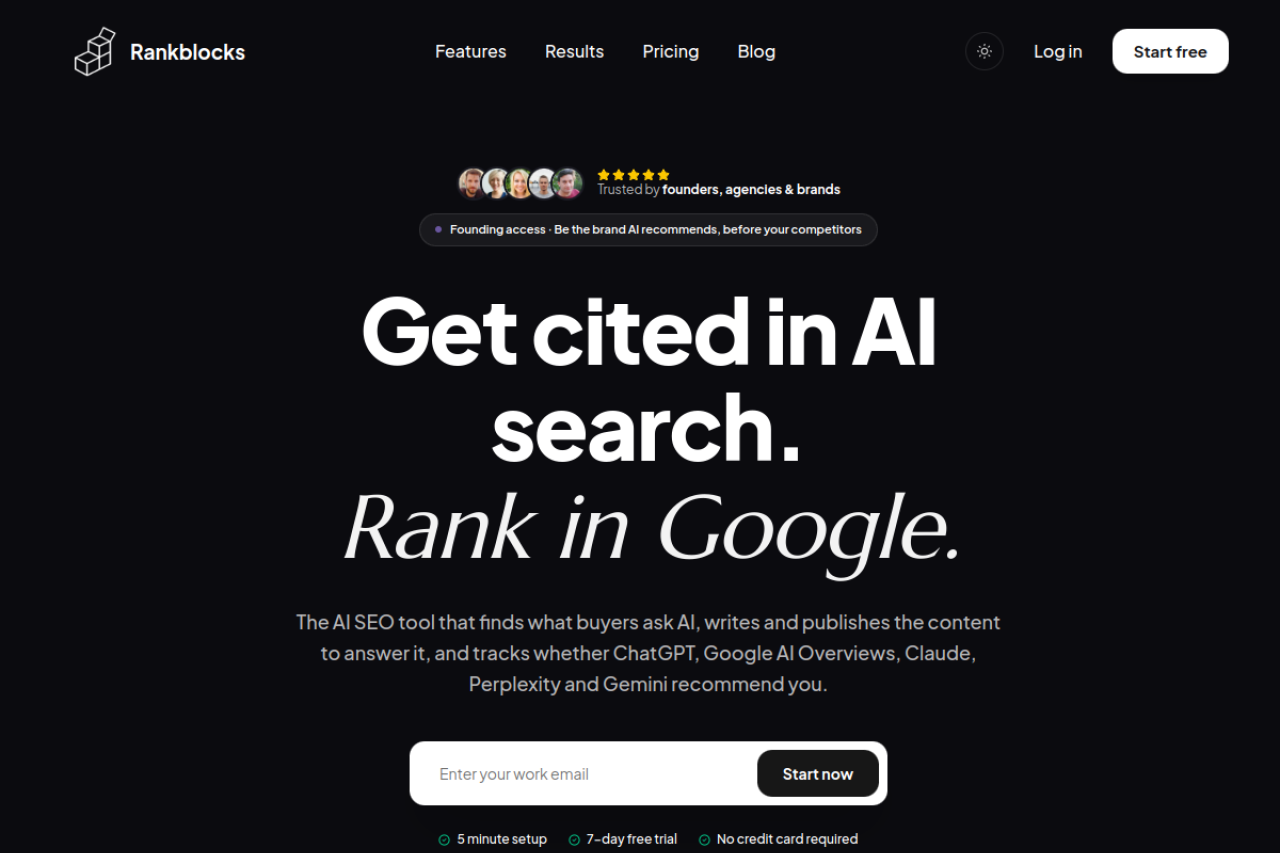
Rankblocks covers the full loop in one place, from gap analysis to AI content writing to publish to citation tracking. That closed cycle is why it leads this list for teams without staff to stitch tools together.
The AI Visibility Monitor tracks your mentions and citations across ChatGPT, Claude, Gemini, and Perplexity. The Content Gap Analysis surfaces buying questions where your brand is invisible, ranked by traffic opportunity. Best for B2B and SaaS founders and growth teams who want proof of citations without hiring an agency.
Profound
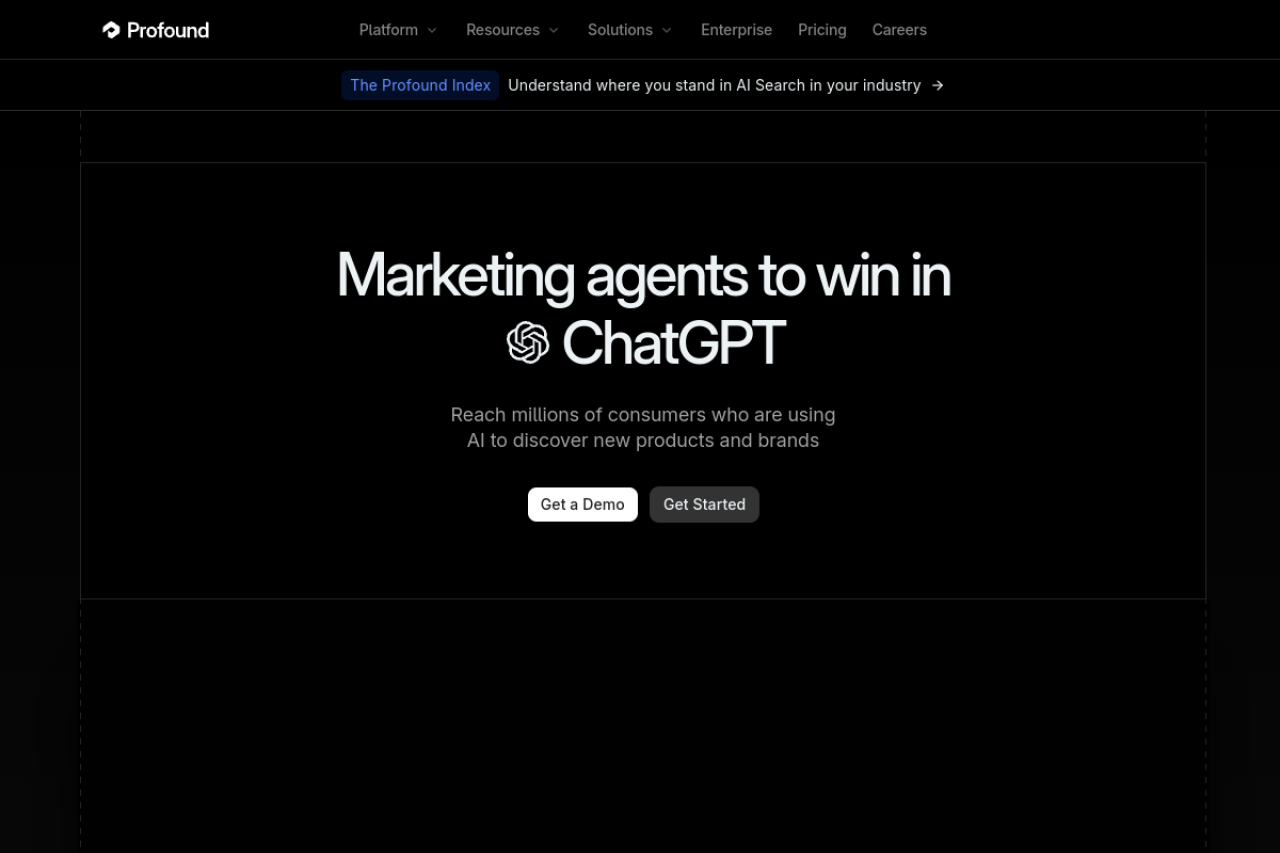
Profound is an AI citation and mention tracking platform aimed at enterprise brand teams. It monitors brand presence in AI-generated answers across major LLMs.
Best for larger organizations that need share-of-voice data at scale. It tracks well, though it does not write or publish the content that closes the gap.
Peec AI
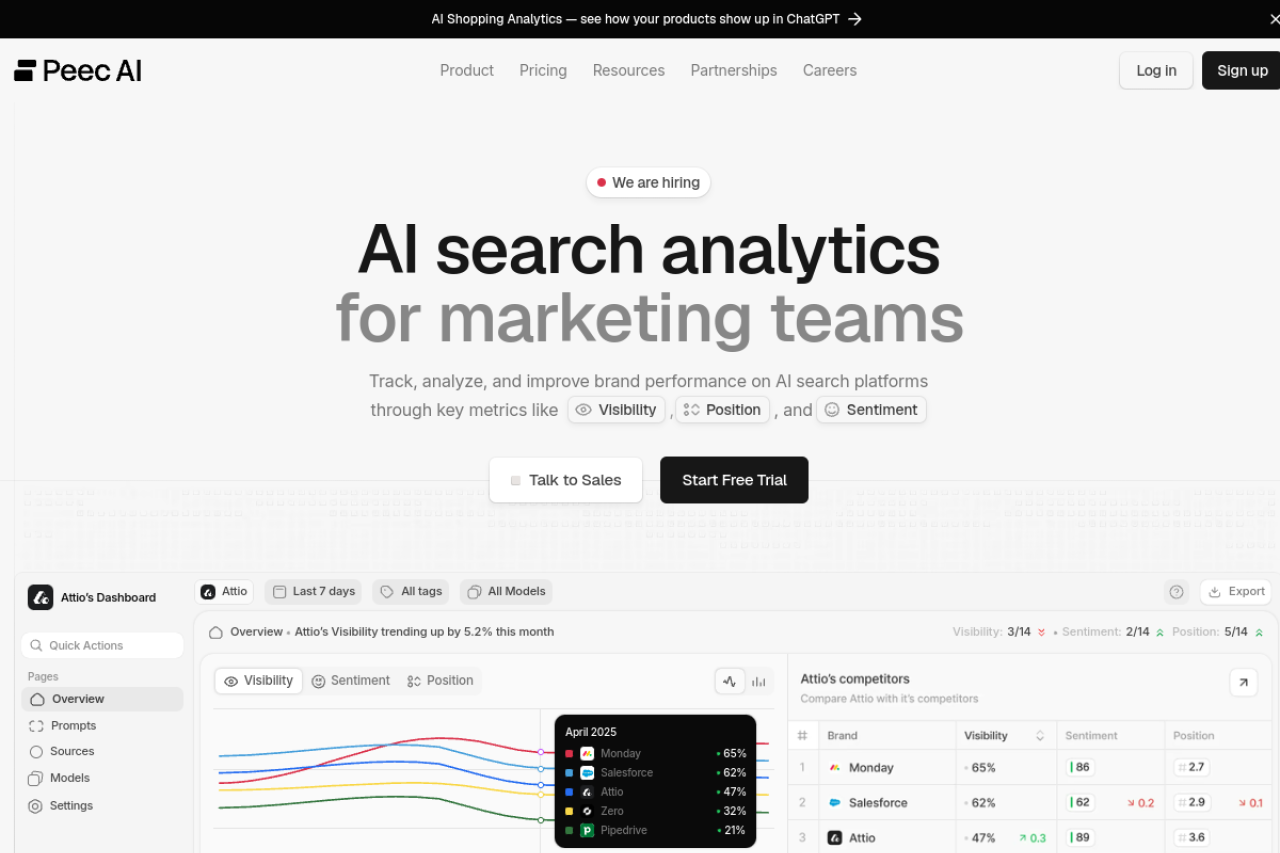
Peec AI focuses on AI search visibility measurement and competitive benchmarking. It tracks which questions surface your brand versus a competitor in AI answers.
Best for teams that want competitive AI-mention data without a full content suite. Strong on measurement, lighter on execution.
Otterly.AI
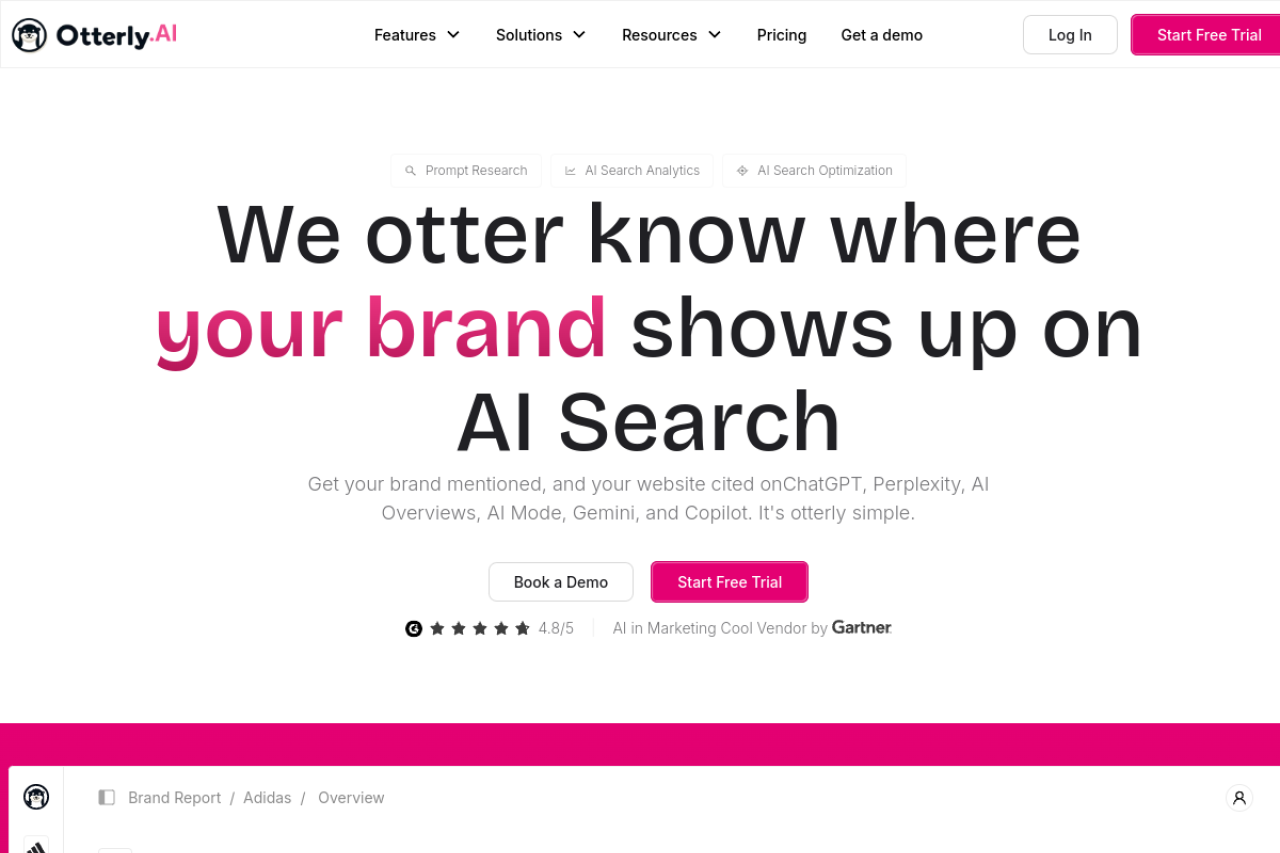
Otterly.AI is a dedicated GEO platform built around prompt monitoring and daily citation tracking. It reruns prompt sets across ChatGPT, Perplexity, Gemini, and Google AI Overviews.
Best for teams that want historical AI response data and share-of-voice metrics over time. Its trend history helps you spot when your visibility moves.
Surfer SEO
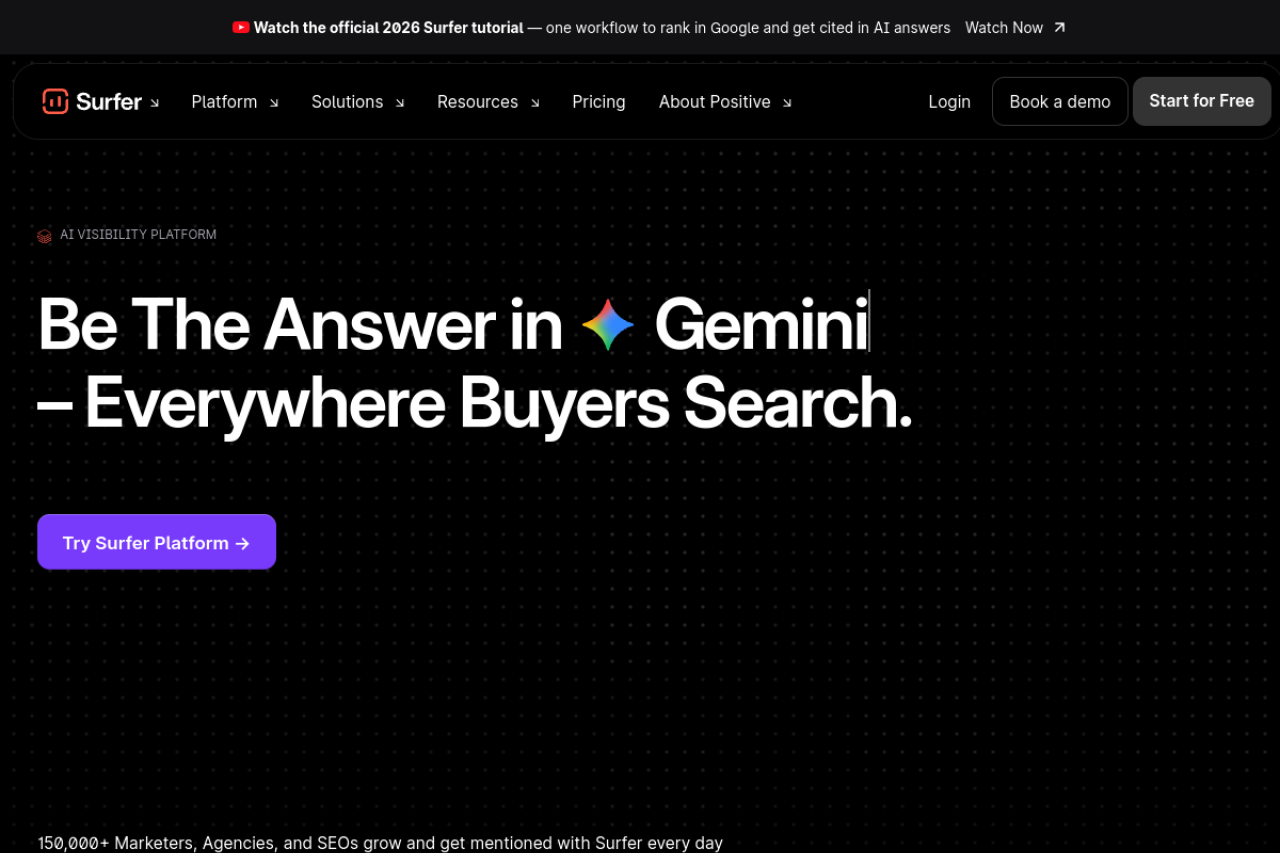
Surfer SEO is a classic on-page optimizer with content scoring and NLP-based keyword guidance. It is strong for traditional ranking signals, though AI citation tracking is not its focus.
Best for teams whose main priority is Google rankings, with AI features as a supplement. If you weigh options across the best AI SEO tools, Surfer sits firmly on the classic-SEO side.
Turn AI search visibility into a closed loop, not a guessing game
The ai tool vs ai agent choice is a revenue decision, not a technical one. It decides how much work your team does by hand and how often buyers find you in AI answers.
Stitch point tools together, and a human sits in every gap. Those gaps cost citations, and lost citations cost pipeline. One platform that closes the loop from gap to content to publish to proof beats five disconnected tools every time.
Rankblocks runs that full cycle. Its Content Gap Analysis finds the invisible buying questions, the AI Content Writing Engine publishes answers built to win citations, and the AI Visibility Monitor proves whether ChatGPT, Claude, Gemini, or Perplexity actually surfaces you. No agency retainer, no fragmented AI visibility tracking tool stack.
Want to know where you stand right now? Find one gap and see one buying question where your brand is invisible in AI answers today.
Frequently asked questions about AI tool vs AI agent
What is the real difference between an AI tool and an AI agent?
An AI tool takes an input and returns an output while a human approves every action. An AI agent reads context, decides the next step, and acts without hand-holding until a goal is met. Autonomy is the dividing line, not price or model sophistication.
Is ChatGPT an AI tool or an AI agent, and why does that matter for citations?

On its own, ChatGPT is a tool, since you prompt it and it answers. It becomes agent-like only inside a system that lets it plan and act. This matters because ChatGPT cites content with strong entity coherence, so how you build that content decides whether it names your brand.
What is the difference between an AI copilot, an AI agent, and agentic AI?
A copilot suggests the next move but needs human approval each time. An agent acts on its own toward a goal. Agentic AI sits above single agents, orchestrating several of them toward one larger outcome as a coordinated system.
When should a search or content team choose an AI agent over an AI tool?
Choose an agent for multi-step, adaptive work like gap analysis to draft to publish to measured citation. Choose a tool for single predictable tasks like schema or meta generation. If a human must approve every micro-step, a tool fits better than an agent.
Can an AI tool alone improve my brand's mentions in ChatGPT or Perplexity?
A tool can help one step, like drafting a title or checking a keyword, but it will not close the loop alone. Improving mentions takes gap analysis, published content built for citation, and tracking, which is agent-level work across the whole cycle.